
A Guide to Nature Attractions on the Ring Road in Iceland
Nature is Iceland's biggest draw, and driving the Ring Road is one of the best ways to experience its diverse landscapes. The Ring Road, also known as Route 1, is a 1,332-kilometer (828-mile) highway circling the entire island. Cruising through this route takes you everywhere, from waterfalls and black sand beaches to glaciers, geothermal areas, and volcanic terrain. Truly, visiting the nature attractions on the Ring Road in Iceland is already a complete exploration of the country. This guide highlights the must-see stops and scenic destinations for an unforgettable road trip around Iceland.
Golden Circle
Sure, it is technically a detour from Route 1. However, the Golden Circle is the perfect prologue to the nature attractions on the Ring Road in Iceland. This popular 300-kilometer sightseeing route begins and ends in Reykjavík and can easily be explored in a single day. For many travelers, it’s an ideal warmup before you officially head east onto the Ring Road.
Þingvellir National Park
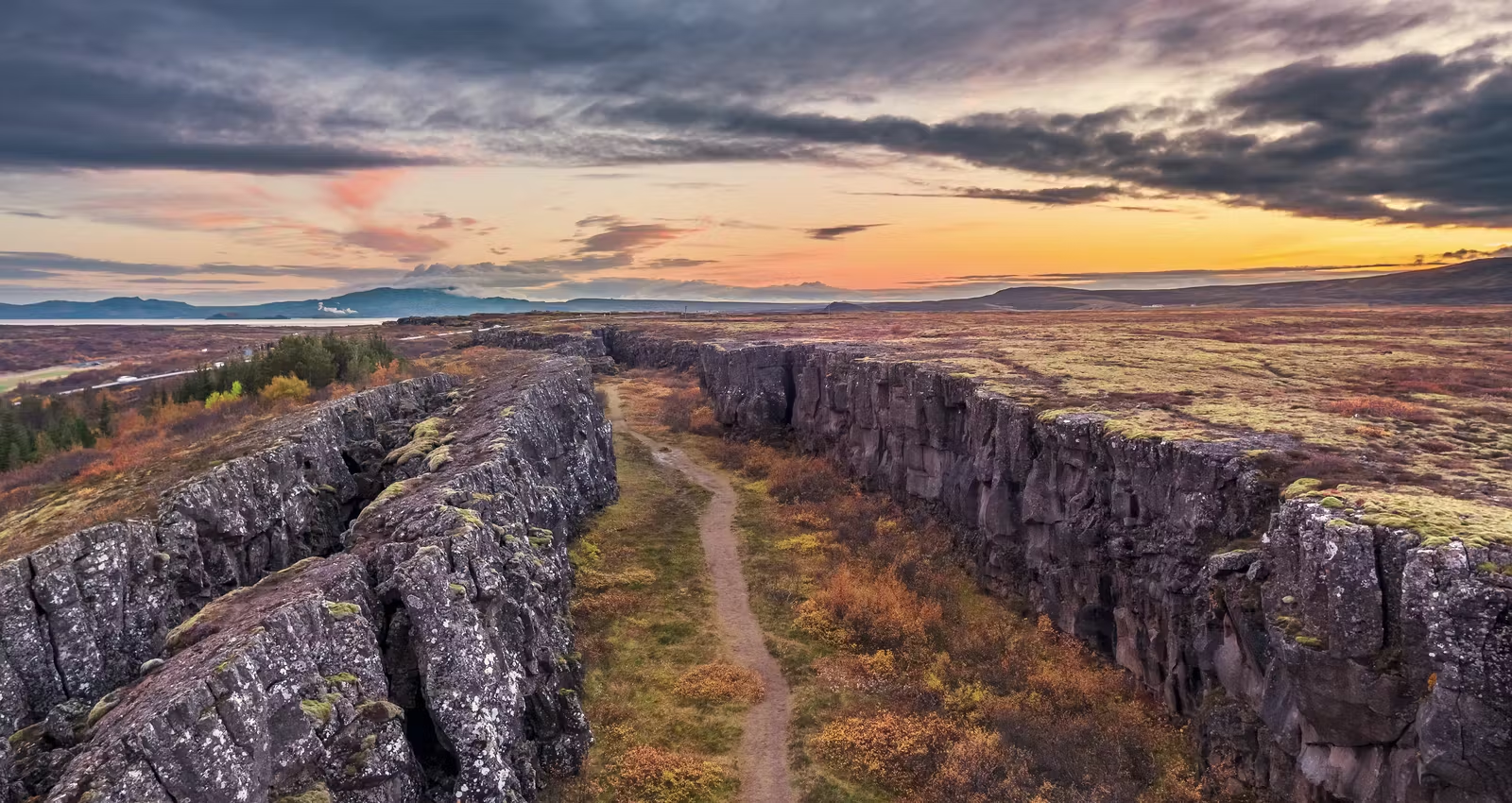
This UNESCO World Heritage Site is a geological wonder where the North American and Eurasian tectonic plates are gradually pulling apart. Visitors can walk through the Almannagjá gorge to see the dramatic rift formations created by this ongoing tectonic activity.
Þingvellir National Park also holds historical significance as the site where Iceland's parliament, the Alþingi, was established in 930 CE. It’s an essential stop for travelers seeking memorable nature attractions on the Ring Road in Iceland.
Geysir Geothermal Area
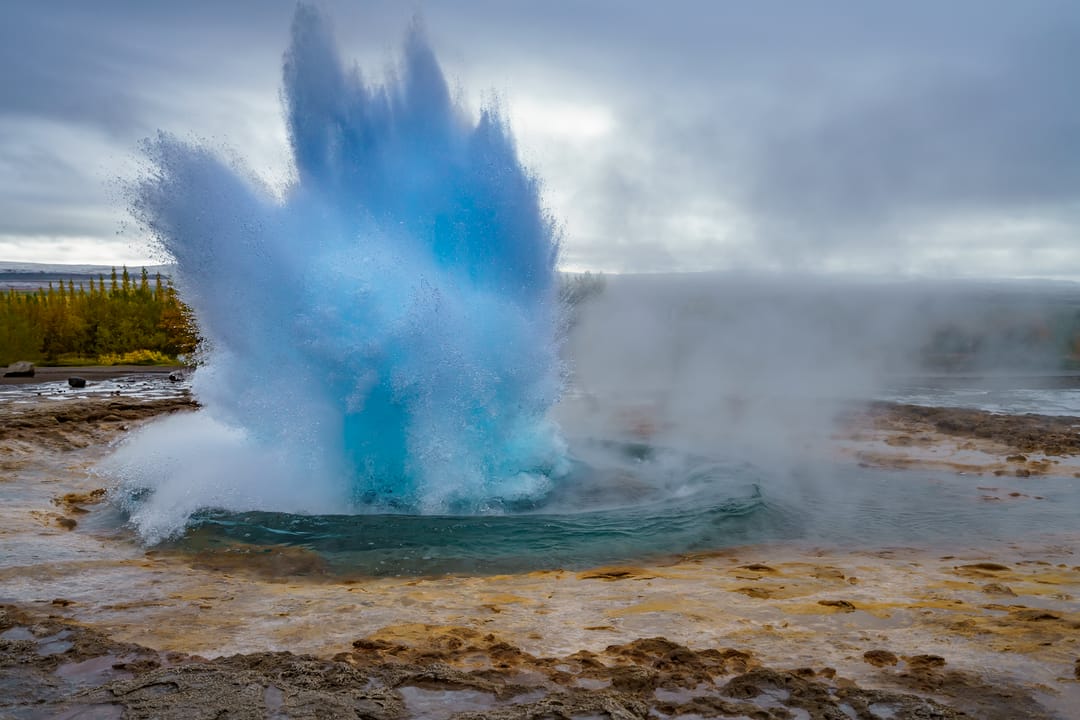
Located in the Haukadalur Valley, this highly active geothermal field features bubbling mud pots, steaming vents, and colorful mineral deposits. While the Great Geysir is largely dormant, its neighbor, Strokkur, reliably sends boiling water into the air every few minutes. Geysir provides a fascinating glimpse into the subterranean heat that continues to shape Iceland’s landscapes.
Gullfoss Waterfall
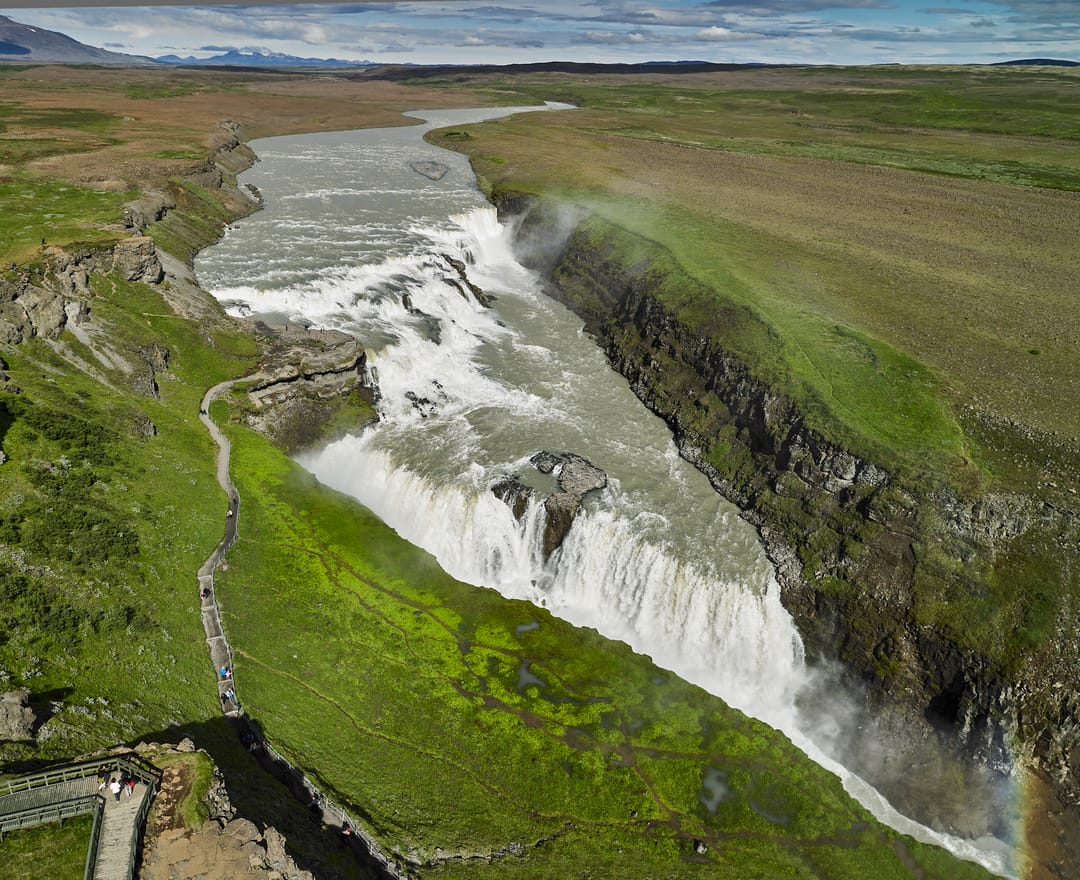
Fed by the Hvítá River, the massive “Golden Falls” plunges 32 meters (105 feet) down a two-tiered staircase into a deep canyon. Walking paths and viewing platforms offer excellent vantage points to feel the heavy mist and witness the powerful glacial meltwater. On sunny days, the spray creates brilliant rainbows across the canyon, making Gullfoss a spectacular final stop on the Golden Circle loop.
South Coast
Leaving the capital region behind, South Coast Iceland marks the first major leg of the Ring Road journey. This scenic stretch is incredibly popular, packing South Coast waterfalls, glaciers, and dramatic coastlines into a relatively short drive. Many of the country's most iconic landmarks can be found here. Truly, the south is an essential region for checking off bucket-list nature attractions on the Ring Road in Iceland.
Seljalandsfoss Waterfall
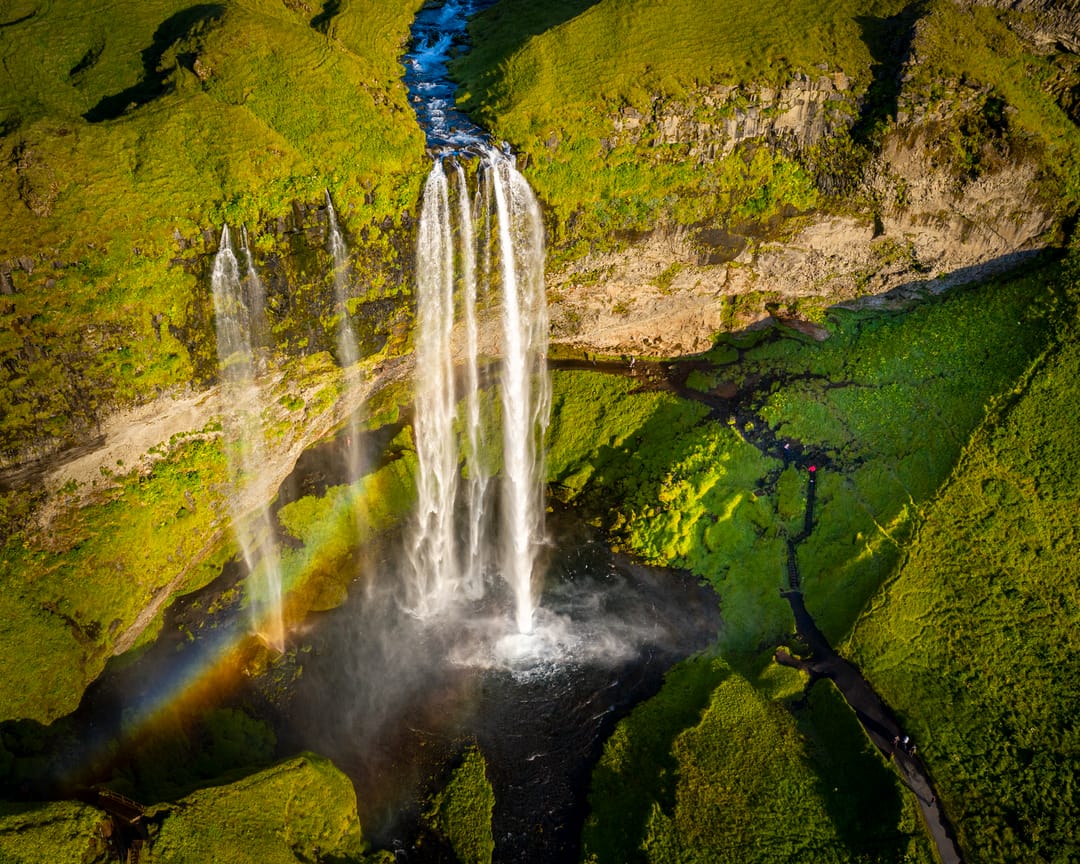
One of the first landmarks travelers encounter, Seljalandsfoss is an elegant 60-meter (197-foot) waterfall cascading over a former sea cliff. Visible from Route 1, it is among Iceland's most recognizable waterfalls. Its most distinctive feature is the footpath that loops behind the cascade, offering a unique perspective from behind the waterfall. Be prepared for mist, especially on windy days, and wear sturdy footwear, as the trail can be slippery.
Skógafoss Waterfall
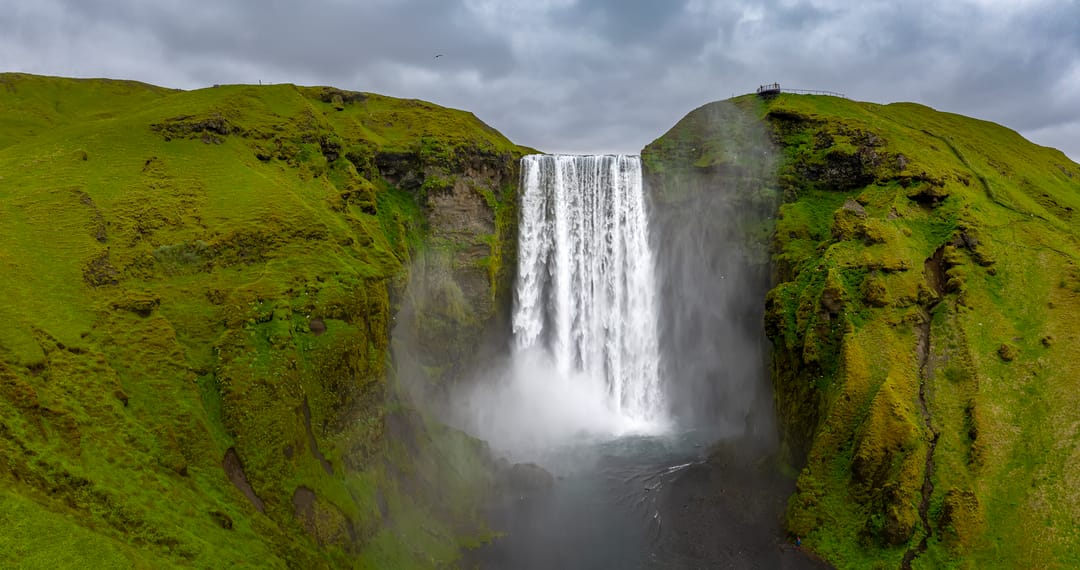
Just a short drive east, Skógafoss Waterfall Iceland offers a different spectacle. This vast curtain of water drops 60 meters (197 feet) over a cliff about 25 meters (82 feet) wide. The flat terrain at its base allows visitors to approach remarkably close to the cascade. For stunning views of the coast, climb the 527-step staircase to the observation platform above the falls. The viewpoint also marks the beginning of the renowned Fimmvörðuháls hiking trail.
Reynisfjara Black Sand Beach
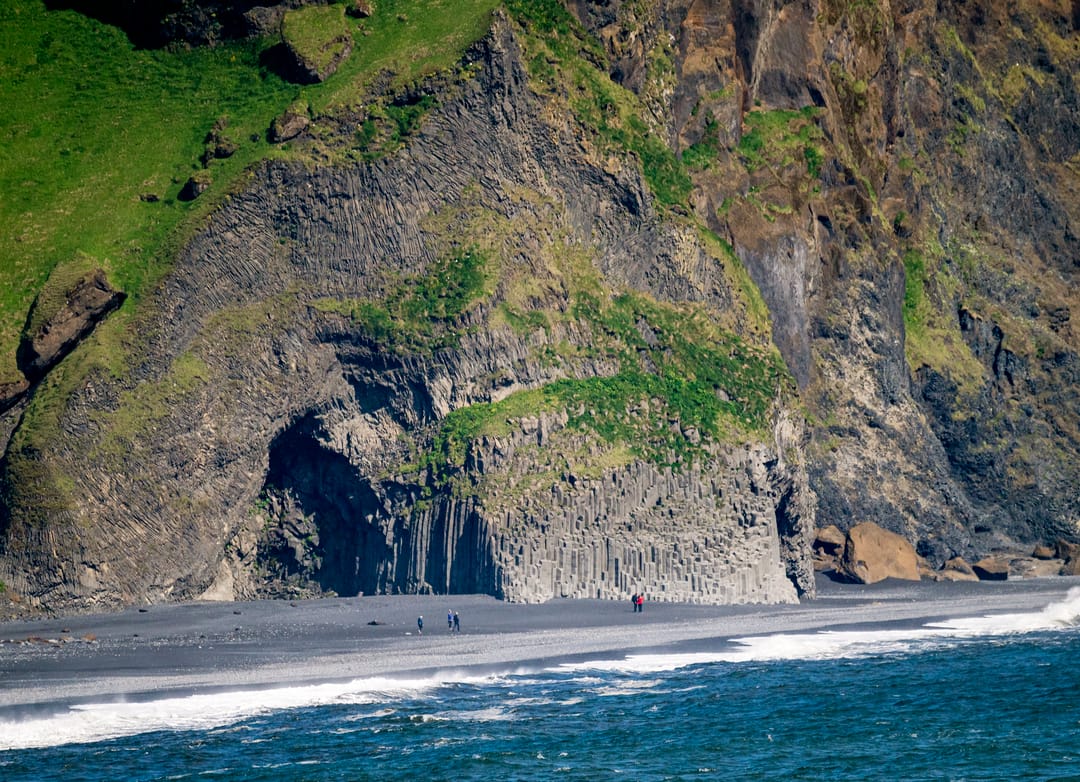
Located near Vík, Iceland, this world-famous coastline is known for its volcanic sands, powerful Atlantic waves, and striking basalt columns. Offshore, the dramatic Reynisdrangar sea stacks rise from the ocean, creating an iconic Icelandic seascape. It is one of the most famous and visually captivating natural attractions on the Ring Road in Iceland. However, sneaker waves can be extremely dangerous, so always keep a safe distance from the shoreline.
Dyrhólaey Peninsula
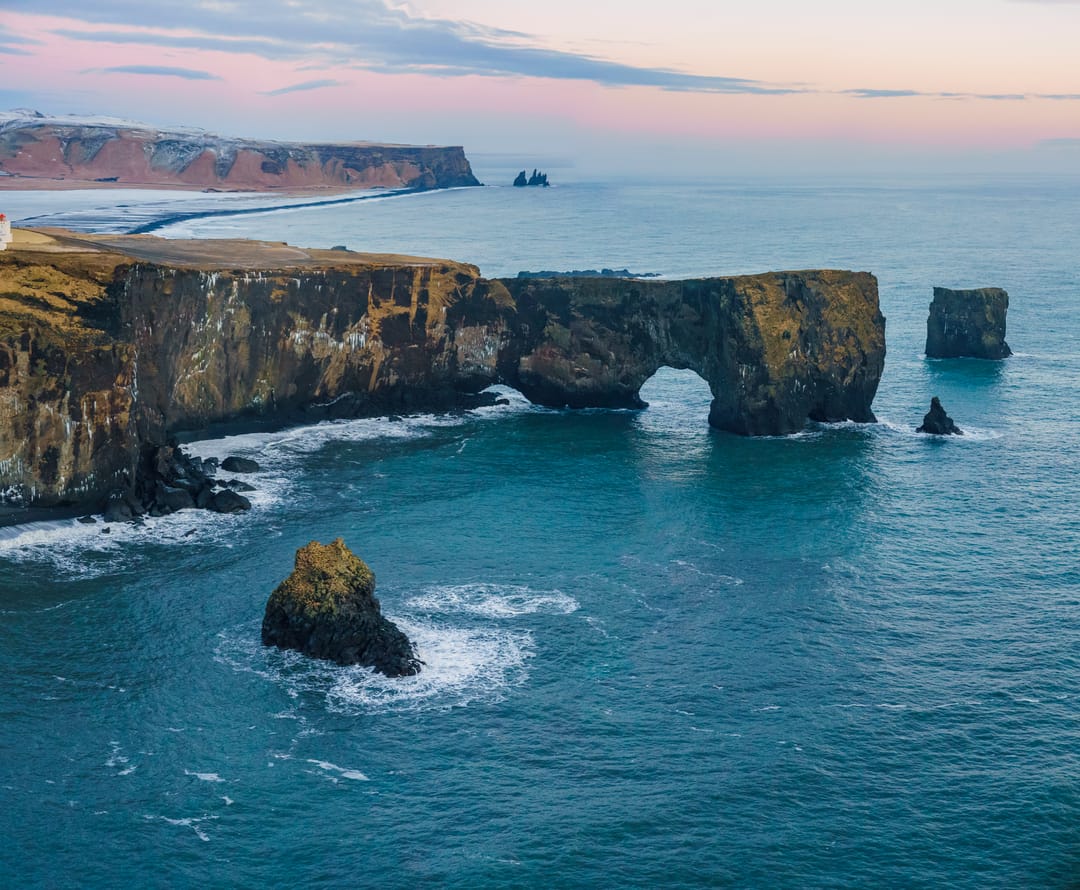
Dyrhólaey Peninsula is a headland known for its massive black lava arch rising 120 meters (394 feet) above the sea. Here, towering cliffs offer excellent vantage points of black sand beaches stretching in both directions and striking offshore rock formations. If you are traveling during the summer months, soak in the sight of migratory seabirds. Atlantic puffins can often be seen burrowing in the grassy cliffs, making Dyrhólaey a fantastic wildlife destination in the South Coast.
Fjaðrárgljúfur Canyon
Near the village of Kirkjubæjarklaustur lies the ancient, serpentine Fjaðrárgljúfur Canyon, which reaches depths of up to 100 meters (328 feet). Formed by glacial meltwater over millennia, the canyon is characterised by steep, twisting rock walls draped in delicate green moss. Well-maintained walking trails and viewing platforms line the eastern rim, overlooking stunning views of the narrow river valley below.
Vatnajökull National Park
Dominating the island’s southeastern region, Vatnajökull National Park is a vast wilderness shaped by volcanic heat and glacial ice. It is home to Europe's largest glacier and some of the most spectacular natural attractions on the Ring Road in Iceland. Here, landscapes open up into glacial outwash plains, deeply carved gorges, and breathtaking glacier lagoons, all easily reached right off the highway.
Múlagljúfur Canyon
Hidden away just off Route 1, Múlagljúfur Canyon is a lesser-known destination that offers a quieter alternative to popular sites. A moderately challenging hike traces the canyon rim, revealing steep green cliffs and rugged rock formations. Along the way, visitors can marvel at the waterfalls Hangandifoss and Múlafoss plunging into the gorge below. The trail culminates in spectacular views of Öræfajökull and the outlet glaciers of Vatnajökull, a scenic finale to the off-the-beaten-path experience.
Jökulsárlón Glacier Lagoon
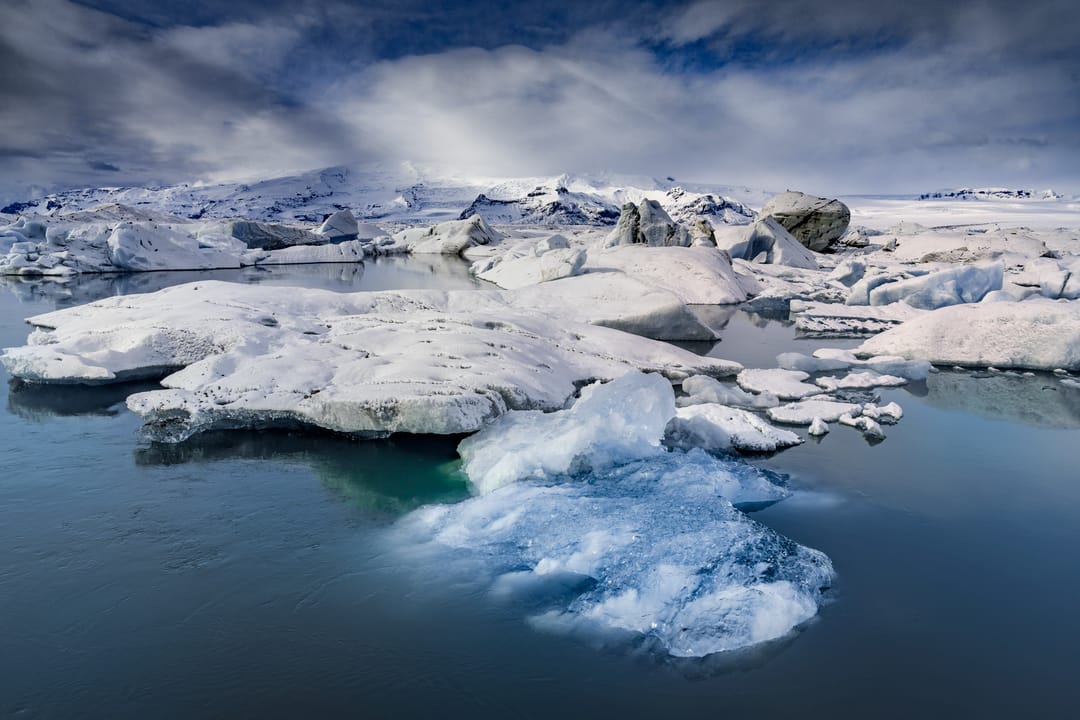
No doubt about it: the Jökulsárlón Glacier Lagoon is one of Iceland’s undisputed highlights. Here, travelers are treated to the mesmerizing sight of massive icebergs breaking off a receding glacier tongue. As they drift toward the ocean, the blue-and-white chunks shift with the currents, creating an ever-changing landscape. In the summer months, visitors can take a boat tour among the icebergs for a closer look. Seals are also frequently spotted swimming in the lagoon or resting on floating ice.
Diamond Beach
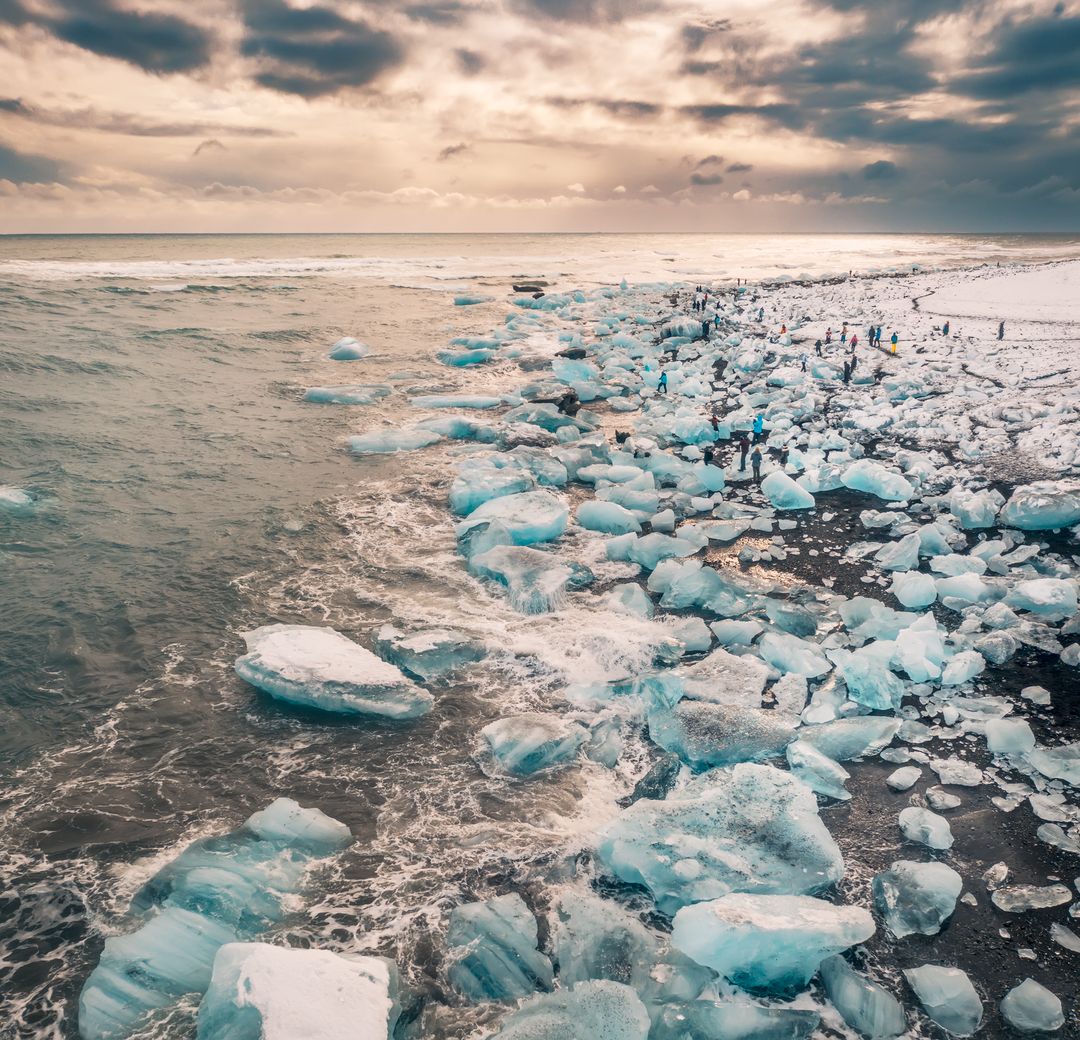
Directly across the road from Jökulsárlón, icebergs float through a narrow channel and wash ashore on the black volcanic sands of Breiðamerkursandur. Known as Diamond Beach, this shoreline offers a striking contrast between crystal-clear ice and dark sand. Scattered along the coast, the ice blocks glisten in the sunlight like precious gems—hence the name. Among the most photographed natural attractions on the Ring Road in Iceland, it’s a peek at the final stage of a glacier's journey.
Vatnajökull Glacier
The mighty Vatnajökull Glacier caps the region, covering roughly 8% of Iceland's total landmass. Its immense ice cap dominates the surrounding landscape, with outlet glaciers often visible from Route 1. For a closer look, visitors can join guided glacier hikes or seasonal ice cave tours to step onto the ice. Experiencing this massive frozen landscape firsthand lets travelers appreciate the sheer scale of the island's wilderness. Whether admired from afar or explored up close, Vatnajökull is a core component of any classic Ring Road trip.
Svartifoss Waterfall
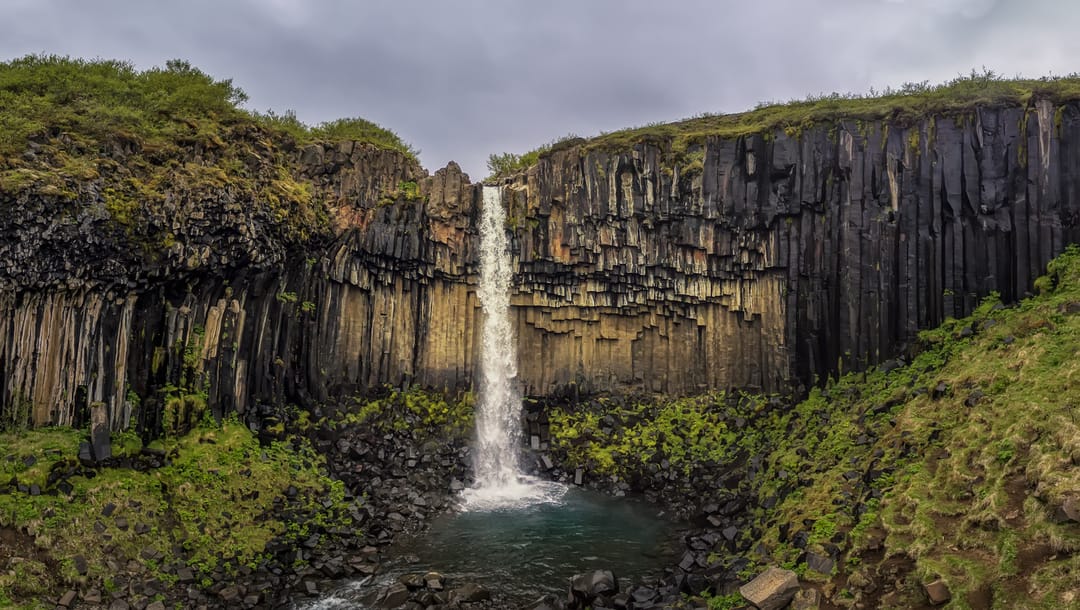
Located in the Skaftafell area of the national park, Svartifoss is famous for its distinct architectural beauty. The waterfall drops 20 meters (66 feet) over a crescent-shaped cliff composed of dark, hanging basalt columns. The geometric, hexagonal volcanic rock pipes are an extraordinarily Icelandic feature, formed by the slow cooling of lava flows.
East Iceland
As you leave the southern glaciers behind, the landscape shifts into the quiet, deeply carved fjords of East Iceland. It unfolds into a region of narrow coastal roads, fishing villages, and expansive wilderness. Traveling through the east offers a more tranquil side of Iceland. Here, expect some of the country’s oldest geological formations alongside remarkable nature attractions on the Ring Road in Iceland.
Vestrahorn Mountain
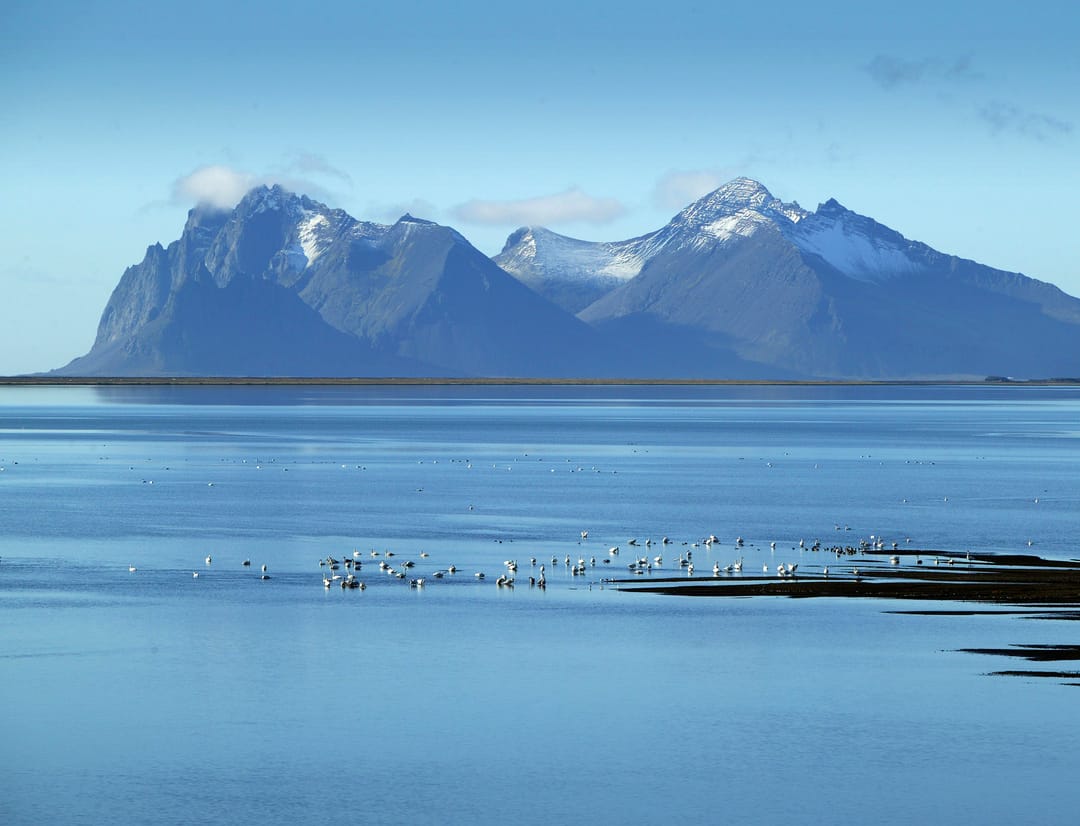
Found on the Stokksnes peninsula, Vestrahorn is a gabbro mountain that rises 454 meters (1,490 feet) above a coastal lagoon. The dark, jagged peaks cast perfect reflections on the shallow tidal pools at its base, creating an incredibly atmospheric landscape. Rich in iron and distinct from the volcanic basalt found elsewhere in the country, Vestrahorn showcases the unique geology of East Iceland.
Nearby, visitors can also explore a replica Viking village. It was originally built as a movie set, and has since become a popular tourist attraction.
Hengifoss Waterfall
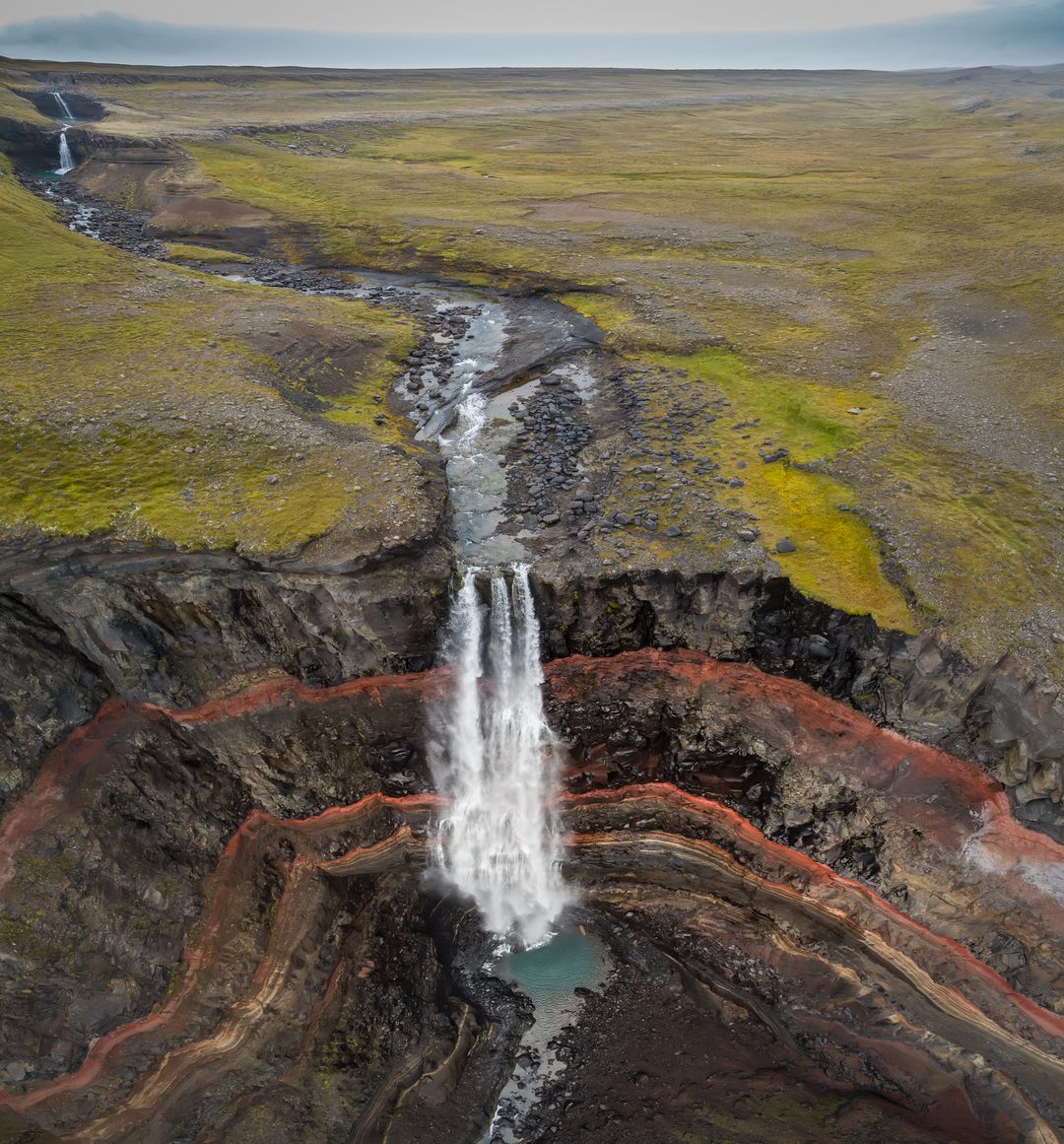
As one of the tallest waterfalls in the country, Hengifoss plummets 128 meters (420 feet) into a massive gorge. The surrounding cliff face is particularly distinctive, featuring striking red clay layers sandwiched between thick slabs of dark basalt. The 2.5-kilometer (1.6-mile) uphill hike to the waterfall also passes the smaller Litlanesfoss cascade. Together, these geological features make Hengifoss one of East Iceland’s most remarkable natural landmarks.
Stuðlagil Canyon
Hidden in the Jökuldalur Valley, Stuðlagil Canyon is home to one of the most impressive basalt column formations in Iceland. A striking turquoise river cuts through towering geometric cliffs, creating a cathedral-like corridor. With symmetrical basalt walls and vivid waters, it almost appears like a mirage rising out of the landscape. While it requires a short detour off Route 1, many travelers consider the trip worthwhile.
Hallormsstaðaskógur Forest
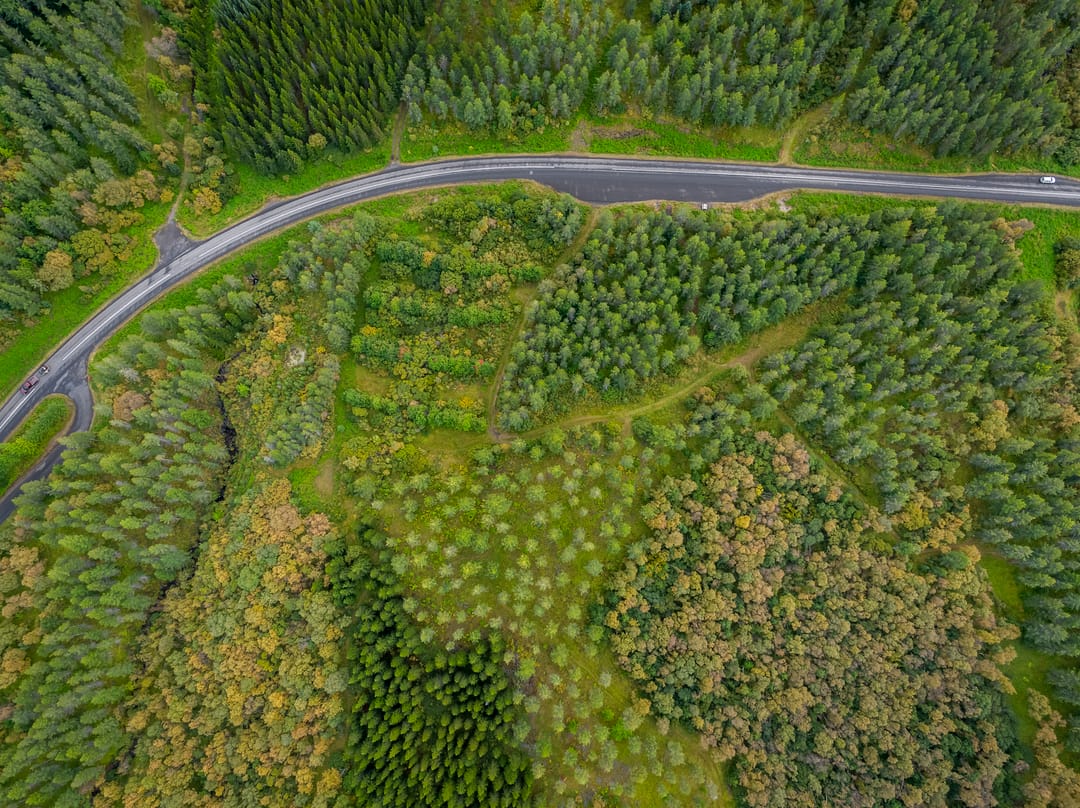
Spanning over 740 hectares along the shores of Lake Lagarfljót, Hallormsstaðaskógur is Iceland’s largest forest. In a country largely devoid of extensive woodlands, this lush green reserve is a refreshing change of scenery. Visitors can explore well-marked hiking trails, diverse tree species, arboretums, and peaceful picnic areas throughout the reserve. Hallormsstaðaskógur is a peaceful eco-destination among the many volcanic and glacial nature attractions on the Ring Road in Iceland.
North Iceland
North Iceland introduces travelers to volcanic landscapes, powerful waterfalls, geothermal areas, and vast lava fields. Along the Ring Road, travelers encounter steaming vents, glacial rivers, and evidence of tectonic forces that continue to shape Iceland.
Dettifoss Waterfall
Located within Jökulsárgljúfur Canyon, Dettifoss is widely regarded as Europe's most powerful waterfall. Fed by glacial meltwater from Vatnajökull, it sends a tremendous volume of sediment-rich water plunging into a rugged canyon below. The waterfall's immense force generates such a constant roar that visitors can often feel the vibrations beneath their feet.
Lake Mývatn
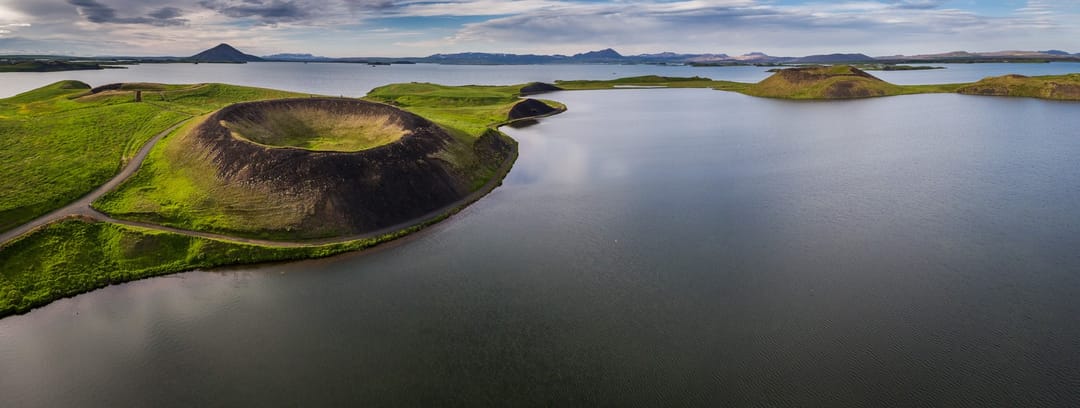
Lake Mývatn is a shallow volcanic lake renowned for its unique geology and rich birdlife. Formed by volcanic eruptions approximately 2,300 years ago, the area is home to an extraordinary variety of landforms. Visitors can explore the otherworldly lava formations of Dimmuborgir and the Skútustaðagígar pseudocraters, both shaped by the region's volcanic past. Combining diverse wildlife with dramatic scenery, Lake Mývatn is among the memorable nature attractions on the Ring Road in Iceland.
Hverir Geothermal Area
Located at the foot of Námafjall mountain, Hverir is a surreal landscape of boiling mud springs, roaring fumaroles, and sulfur-stained soil. The complete lack of vegetation and the intense, billowing columns of steam give the entire area an extraterrestrial atmosphere. Well-marked walking paths allow visitors to safely navigate around the sizzling vents, experiencing the geothermal energy cooking beneath the Earth's crust.
Goðafoss Waterfall
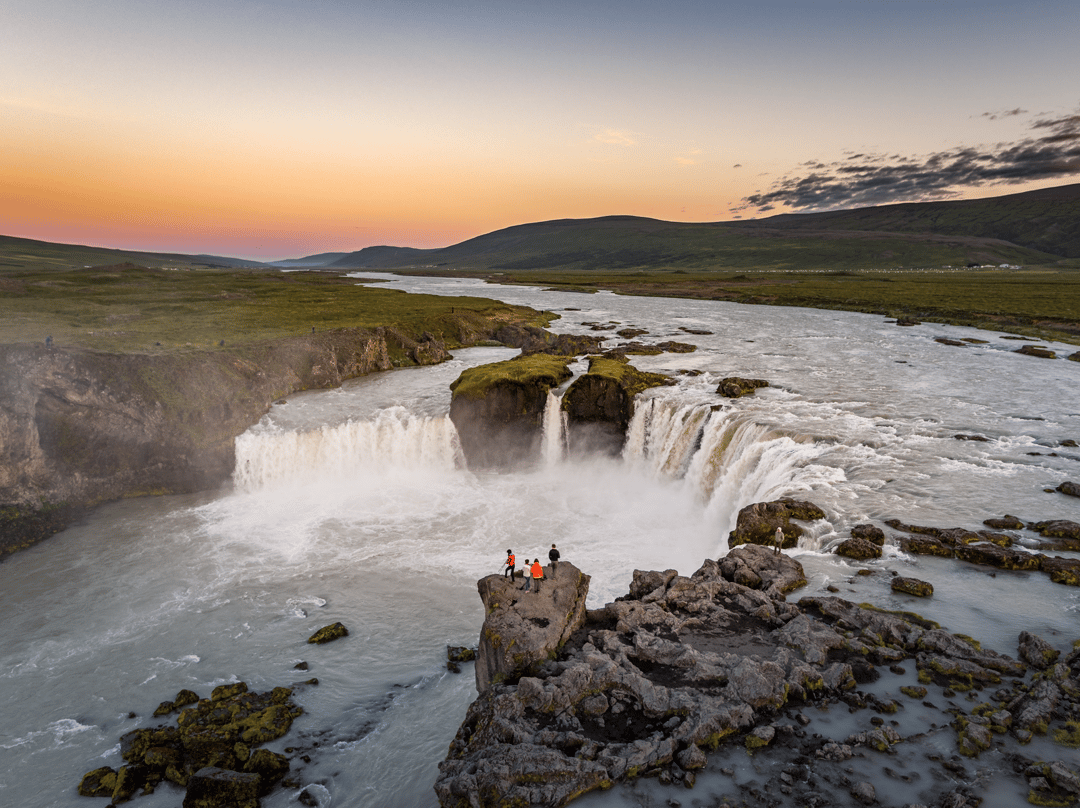
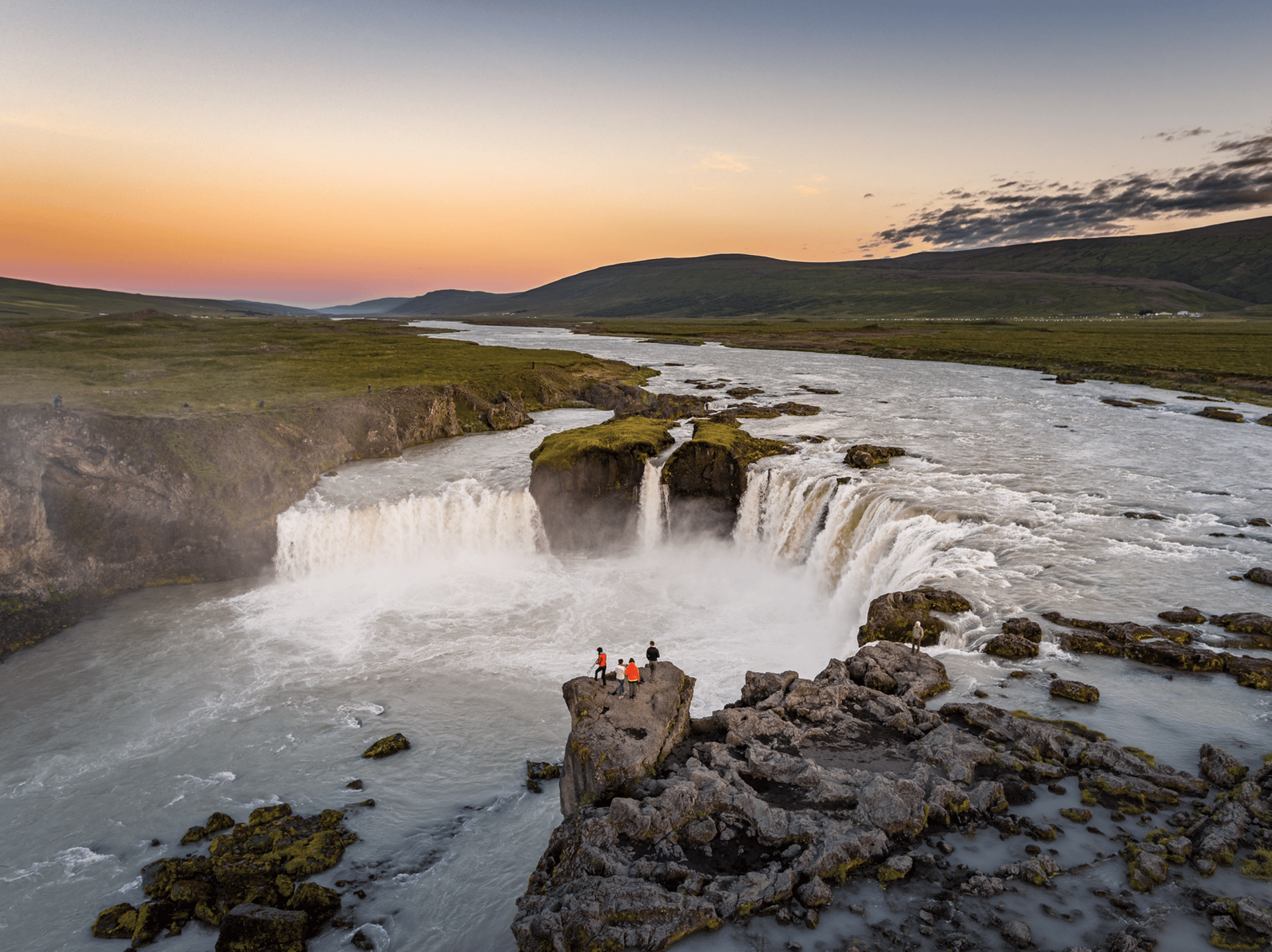
With a name translating to “Waterfall of the Gods,” Goðafoss is undoubtedly special. This broad, horseshoe-shaped cascade is renowned for its graceful flow, which contrasts beautifully with the surrounding volcanic landscape. Beyond its natural beauty, Goðafoss is closely tied to a pivotal moment in Icelandic history. It’s said that lawspeaker Þorgeir Ljósvetningagoði threw his pagan idols into the waterfall after Iceland adopted Christianity around the year 1000.
West Iceland
As the Ring Road enters the Borgarfjörður region, the landscape softens into rolling valleys, birch woodlands, and lava fields. West Iceland provides a quiet but fascinating conclusion to the diverse nature attractions on the Ring Road in Iceland.
Hraunfossar Waterfalls
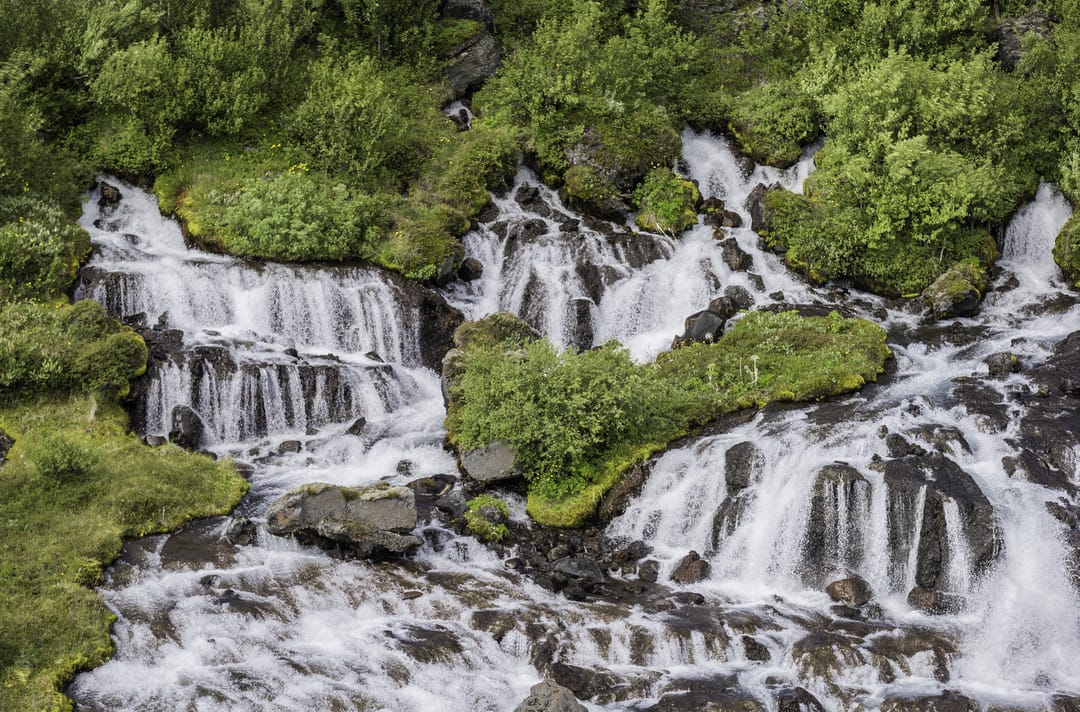
Standing out from thundering glacial drops, Hraunfossar is a remarkably tranquil series of clear streams emerging from the Hallmundarhraun lava field. Water filtered through the porous volcanic rock flows from beneath the lava and cascades into the turquoise Hvítá River. Stretching for nearly 900 meters (2,953 feet), the falls create one of the country's most unique natural spectacles. A short walking path also leads to nearby Barnafoss.
Deildartunguhver Hot Spring
Follow the billowing clouds of steam to Deildartunguhver, Europe's highest-flow hot spring. It produces approximately 180 liters (48 gallons) of near-boiling water every second, supplying hot water to communities throughout West Iceland. Well-maintained boardwalks and safety barriers allow visitors to observe the steaming vents and bubbling springs from a safe distance.
Borgarfjörður Region Landscapes
The broader Borgarfjörður valley serves as a scenic, pastoral backdrop for the final drive along Route 1. This historic area features wide river valleys, fertile farmlands, ancient lava fields, and volcanic landmarks such as Grábrók crater. The landscape offers a gentler contrast to the glaciers, fjords, and rugged mountains found in other regions. Peaceful and diverse, Borgarfjörður provides a fitting conclusion to a tour of nature attractions on the Ring Road in Iceland.
FAQs
Yes, it is the most efficient and comprehensive way to experience Iceland's incredibly diverse landscapes. The Ring Road connects world-famous glaciers, waterfalls, and volcanic fields along one continuous highway.
The entire loop is spectacular and worth exploring. However, popular highlights include the cascades of Skógafoss and Seljalandsfoss, and the floating icebergs of Jökulsárlón Glacier Lagoon.
No, the Golden Circle is a separate sightseeing route near Reykjavík. However, many travelers combine it with a Ring Road itinerary because it includes some of Iceland's most famous attractions.
The summer months (June–August) offer the best driving conditions, long daylight hours, and fully accessible roads. If you want to view the northern lights or explore natural ice caves, a winter trip is ideal.
Without stopping, the 1,332-kilometer (828-mile) loop takes approximately 16 to 17 hours of continuous driving. However, navigating weather changes and enjoying the scenery requires spreading the journey over at least 7 to 10 days.
A standard two-wheel-drive car is perfectly sufficient during the summer since the entire main highway is fully paved. However, a 4x4 vehicle is highly recommended for winter travel or if you plan to venture onto rugged gravel detours.
Popular articles
The Complete Guide to the Northern Lights in Iceland
Learn how the Northern Lights form, where to see them in Iceland, how to prepare, take photos, read the forecast, and improve your chances of a sighting.
Let's Talk About the Volcano in Iceland About to Erupt
Is a volcano in Iceland about to erupt? Here’s what travelers should know about Svartsengi, Reykjanes activity, flights, safety, and the Blue Lagoon.
Solar Eclipse 2026 in Iceland | What Happened
Iceland experienced a total solar eclipse on August 12, 2026. Discover what happened in Reykjavík, eclipse times, totality locations and more.
September 2026 updates on the Sundhnúkagígar Eruption in the Reykjanes Peninsula!
The current eruption in the Reykjanes Peninsula, is called Sundhnúkagígar Crater Row. See insights on the seismic activity and volcanic eruptions in the area!
Active Volcanoes in Iceland 2026
Active volcanoes aren't the same thing as active eruptions. A volcano can be considered active even when it is not ejecting ash, rock, gases and magma, so which are active in Iceland in 2026?
Top 10 Places To See the Northern Lights in Iceland
Discover the best places to see the Northern Lights in Iceland, from Jökulsárlón and Kirkjufell to Reykjavík, Þingvellir and North Iceland.
Ice Caves From Reykjavik
Planning an ice cave trip from Reykjavik? Compare Katla, Langjökull and Vatnajökull, travel times, seasons and Perlan’s ice cave in the city.