
A Guide to Icelandic Fish
From Atlantic cod to Arctic char, discover Icelandic fish, their habitats, role in the food web, and importance to Iceland’s fishing culture.
The North Atlantic waters surrounding Iceland are home to a wide variety of fish species. Fishing has been an important part of life in Iceland for centuries, influencing the country’s economy, food traditions, and coastal communities. While fish may receive less attention than whales, puffins, and other wildlife in Iceland, they are a very important part of the country’s marine ecosystem.
Why Do Fish Thrive in and Around Iceland?
Iceland lies at a marine crossroads where cold, Arctic-influenced waters meet warmer, saltier currents from the Atlantic Ocean. The movement and mixing of these water masses, combined with seasonal daylight and circulating nutrients, support the growth of phytoplankton. These microscopic organisms form the base of a food web that sustains small forage fish, larger predatory species, seabirds, seals, and whales.
Fjords, bays, shallow coastal waters, estuaries, and offshore banks offer a variety of feeding, spawning, and nursery habitats for marine fish. Many species live in sheltered coastal areas as juveniles. Although the use of these habitats and conditions varies considerably between species, they are similar in offering ample food supply and shelter from predators for growing juveniles. Iceland’s rivers and lakes come in three main groups: most are run-off rivers fed by rainfall and snowmelt in springtime, many are spring-fed, and many are fed by glacial runoff. These waters support a very small but distinctive group of freshwater fish.
The fish in both freshwater and marine ecosystems support far more than Iceland’s human population. Fish occupy a central position in food webs in and around the country.
To give some examples:
- Seabirds: Puffins, the Arctic tern, and many other seabirds catch small schooling fish near the coast, particularly when feeding their chicks during the summer breeding season.
- Marine Mammals: Seals in Iceland feed on species such as cod, flatfish, herring, and other marine prey.
- Waterfowl: The diets of ducks in Iceland vary considerably. At lakes such as Mývatn, many feed primarily on aquatic insects, crustaceans, molluscs, or plant matter. Fish-eating species such as mergansers also catch small fish.
Conditions in the sea vary around Iceland. Waters off the south and west are generally warmer due to Atlantic currents, while colder Arctic currents influence the north and east. These differences affect how the various species of fish and marine animals are distributed around the country.
Visitors can dive deeper into Iceland’s aquatic ecosystems at The Ocean exhibition at Perlan in Reykjavík. This cinematic journey explores Icelandic fish, whales, algae, ocean currents, and the interconnected life beneath the waves.
Marine and Freshwater Fish in Iceland
Iceland’s waters support a mix of deep-water predators, coastal species, schooling fish, and migratory freshwater species. Although numerous Icelandic fish species inhabit the surrounding North Atlantic, visitors are most likely to encounter a smaller selection on local menus, at harbours, or in fishing communities.
Cod, Haddock, and Other Marine Fish
Whitefish are among the most commercially important Icelandic fish. None has played a greater role in the country’s fishing history than Atlantic cod. Often promoted as Icelandic cod, the species is closely associated with the nation’s coastal communities and seafood industry. Cod live mainly around the continental shelf, where they feed on smaller fish, crustaceans, and other marine organisms.
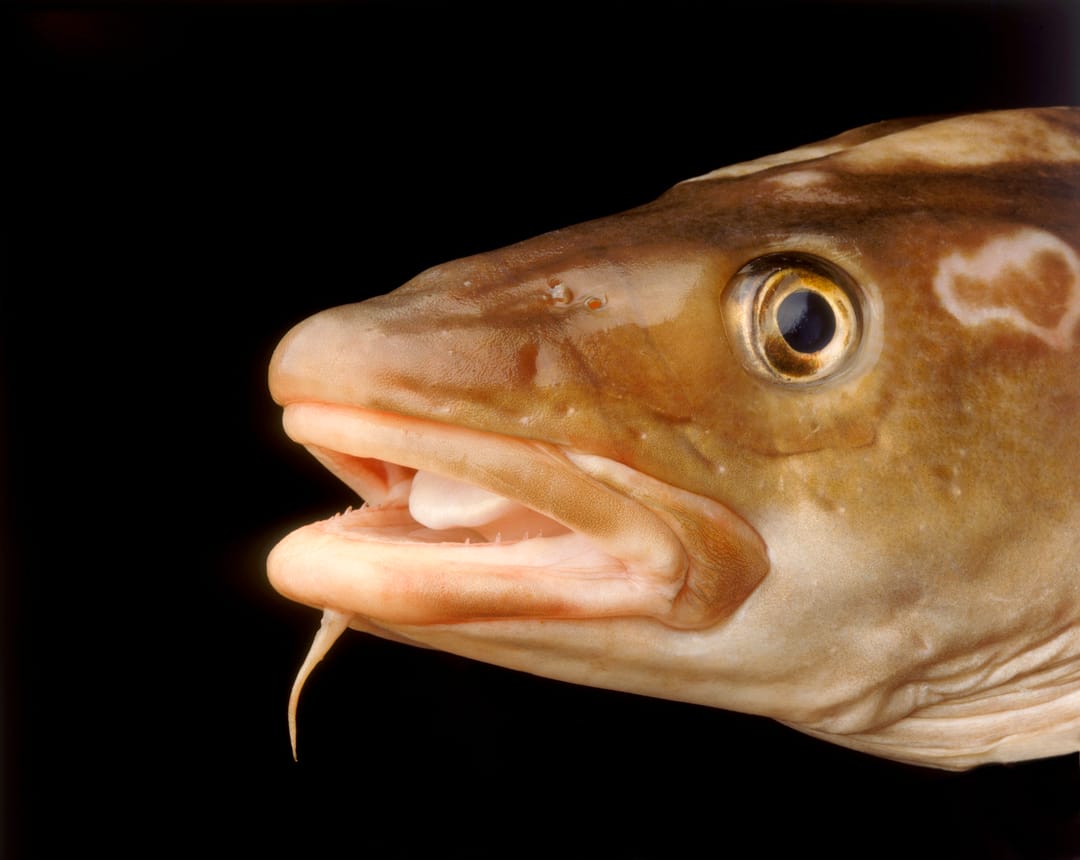
Haddock is another important species, recognisable by the dark line running along its side and the black mark above its pectoral fin. Its flesh is generally softer and sweeter than cod, making it popular for home cooking, fish stews, and fish and chips. Saithe, also known as coley, has darker flesh and a stronger flavour and is likewise widely caught in Icelandic waters.
Many other species contribute to Iceland’s marine biodiversity and fisheries. Halibut and golden redfish are found in deeper waters, while herring and capelin travel in large schools and play an important role in the ocean food web. Herring and capelin provide prey for cod, seabirds, seals, and whales.
Salmon, Trout, and Arctic Char
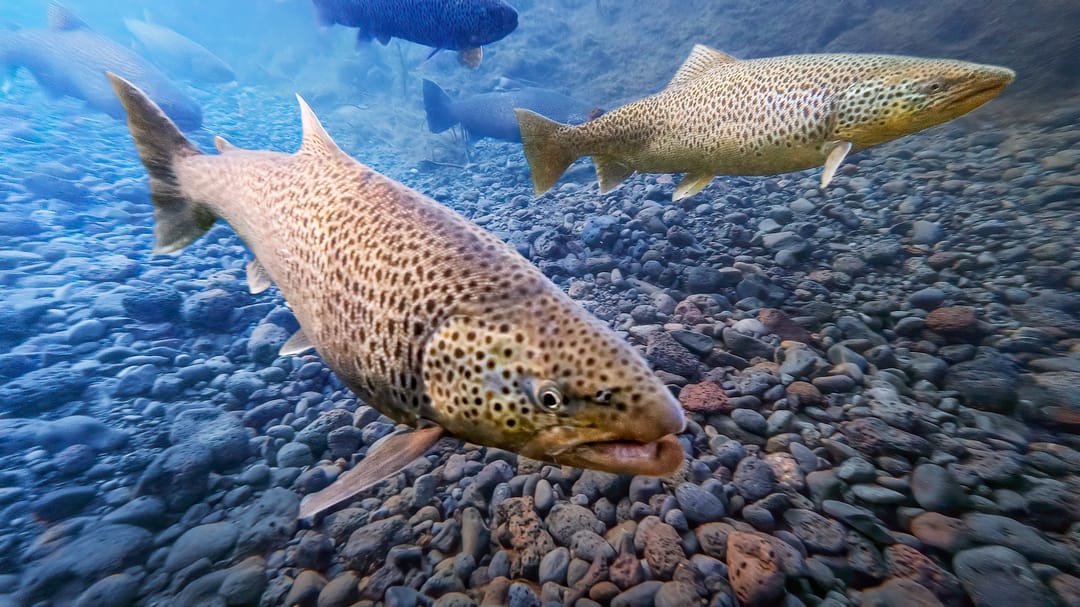
Iceland is known for its cold, clear rivers and lakes with diverse habitats for freshwater fish. As Iceland is positioned far away from the continents, the diversity of native freshwater fish is very limited. Only five species are native to Icelandic fresh waters: Atlantic salmon, brown trout, Arctic char, European eel, and three-spined stickleback. Recently, the sixth species, the European flounder, has been observed in estuaries and lowland waterways.
Icelandic salmon is among the best-known inhabitants of the country’s rivers. As an anadromous species, Atlantic salmon hatch and stay as juveniles for a few years in freshwater before migrating to the sea, where they feed and grow to adult size. In one to three years, they return to freshwater, usually to the river in which they were born, to reproduce. European eels are catadromous, i.e they spend their adult life in lowland streams and wetlands but migrate to the sea for reproduction.
Brown trout and Arctic char are highly adaptable. Their life cycle is shaped by the topography of watersheds. Some populations have become resident, remaining in rivers or lakes throughout their life, while other populations are migratory populations that travel to the sea for better growth conditions. Arctic char has the most northerly distribution of any freshwater fish species, inhabiting a range of rivers and lakes.
Small Fish With a Major Ecological Role
While larger whitefish and migratory salmon often attract anglers and chefs, smaller fish play an equally important role in the ecosystem. The stickleback is among the most versatile of fish species, as it is found in a variety of marine, brackish-water, and freshwater habitats. These small fish are often found in high densities and constitute important food for fish and birds. In the sea, species such as capelin, herring, and sand-eel gather in schools and provide food for larger fish, seabirds, seals, and whales.
Capelin are particularly significant. They spend much of their lives feeding in colder northern waters before migrating towards spawning grounds off the southern and western coast of Iceland. Their seasonal concentrations create valuable feeding opportunities for predators such as cod, humpback whales, seabirds, and seals.
How Fishing Shaped Iceland
For much of Iceland’s history, farming and fishing formed the foundations of everyday life and the national economy. Rural households raised livestock such as sheep, cows, and horses, while coastal communities relied heavily on the sea. Early fishers used small, open wooden boats to catch cod, haddock, and other species close to shore. These journeys could be dangerous, but the catch provided food for local households and valuable goods for trade and export.
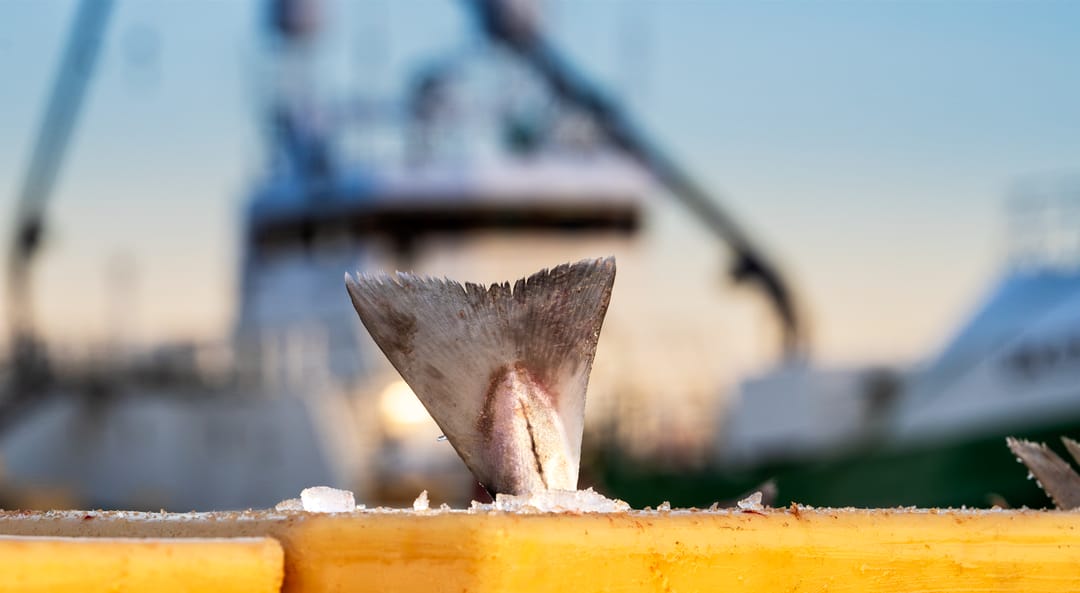
The fishing industry changed dramatically during the 20th century. Motorised vessels allowed crews to travel farther from shore, thus enabling the exploitation of rich offshore fishing grounds. Meanwhile, improved harbours, larger trawlers, refrigeration, freezing plants, and international shipping transformed the Icelandic fish industry. Many coastal villages expanded around fishing and processing, creating jobs and strengthening links with overseas markets.
Today, Iceland manages most commercial fisheries through a system based on scientific stock assessments and catch limits. The Marine and Freshwater Research Institute evaluates the condition of major stocks and provides advice on fishing opportunities. Government authorities then establish regulations and total allowable catches for many species. Together with monitoring and enforcement, these measures are intended to limit overfishing and support the long-term use of Iceland’s marine resources.
When Is the Best Time to Go Fishing in Iceland?
There is no single nationwide fishing season in Iceland. Opening dates, regulations, and conditions vary according to the species, location, and individual river or lake.
Anglers can use the following as general seasonal guidance:
- Salmon Fishing: The main season generally runs from June to September, although exact dates differ between rivers. Fishing rights are privately managed, and places on well-known salmon rivers may need to be reserved well in advance.
- Trout and Arctic Char: Fishing is commonly available from spring to early autumn, depending on the river or lake. Some waters open earlier or remain accessible later than others.
- Sea Angling: Boat trips depart from coastal communities around Iceland, particularly during summer. Some operators run at other times of year, but schedules depend heavily on weather and sea conditions.
- Ice Fishing: This is possible on selected lakes during winter, but only when local conditions and ice thickness make it safe.
Before fishing in a river or lake, visitors must obtain permission from the holder of the fishing rights. One can usually do this by purchasing a permit or booking through an operator. Rules may cover fishing dates, permitted equipment, catch limits, and whether the fish must be released. Fishing equipment that has previously been used outside Iceland must also be cleaned and disinfected before being used.
FAQs
Cod and haddock are among the most widespread and commercially important fish in Icelandic waters. In freshwater, Arctic char is one of the country’s most widely distributed native species.
As the cod has supported coastal communities, trade, and the Icelandic fishing industry for centuries, it has been described as the country’s most iconic fish species. This is best reflected in the history of the Icelandic flag, where flattened cod was featured on some of the earliest proposed flags.
Atlantic wolffish is a large-headed fish recognised by its prominent canine teeth and powerful crushing molars. Known as steinbítur in Icelandic, it is also valued for its firm, mild white flesh.
No, fishing in rivers and lakes requires permission from the holder of the fishing rights, usually through a permit, licence, or booking. Sea-angling trips are widely available through local operators, although regulations and weather conditions still apply.
Although fish meals have become much more varied in the last few decades, cod and haddock are still among the fresh fish most commonly served in Icelandic homes and restaurants. Visitors may also find Arctic char, salmon, wolffish, fish soup, dried fish, and fish and chips on local menus.
Popular articles
The Complete Guide to the Northern Lights in Iceland
Learn how the Northern Lights form, where to see them in Iceland, how to prepare, take photos, read the forecast, and improve your chances of a sighting.
Let's Talk About the Volcano in Iceland About to Erupt
Is a volcano in Iceland about to erupt? Here’s what travelers should know about Svartsengi, Reykjanes activity, flights, safety, and the Blue Lagoon.

Solar Eclipse 2026 in Iceland | What Happened
Iceland experienced a total solar eclipse on August 12, 2026. Discover what happened in Reykjavík, eclipse times, totality locations and more.
September 2026 updates on the Sundhnúkagígar Eruption in the Reykjanes Peninsula!
The current eruption in the Reykjanes Peninsula, is called Sundhnúkagígar Crater Row. See insights on the seismic activity and volcanic eruptions in the area!
Active Volcanoes in Iceland 2026
Active volcanoes aren't the same thing as active eruptions. A volcano can be considered active even when it is not ejecting ash, rock, gases and magma, so which are active in Iceland in 2026?
Top 10 Places To See the Northern Lights in Iceland
Discover the best places to see the Northern Lights in Iceland, from Jökulsárlón and Kirkjufell to Reykjavík, Þingvellir and North Iceland.
Ice Caves From Reykjavik
Planning an ice cave trip from Reykjavik? Compare Katla, Langjökull and Vatnajökull, travel times, seasons and Perlan’s ice cave in the city.