
Guide to Rauðasandur Beach in Iceland
Tucked away in the remote Westfjords, Rauðasandur is a stunning coastline famous for its unique, shifting red and orange sands. Formed by millions of crushed scallop shells, this dramatic landscape offers peaceful wildlife watching, historic folklore, and an unforgettable off-the-beaten-path beach adventure.
When travellers think of beaches in Iceland, many imagine moody stretches of pitch-black volcanic sand. Yet tucked away in the southern reaches of the Westfjords is a very different coastal landscape: Rauðasandur.
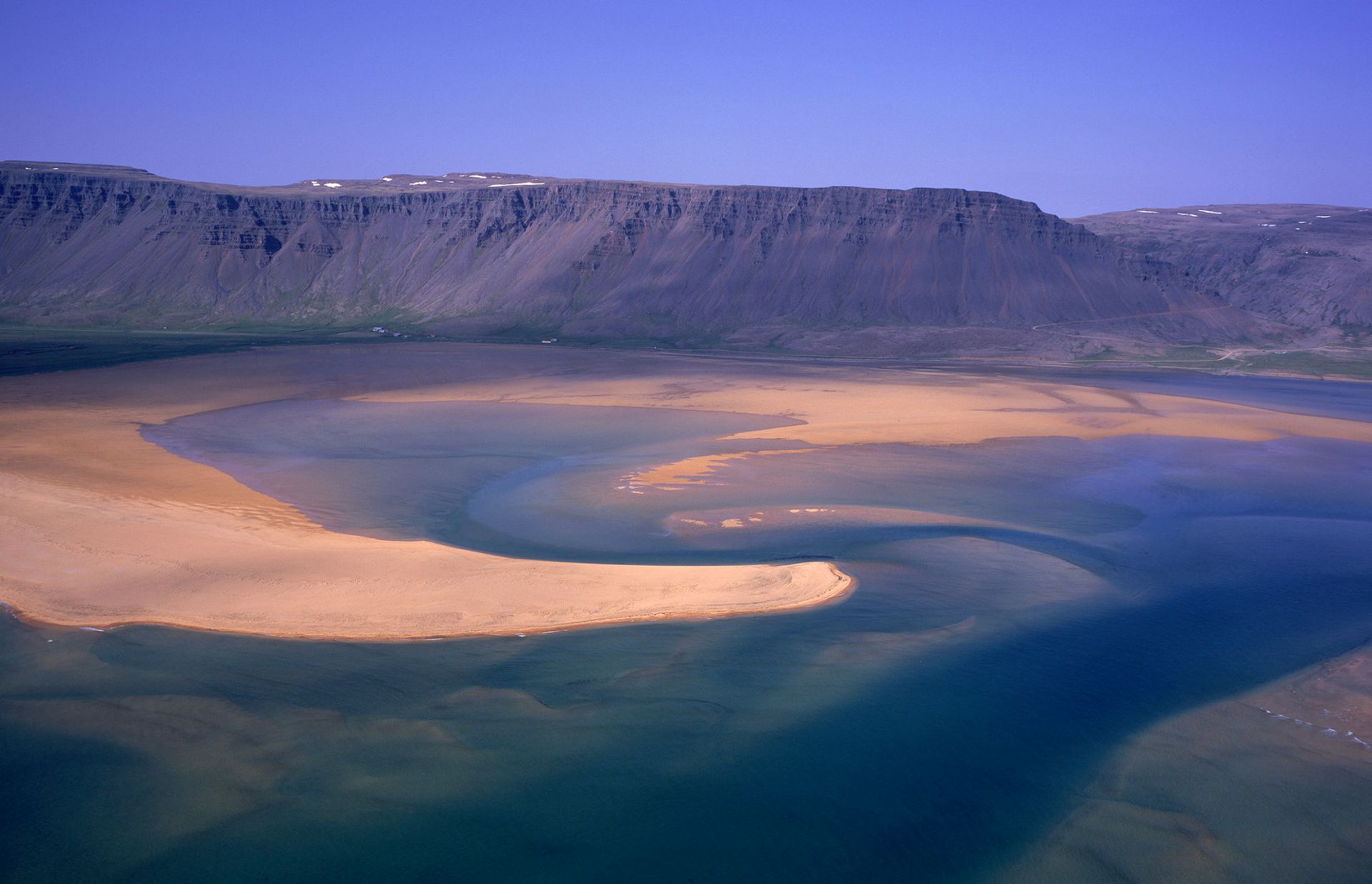
This striking shoreline is one of the most unusual seascapes in Iceland. Instead of dark volcanic sand, Rauðasandur Beach features soft, warm tones ranging from gold and copper to a deep pinkish-orange. It is one of the most stunning beaches in the Westfjords, extending for kilometres under broad skies and coastal slopes. Although it is always a beautiful sight, its appearance shifts with the tides, weather, and ever-changing light.
Why Is Rauðasandur Beach Red?
The name Rauðasandur literally translates to “Red Sand.” However, visitors should not expect a purely crimson shore, as Rauðasandur is not a single-colour beach. Depending on cloud cover, moisture, and tide, the red sand is constantly changing. It can morph into shades of soft pink, orange sand, deep copper, brilliant gold, or even pale, creamy yellow.
The origin of this unusual colour palette comes down to marine biology. The warm tones come largely from countless fragments of crushed shells. The dominant shell species found in the sand is the Iceland scallop (Chlamys islandica), known in Icelandic as hörpudiskur. Over time, powerful ocean currents grind these shells into fine sand and deposit them along this sheltered bay. The rich golden-orange colour is often strongest during the long, low-angle light of summer afternoons and golden hour.
Want to understand more about the forces shaping Iceland’s coasts? Perlan’s Ocean exhibit explores the Atlantic currents, marine life, and ecosystems that influence the island’s surrounding waters. Visiting this Reykjavík museum is an excellent way to add context to the coastal landscapes you experience around Iceland.
The History and Name of Rauðasandur
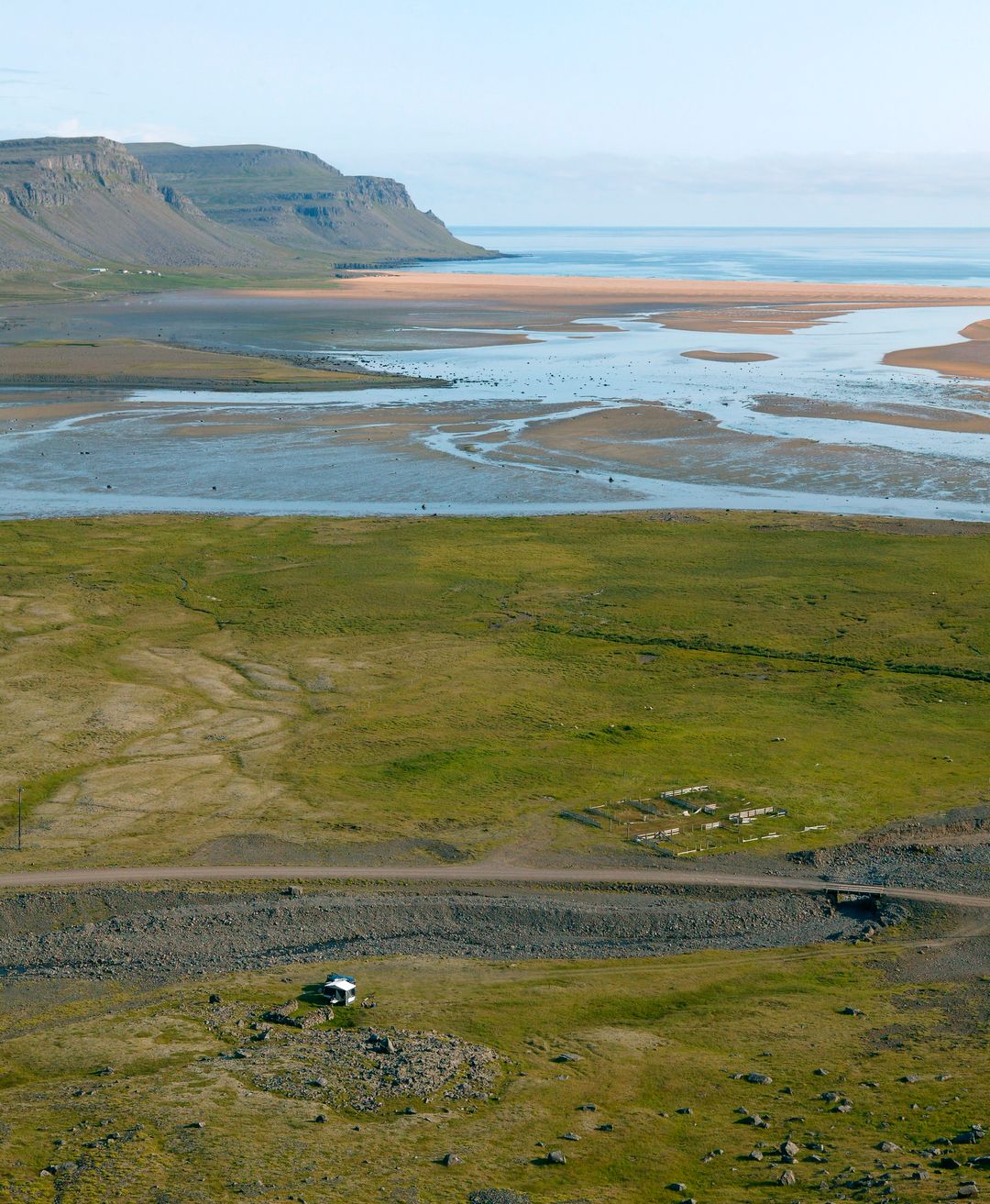
Rauðasandur’s literal translation of “red sand” seems obvious, but one of Iceland’s oldest written sources offers another layer to the story. According to the Book of Settlement, an early settler named Ármóður rauði Þorbjarnarson, or Ármóður the Red, claimed land here. Even so, the reddish hue of the broad sandbank remains the most likely explanation for the place name.
Sjöundá and a Dark Local Story
Beyond its natural beauty, Rauðasandur also has a darker chapter connected to Sjöundá, a remote farmstead in the area. In the early 19th century, Bjarni Bjarnason and Steinunn Sveinsdóttir were involved in a notorious murder case, now part of the Westfjords' history. The grim events at Sjöundá later inspired Svartfugl (The Black Fowl), an acclaimed novel by Icelandic author Gunnar Gunnarsson.
What to See and Do in Rauðasandur
Ultimately, Rauðasandur’s main draw is its sense of remoteness and raw, unspoiled nature.
Walk the Red Sand Beach
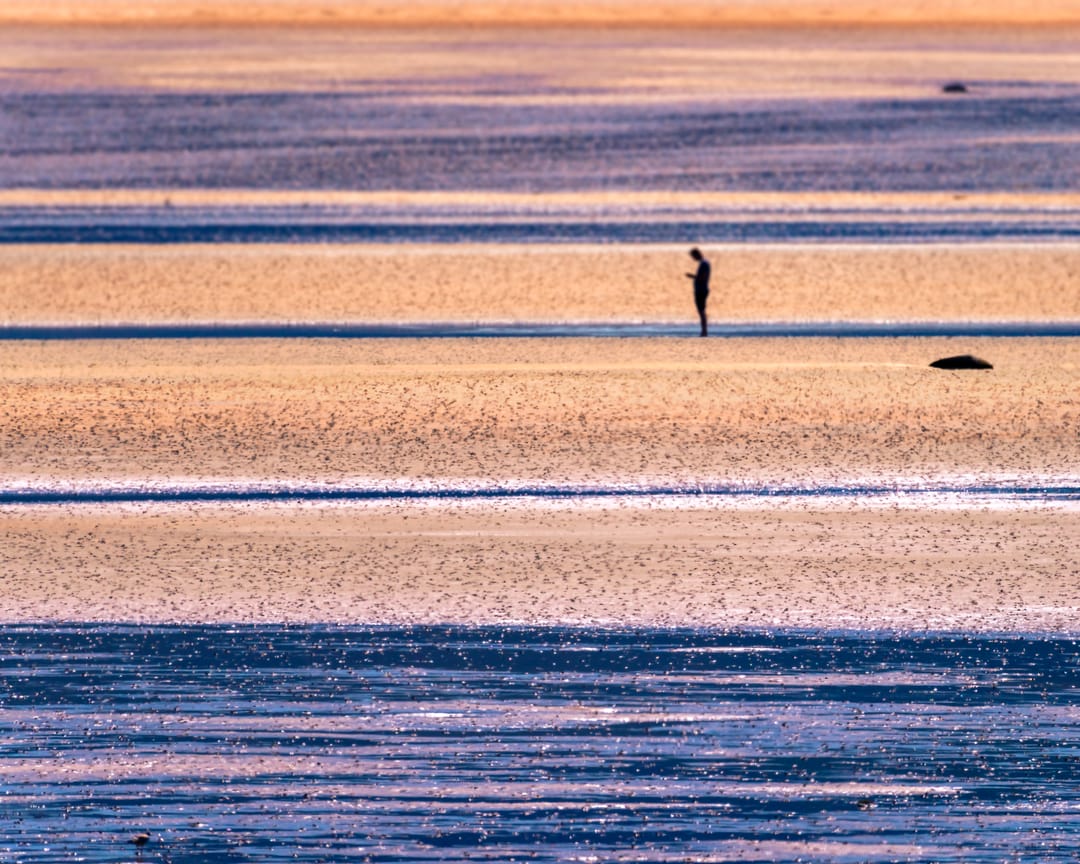
Rauðasandur Beach stretches for roughly 10 kilometres (6.2 miles) from end to end. And so, a long walk along the shoreline is typically the main activity for many visitors. However, the experience is shaped entirely by the tides. At low tide, the receding ocean reveals a broad plain of wet, reflective orange sand that can look like a mirror. At high tide, much of the walking space disappears as Atlantic waves push toward the marshy coastal grasses.
Look for Seals and Birdlife
The quiet sandbanks around Rauðasandur are known for occasional seal sightings. Animals and wildlife are never guaranteed, but observant walkers may spot harbour seals resting near the waterline or swimming just offshore. The surrounding coast also attracts rich Icelandic birdlife. Keep an eye out for gulls, fulmars, and other seabirds gliding over the beach and nearby slopes. Always maintain a respectful distance from resting seals and nesting birds.
Visit Melanes and the Local Campsite
For travellers who want to spend the night by the ocean, Melanes campsite offers a peaceful, simple place to stay. Like many rural facilities in Iceland, the campsite is seasonal and generally operates from May 15 to September 15. However, opening dates can vary depending on weather, road conditions, and staffing. It is always wise to check its current status before planning an overnight stay.
Stop at Franska Kaffihúsið, If Open
In season, travellers may also hear about Franska Kaffihúsið, the French café associated with Rauðasandur. Set near the beach, it’s known as a scenic stop for coffee, light refreshments, and views across the bay. Because services in this remote part of the Westfjords can change, check current opening details before setting out.
How to Get to Rauðasandur
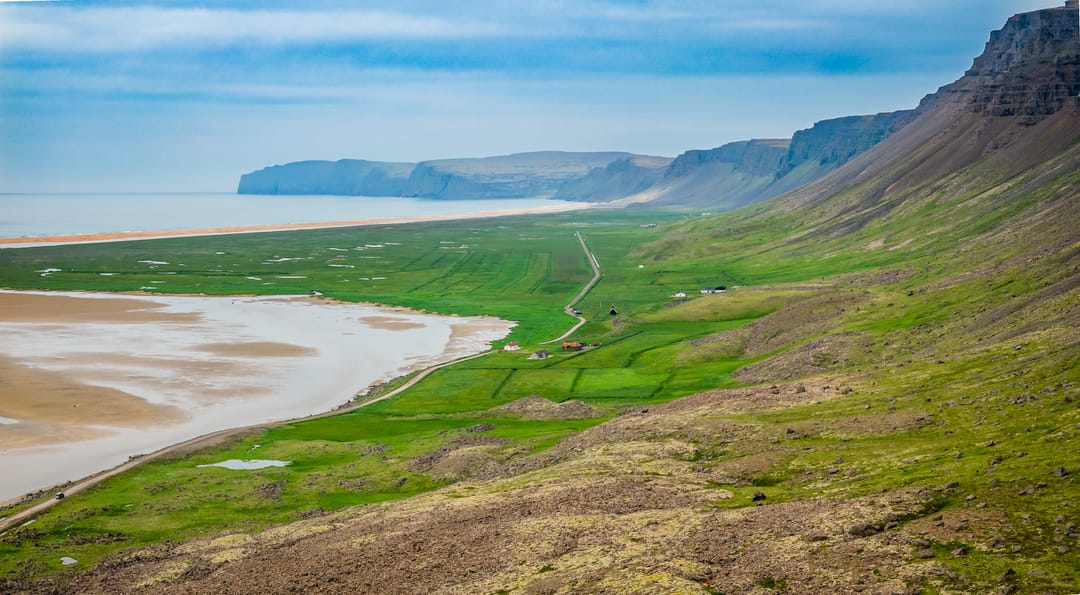
Rauðasandur Beach is situated in the southwestern part of the Westfjords peninsula. Reaching it is part of the adventure, requiring careful attention and a confident driver. Most travellers approach from Patreksfjörður or combine the visit with a detour to Látrabjarg. The route generally follows Road 62, then Road 612, then Road 614, which leads down toward Rauðasandur.
The final descent toward the coast is a steep, winding gravel road with tight bends and narrow sections. Guardrails are limited or absent. Although it is not designated as an official F-road, drivers should take it seriously. Drive slowly, use low gears where appropriate, and avoid the route in high winds, dense fog, snow, or ice. A 4x4 vehicle is not mandatory in summer, but it can offer comfort, stability, and peace of mind on gravel.
Best Time to Visit Rauðasandur Beach
To experience Rauðasandur comfortably, timing your visit with the seasons is essential. The best travel window is generally from late spring through early autumn, especially June through September.
- Summer (June–August): This period usually offers the easiest road conditions, long daylight hours, and the best chance of sunshine. Seasonal access to Melanes campsite is also available.
- Shoulder Season (May and September): The landscape can be beautifully quiet, but conditions are more unpredictable. Late spring snow, autumn storms, strong winds, or changing road conditions can affect travel plans, so flexibility is important.
- Winter (October–April): Winter travel is generally not recommended for casual visitors. The steep gravel road and switchbacks can become difficult or unsafe due to snow, ice, poor visibility, and strong winds.
Rauðasandur is a reminder that water is constantly shaping Iceland, from tides and waves to wetlands, rivers, and glaciers. At Perlan, the Water in Icelandic Nature exhibition explores the diversity of Icelandic water and its role in shaping the land.
Nearby Attractions
With the long journey to the southern Westfjords, it is best to combine your Rauðasandur visit with other regional highlights:
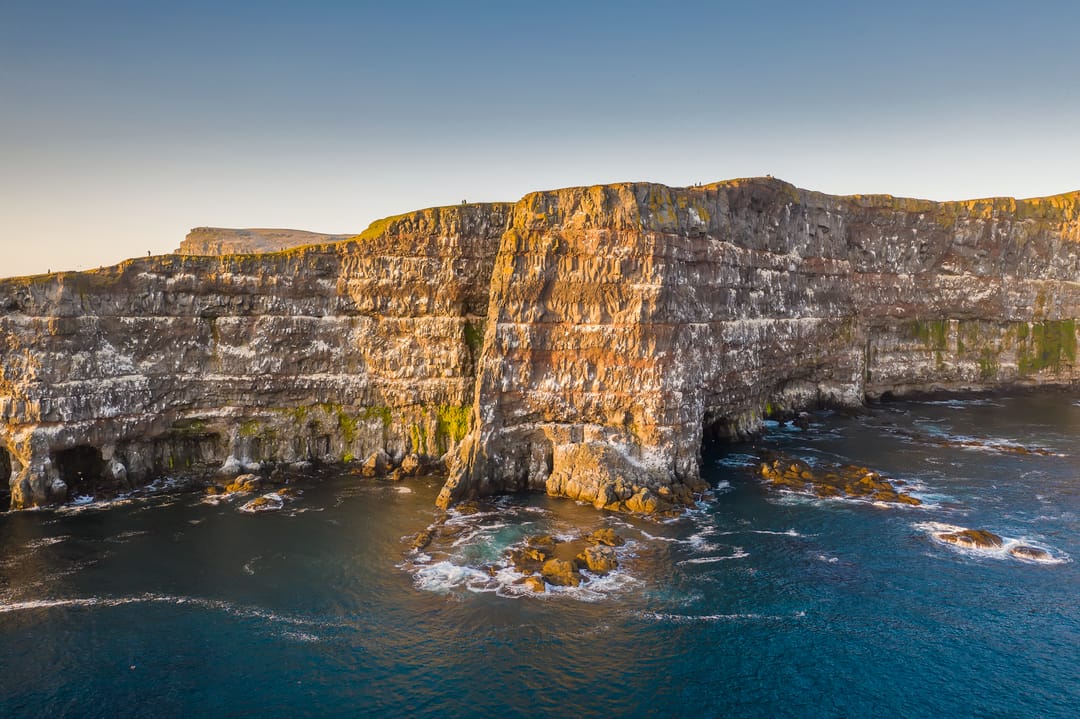
- Látrabjarg Bird Cliff: This towering cliff face is a legendary wildlife haven, home to millions of nesting seabirds. In summer, it is famous for puffins, which nest here and can be seen from a respectful distance.
- Patreksfjörður: The closest large town serves as an excellent base. It offers travellers fuel stations, grocery stores, local restaurants, and overnight accommodations before or after tackling the coastal roads.
- Dynjandi Waterfall: Though located further north along the Westfjords loop, the jewel-like Dynjandi Waterfall is an essential regional stop.
Other Scenic Beaches and Coastal Places in Iceland
Rauðasandur offers a very different coastal experience from other Icelandic shorelines. Travellers exploring beach landscapes might also enjoy sandy Langisandur in West Iceland or the dramatic Elephant Rock formation. The Westman Islands are also home to stunning volcanic shores. Farther east, the mountain-and-black-sand scenery around Vestrahorn and Stokksnes is another coastal highlight.
If you are planning a longer West Iceland route, a Snæfellsnes Peninsula itinerary can also pair well with Rauðasandur. Snæfellsnes Peninsula, often called “Iceland in miniature,” offers a road trip through lava fields, sea cliffs, fishing villages, beaches, and glacier views.
FAQs
Yes, Rauðasandur is worth visiting for travellers already exploring the Westfjords. It requires a careful drive and flexible planning, but its unusual color and wide coastal views make it a memorable sight.
Yes, travellers may see both spellings. Rauðasandur is commonly used in travel writing, while Rauðisandur beach also appears in Icelandic and English sources.
A 4x4 is not always required in good summer conditions, but the final road is steep, winding, and gravel. A higher-clearance vehicle can feel safer and more comfortable, especially in wet or windy weather.
Rauðasandur Beach is better known for walking, photography, and scenery than swimming. The water is cold, tides can change conditions quickly, and there are no typical beach facilities for casual swimming.
Plan at least one to two hours if you want to walk, take photos, and enjoy the scenery. Add more time if you plan to visit Melanes, look for wildlife, or combine Rauðasandur with Látrabjarg.
Popular articles
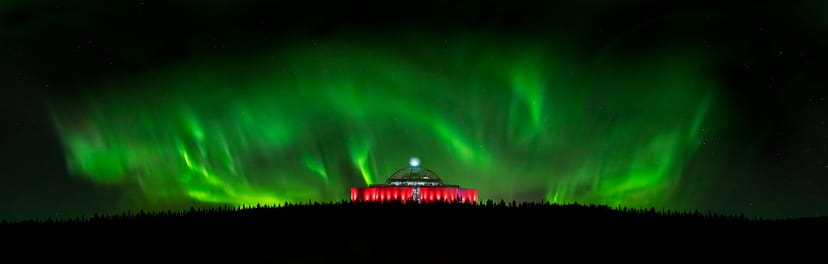
The Complete Guide to the Northern Lights in Iceland
Learn how the Northern Lights form, where to see them in Iceland, how to prepare, take photos, read the forecast, and improve your chances of a sighting.
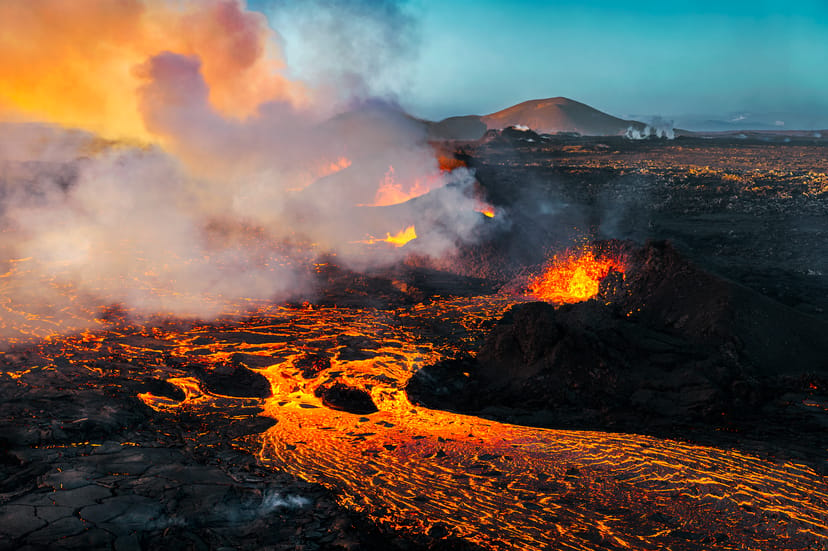
Let's Talk About the Volcano in Iceland About to Erupt
Is a volcano in Iceland about to erupt? Here’s what travelers should know about Svartsengi, Reykjanes activity, flights, safety, and the Blue Lagoon.
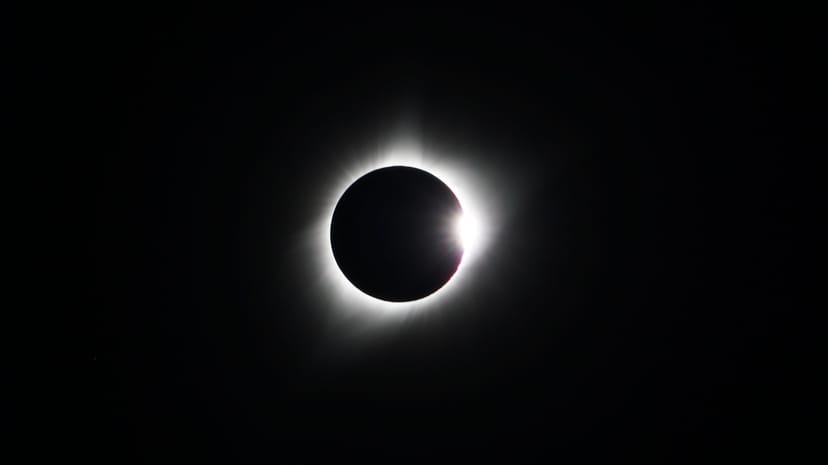
Solar Eclipse 2026 in Iceland | What Happened
Iceland experienced a total solar eclipse on August 12, 2026. Discover what happened in Reykjavík, eclipse times, totality locations and more.
September 2026 updates on the Sundhnúkagígar Eruption in the Reykjanes Peninsula!
The current eruption in the Reykjanes Peninsula, is called Sundhnúkagígar Crater Row. See insights on the seismic activity and volcanic eruptions in the area!
Active Volcanoes in Iceland 2026
Active volcanoes aren't the same thing as active eruptions. A volcano can be considered active even when it is not ejecting ash, rock, gases and magma, so which are active in Iceland in 2026?
Top 10 Places To See the Northern Lights in Iceland
Discover the best places to see the Northern Lights in Iceland, from Jökulsárlón and Kirkjufell to Reykjavík, Þingvellir and North Iceland.
Ice Caves From Reykjavik
Planning an ice cave trip from Reykjavik? Compare Katla, Langjökull and Vatnajökull, travel times, seasons and Perlan’s ice cave in the city.