
Lóndrangar: Guide to Iceland’s Dramatic Sea Cliffs
Learn about Lóndrangar, the striking volcanic cliffs on Iceland's Snæfellsnes Peninsula. The twin basalt cliffs are known for their scenic trails, folklore, and abundant birdlife.
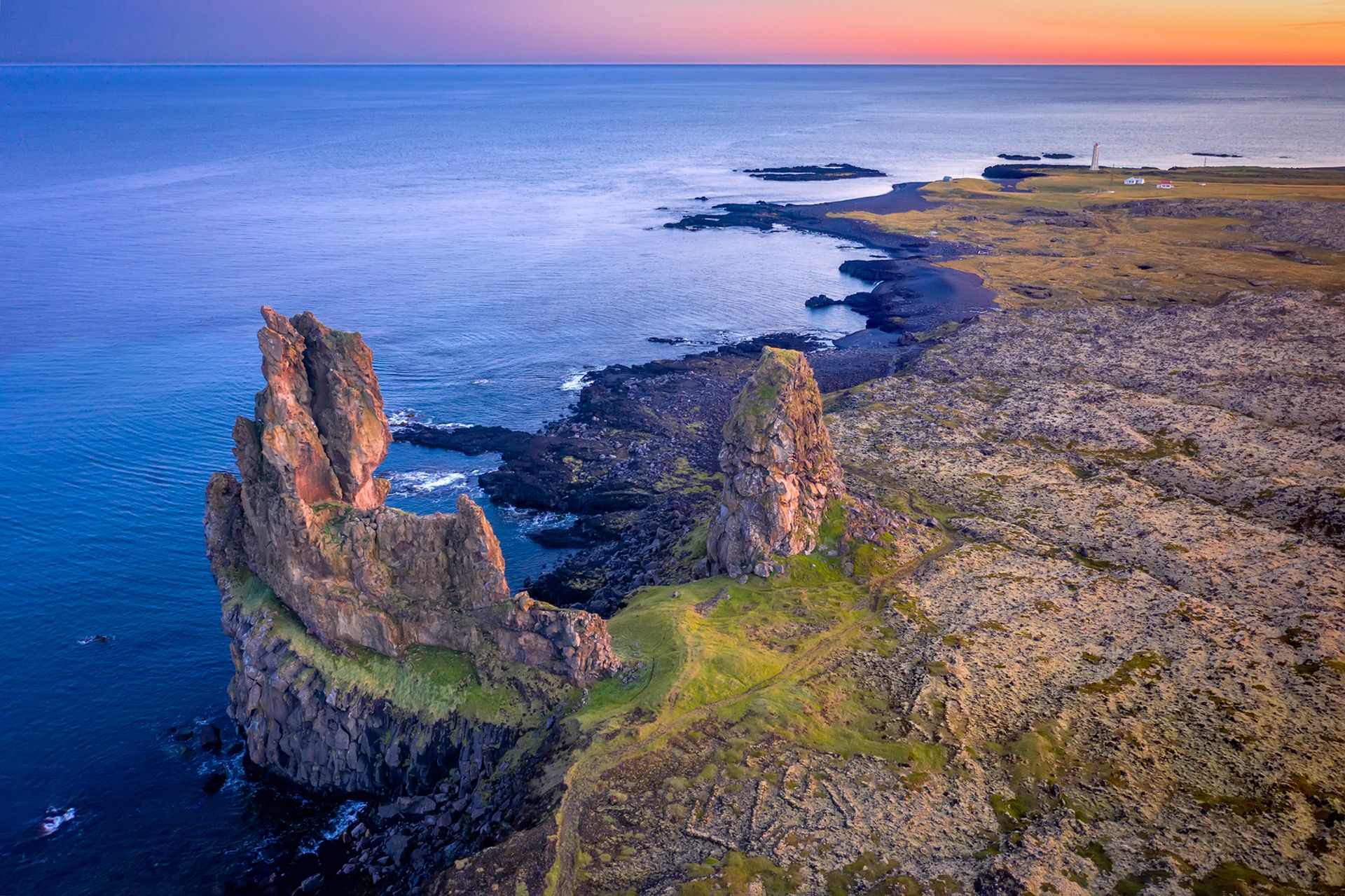
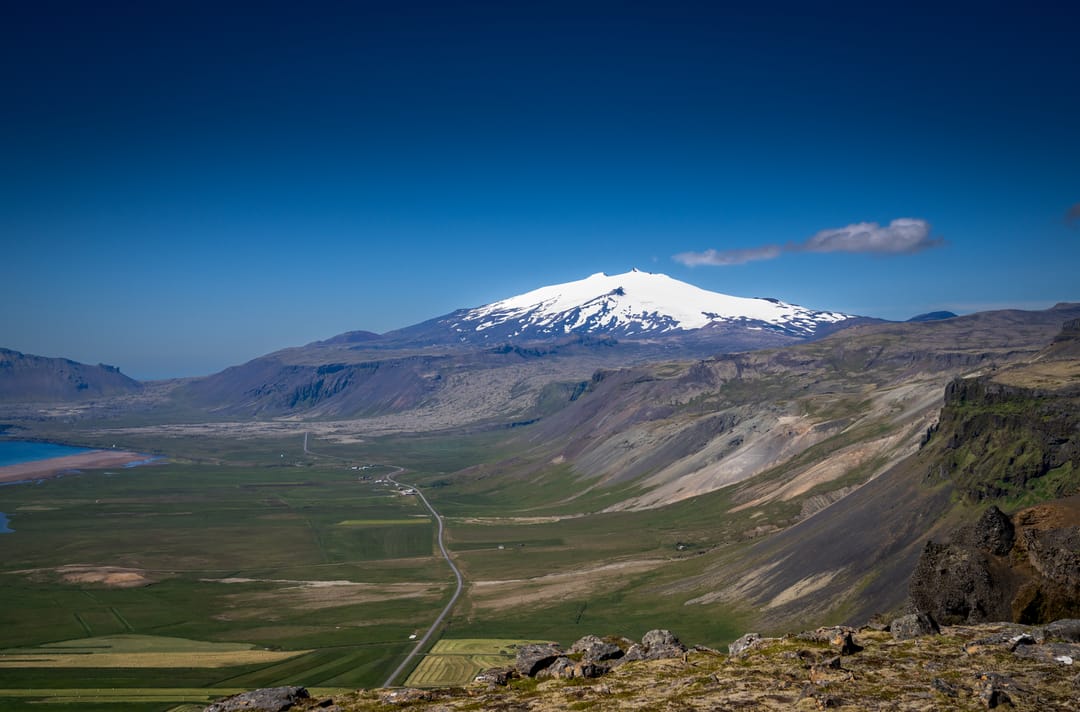
On the edge of the Snæfellsjökull National Park, the Lóndrangar cliffs rise out of the wild North Atlantic coast. The pair of basalt cliffs is among the most distinctive coastal features of the Snæfellsnes Peninsula. These formations rise along the southern coastline and attract photographers, hikers, and visitors interested in local folklore.
What Are the Lóndrangar Cliffs?
In geological terms, Lóndrangar consists of two volcanic plugs, which are hardened basalt pillars left behind from an ancient crater. Located on the southern shore of the Snæfellsnes Peninsula, these formations are surrounded by a rugged volcanic landscape. Here, basalt cliffs and lava fields stretch to the sea.
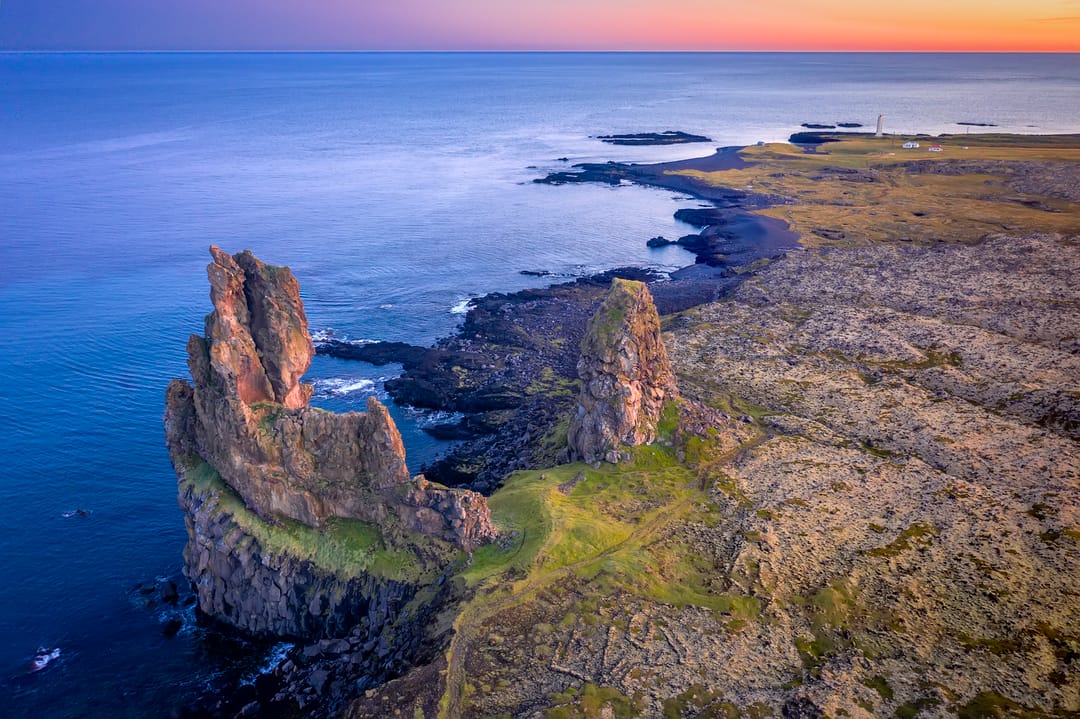
A volcanic plug forms when magma solidifies within a volcanic vent. Over thousands of years, erosion can wear away the soft volcanic material and expose the harder rock within. At Lóndrangar, marine erosion gradually reshaped the old crater, leaving the striking formations at the coastline today. The taller formation reaches 75 metres (246 feet) above sea level, while its smaller companion stands at 61 metres (200 feet).
Readers who are fascinated by the volcanic origins of Iceland’s attractions can explore further at Perlan in Reykjavík. Its exhibitions bring Icelandic nature to life through immersive displays, including a realistic reconstruction of the puffin-favourite Látrabjarg bird cliff.
What to See and Do at Lóndrangar
The area around Lóndrangar is ideal for those looking for open ocean views. A walking path follows the coast between Svalþúfa and Malarrif, passing the Lóndrangar formations and offering views of nearby Þúfubjarg sea cliff.
Of course, the main draw is the two pinnacles framed by the Atlantic Ocean. From the clifftop trails, you can watch giant swells crashing against the dark, rocky shoreline.
Additionally, the Lóndrangar area is a pleasant birdwatching site. Seabirds are abundant throughout Snæfellsjökull National Park, with fulmars and kittiwakes among its common species. Black guillemots are common around Lóndrangar and the nearby Malarrif lighthouse.
Folklore and History of Lóndrangar
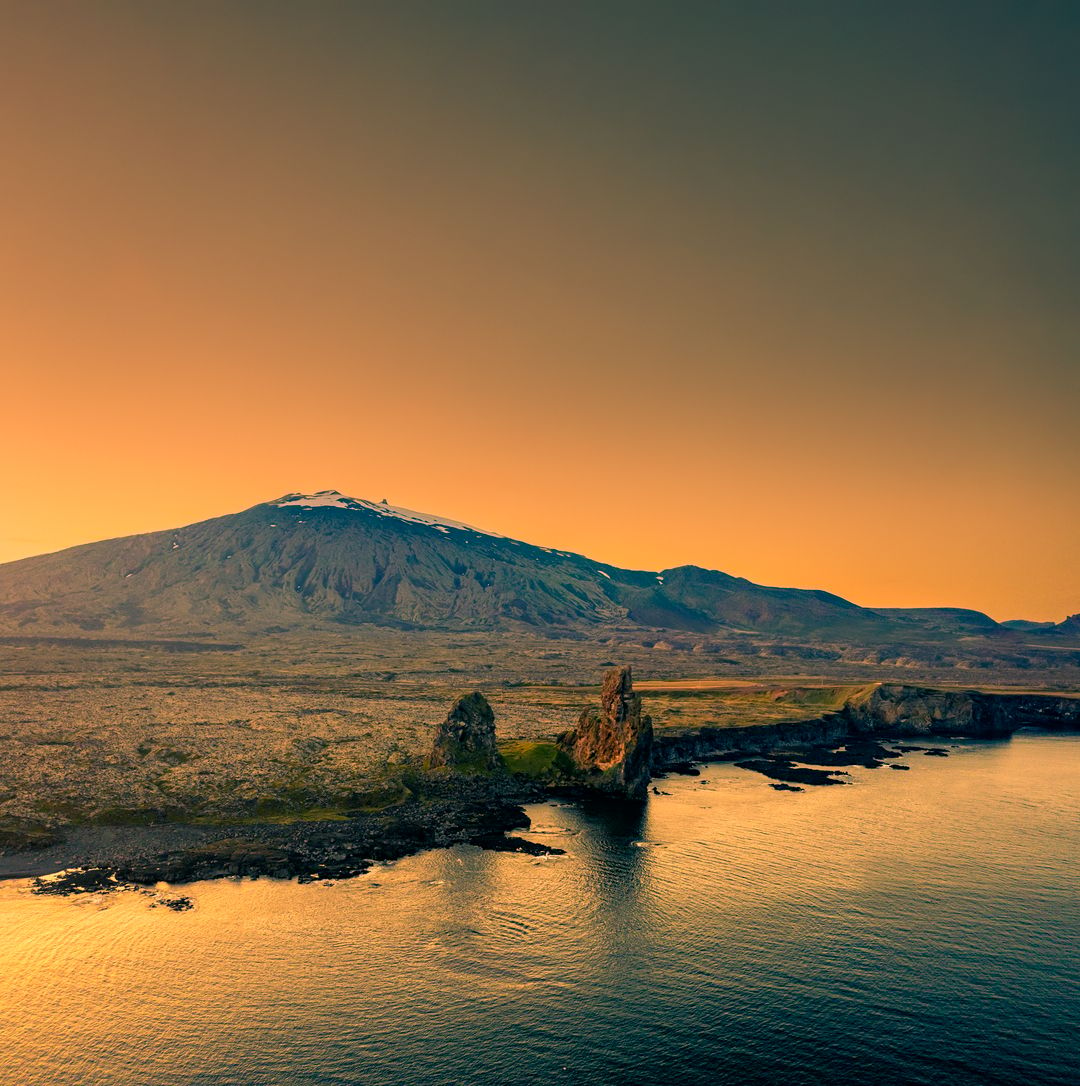
Icelandic sites are deeply rooted in local folklore, and Lóndrangar is no exception. Traditionally, the grassy hill of Svalþúfa beside Lóndrangar was said to belong to the elves. Local farmers therefore avoided cutting hay on the hill out of respect for its supposed supernatural inhabitants.
Another legend tells that the Devil and the poet Kolbeinn Grímsson engaged in a poetic duel on the cliff's edge, and that Kolbeinn triumphed by devising a new poetic meter that now bears his name.
Beyond the folklore, the pinnacles also have a history of daring climbs. The taller Lóndrangar pillar was first climbed in 1735, while the smaller pinnacle was not successfully climbed until 1938.
How to Get to Lóndrangar
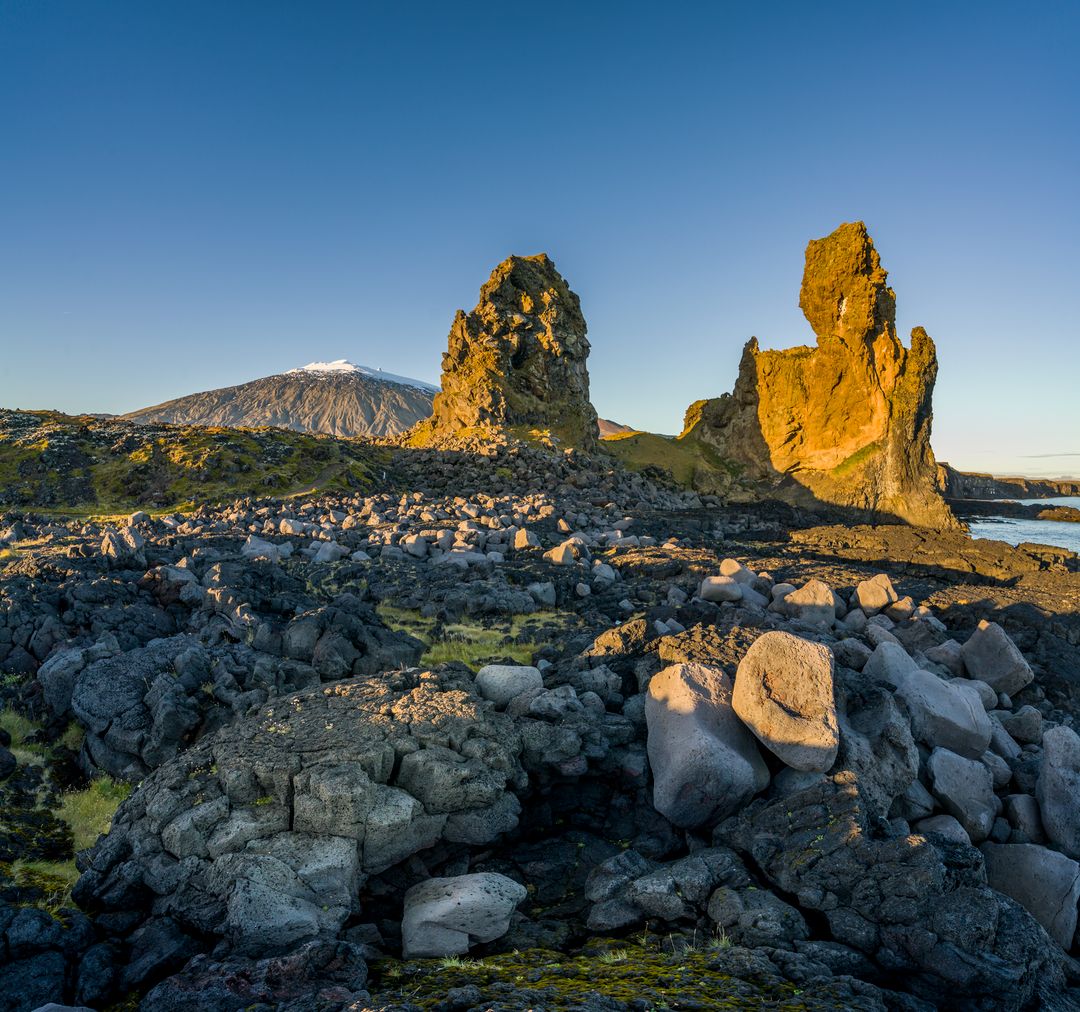
Lóndrangar is situated within Snæfellsjökull National Park near the western edge of the Snæfellsnes Peninsula. The site is easily reached by car from Route 574, which loops around the outer part of the peninsula.
Parking is available at both Svalþúfa and Malarrif. A marked 2-kilometre (1.2-mile) coastal trail connects the two locations, passing Lóndrangar along the way.
Nearby Attractions
Most travellers combine an opportunity to visit Lóndrangar with stops at the Malarrif Lighthouse or the sea arch at Gatklettur. However, the basalt cliffs also pair well with a wider Snæfellsnes itinerary.
Other worthwhile stops include Saxhóll Crater and the striking orange Svörtuloft Lighthouse, both on the western side of the peninsula. Farther along, travellers can explore Berserkjahraun Lava Field, Bjarnarfoss and Eldborg Crater. Those continuing south through West Iceland can also consider hikes at Akrafjall and Hafnarfjall.
FAQs
Yes. Lóndrangar is a scenic coastal stop combining volcanic scenery, walking trails, birdlife and local folklore.
The larger basalt pinnacle reaches 75 metres (246 feet) high. Meanwhile, the smaller one stands 61 metres (200 feet) above the ocean.
Lóndrangar is volcanic in origin. Magma solidified within an ancient volcanic system, while marine erosion helped expose and shape the basalt formations seen today.
Plan for around 45 to 90 minutes to explore the viewpoints, take photos and walk part of the coastal trail. If you have more time, you can walk the full route between Svalþúfa and Malarrif.
Summer (June to August) offers mild weather, long daylight hours, and abundant birdlife. If visiting during the shoulder seasons, bring windproof and waterproof layers, as coastal weather conditions change quickly.
Popular articles
The Complete Guide to the Northern Lights in Iceland
Learn how the Northern Lights form, where to see them in Iceland, how to prepare, take photos, read the forecast, and improve your chances of a sighting.
Let's Talk About the Volcano in Iceland About to Erupt
Is a volcano in Iceland about to erupt? Here’s what travelers should know about Svartsengi, Reykjanes activity, flights, safety, and the Blue Lagoon.
Solar Eclipse 2026 in Iceland | What Happened
Iceland experienced a total solar eclipse on August 12, 2026. Discover what happened in Reykjavík, eclipse times, totality locations and more.
September 2026 updates on the Sundhnúkagígar Eruption in the Reykjanes Peninsula!
The current eruption in the Reykjanes Peninsula, is called Sundhnúkagígar Crater Row. See insights on the seismic activity and volcanic eruptions in the area!
Active Volcanoes in Iceland 2026
Active volcanoes aren't the same thing as active eruptions. A volcano can be considered active even when it is not ejecting ash, rock, gases and magma, so which are active in Iceland in 2026?
Top 10 Places To See the Northern Lights in Iceland
Discover the best places to see the Northern Lights in Iceland, from Jökulsárlón and Kirkjufell to Reykjavík, Þingvellir and North Iceland.
Ice Caves From Reykjavik
Planning an ice cave trip from Reykjavik? Compare Katla, Langjökull and Vatnajökull, travel times, seasons and Perlan’s ice cave in the city.