
Guide to Stöng in þjórsárdalur Valley: The Pompeii of Iceland
Stöng in Þjórsárdalur Valley is a Viking-era farm that stands as a significant archeological gem in South Iceland. Often called the “Pompeii of Iceland,” this site invites travelers to step into medieval Icelandic history. Here, the ruins of a once-prosperous Viking settlement remain. Today, visitors can view the original stone foundations or visit the nearby reconstruction.
History of Stöng and the Hekla Eruption
During the early settlement of Iceland, the Þjórsárdalur valley was a fertile region home to around 20 different Viking farms. The most prominent was Stöng, a wealthy Commonwealth farm and manor.
In 1104, the volcano Hekla erupted for the first time in recorded history, blanketing the entire valley in thick volcanic ash. While the residents likely escaped, the farmstead in Iceland became uninhabitable, its roof crushed under the weight of the ash. Buried and forgotten, the Viking settlement vanished from the map for over 800 years.
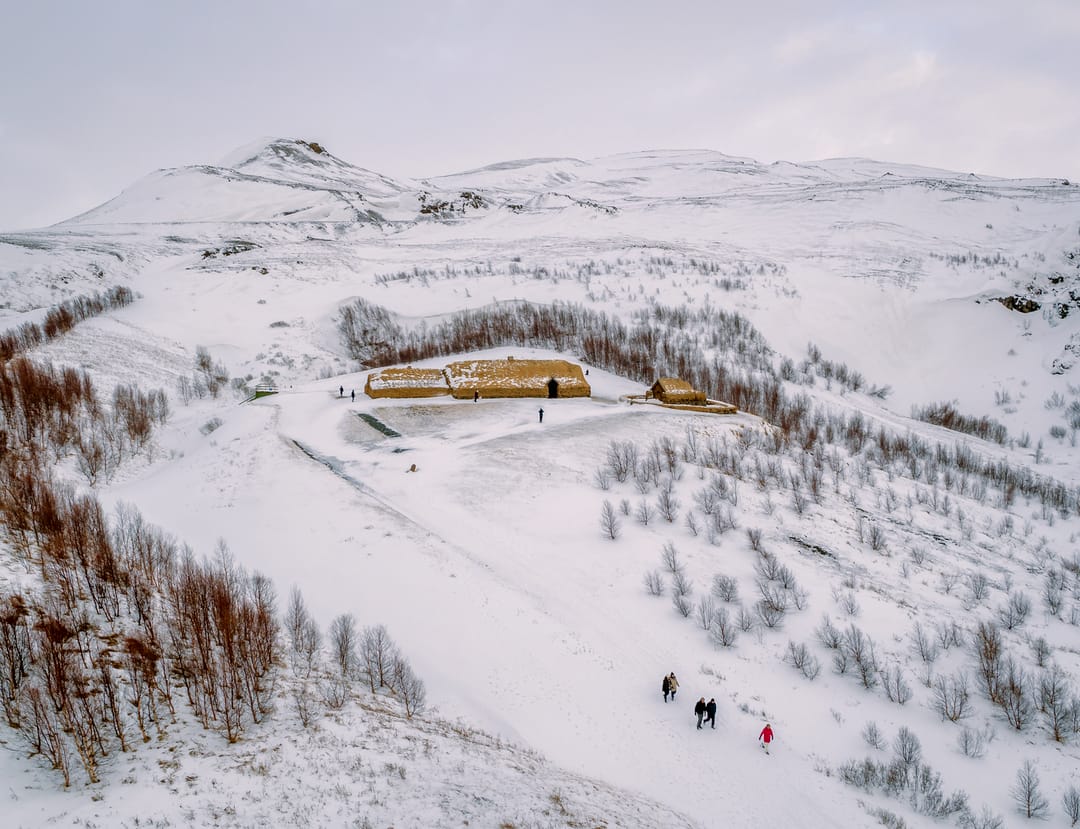
It wasn’t until 1939 that a team of Nordic archaeologists excavated the site. The volcanic ash ultimately served as a preservative; the team discovered the remarkably intact stone foundations of a medieval longhouse. The findings at Stöng in Þjórsárdalur provided the primary blueprint for our understanding of medieval Icelandic life.
To see how these volcanic forces continue to shape the island today, visit Perlan in Reykjavík. The fully immersive Into the Volcano exhibit invites visitors to experience the raw intensity of volcanic activity beneath the earth.
What to See at the Original Ruins of Stöng
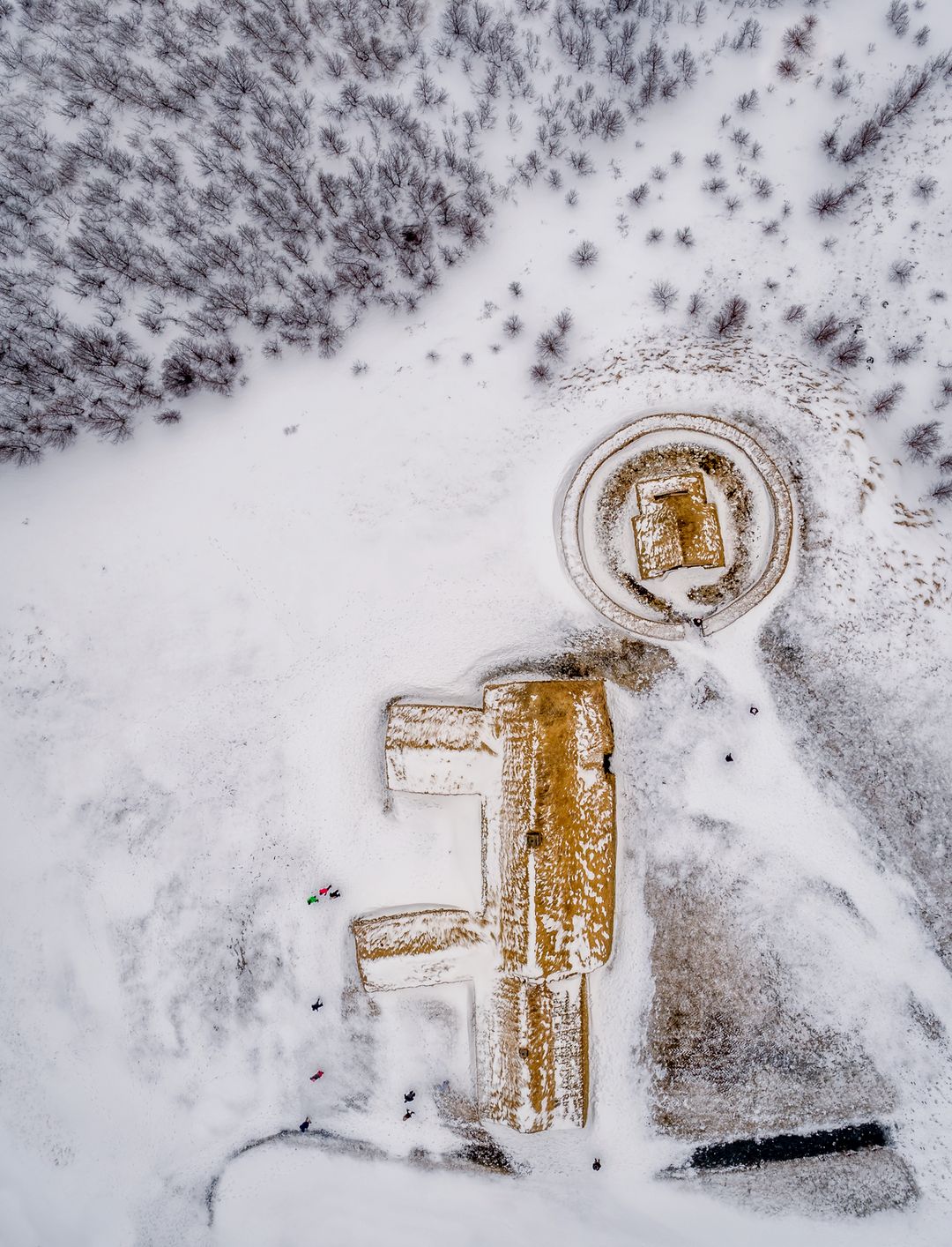
The original ruins of Stöng in Þjórsárdalur are located a short distance from the main road. Unlike the reconstructed farm, these are the authentic stone and turf foundations unearthed in 1939. A newly renovated protective building now covers the site to shield the delicate masonry from the elements.
Inside, a raised observation walkway allows visitors to look down onto the clear layout of the medieval longhouse. You can see the central hearth where fires once roared, as well as the raised side platforms used for sleeping and handiwork. Keep an eye out for smaller side rooms like the pantry and the indoor latrine, as well. The scale and engineering of the longhouse showcase the wealth of this Commonwealth farm before the eruption of Hekla in 1104.
Visiting the Reconstructed Þjóðveldisbærinn
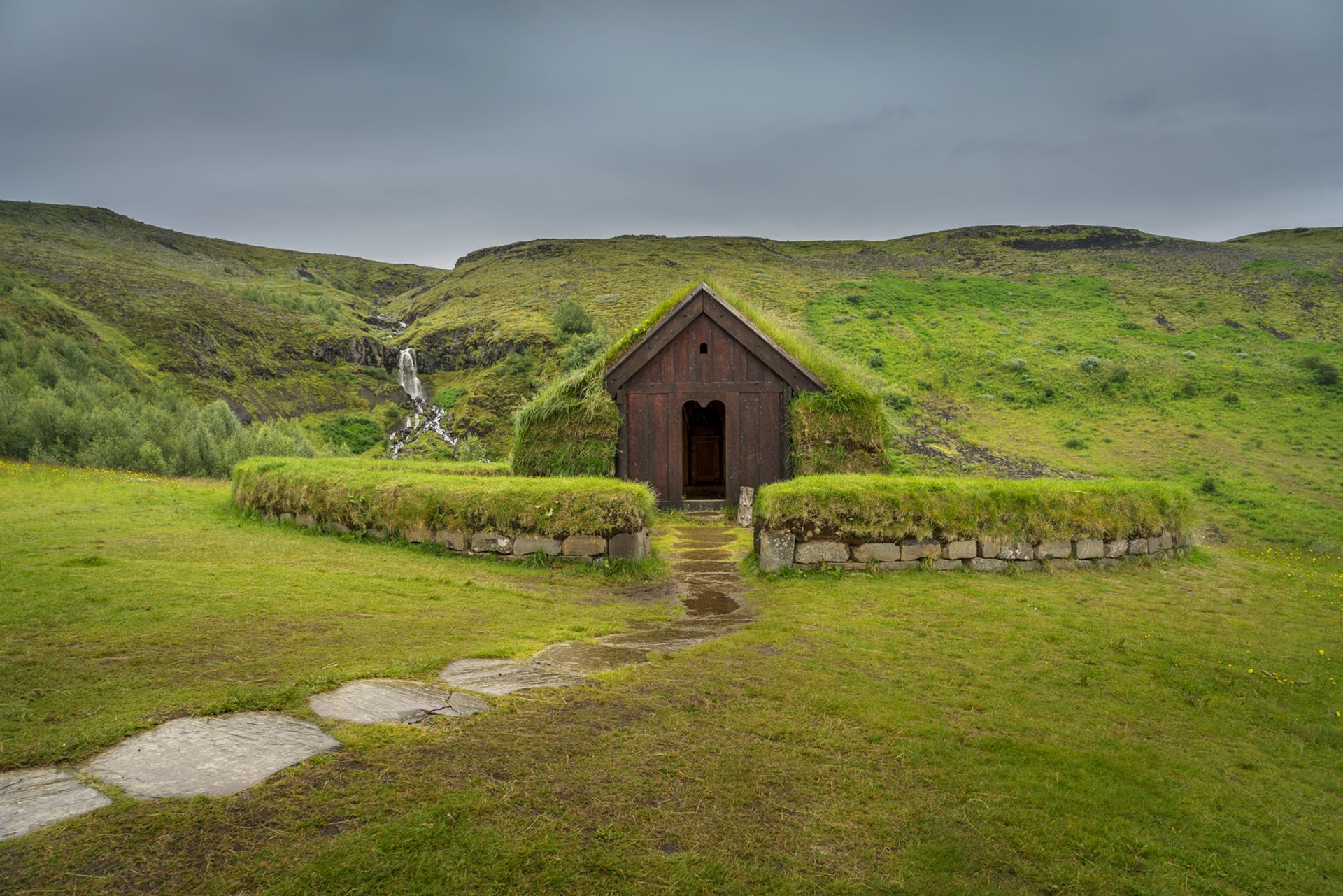
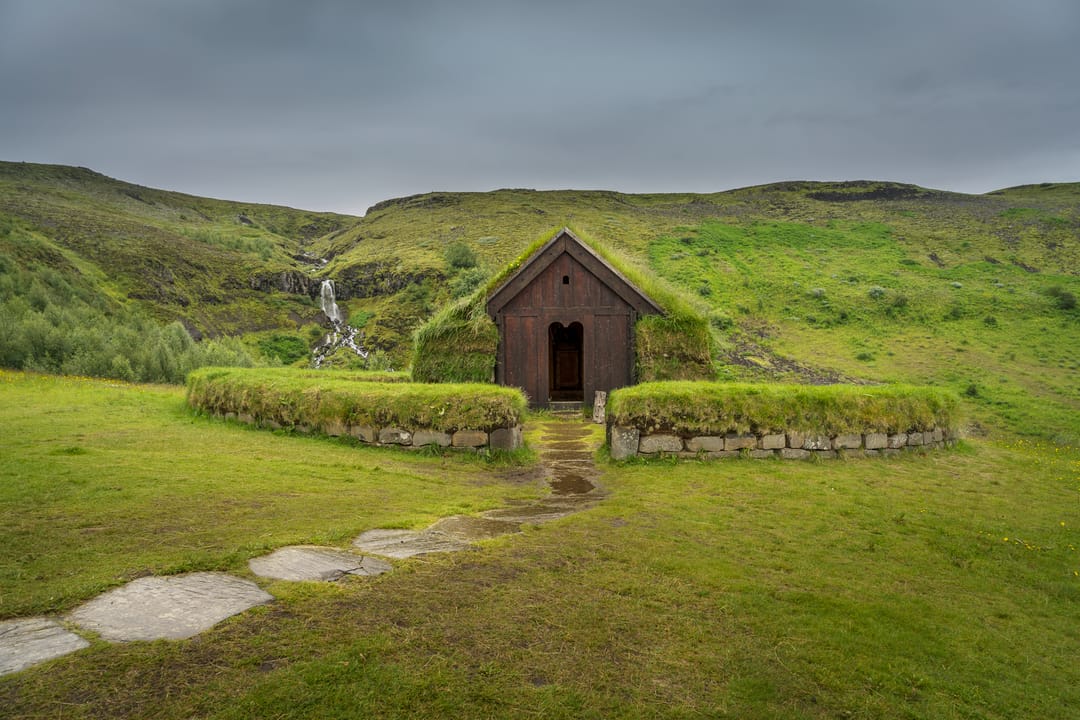
Located approximately 4.3 miles (7 kilometers) from the original ruins of Stöng in Þjórsárdalur is the reconstructed Commonwealth farm, Þjóðveldisbærinn. It was built in 1974 to celebrate the 1100th anniversary of the settlement, offering a vivid look at the past.
Þjóðveldisbærinn was meticulously modeled after the floor plan of the original Stöng manor. It features thick turf walls and a heavy sod roof; traditional insulation designed to withstand the brutal Icelandic winters. Inside, the sleeping areas, central hearth, and even the large whey vats are recreated using medieval Icelandic techniques. A small turf-clad stave church stands nearby, modeled after a 13th-century chapel excavated at the original site.
Visiting the Þjóðveldisbærinn Commonwealth farm is a popular detour for those traveling near the Golden Circle. Situated just off Road 32, the farm is easily accessible during the summer months (May–October). It famously served as a filming location for the Wildling attack in the fourth season of Game of Thrones.
How to Get to Stöng in þjórsárdalur
Both the ruins and the reconstruction are located in the Þjórsárdalur valley, approximately 77 miles (125 kilometers) east of Reykjavík. The most common route is to take the Ring Road past Selfoss. Turn onto Route 30, and then follow Road 32 into the valley.
Road 32 is a paved, well-maintained route with scenic views of the surrounding lava fields and volcano Hekla. To reach the Þjóðveldisbærinn reconstruction, look for the signposts near the Búrfell Power Station. This site is easily accessible for all vehicle types during the summer.
The drive to the original ruins of Stöng in Þjórsárdalur is more adventurous. You will need to turn onto Road 327, a gravel track that loops toward the site. It’s reachable by standard cars in peak summer. However, the road consists of loose gravel and potholes, so a 4x4 vehicle is highly recommended.
Nearby Attractions in the Þjórsárdalur Valley
A visit to Stöng is often part of a larger day trip. The Þjórsárdalur valley is packed with natural landmarks that are just a short drive or hike from the Viking settlement.
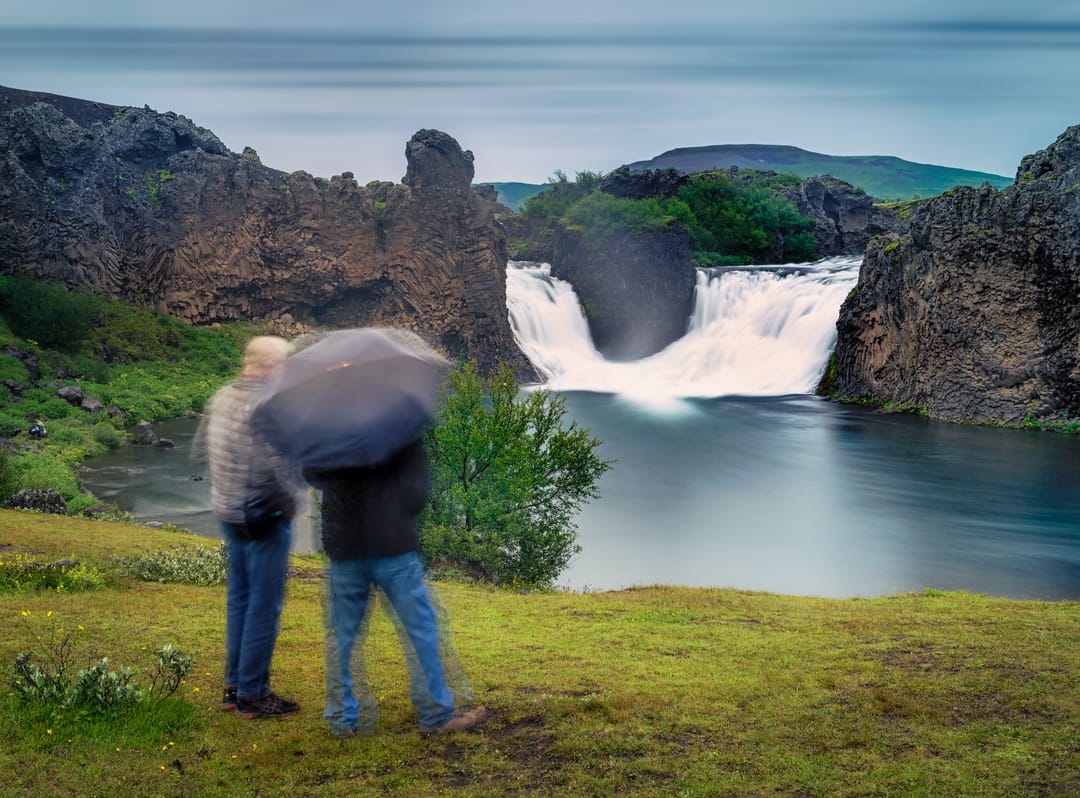
- Hjálparfoss: A few minutes from the Commonwealth farm, Hjálparfoss is a double waterfall framed by symmetric basalt columns.
- Gjáin: A true hidden gem, Gjáin is a lush ravine filled with small waterfalls and volcanic rock formations. It’s a 15-minute hike from the original ruins of Stöng in Þjórsárdalur.
- Háifoss: As one of the tallest waterfalls in Iceland, Háifoss drops 400 feet (122 meters) into a deep canyon. Reaching the Háifoss viewing point requires driving on a bumpy gravel road (Route 332), where a 4x4 vehicle is essential.
A Viking-Era Landmark in South Iceland
Stöng in Þjórsárdalur is a tangible link to the Viking era. It’s an in-depth look at history, whether you’re exploring the original foundations or walking through the Þjóðveldisbærinn reconstruction.
For those returning to Reykjavík, a visit to Perlan is a fantastic way to round out the trip. Their Forces of Nature exhibition is a highlight, showcasing the power of volcanoes, earthquakes, and geothermal energy in shaping the land.
FAQs About Stöng in þjórsárdalur
What to do in Pjorsardalur?
Beyond the original ruins of Stöng and the Þjóðveldisbærinn reconstruction, you can hike to the "fairy-tale" oasis of Gjáin. You can also photograph the double falls at Hjálparfoss, or marvel at Háifoss, one of Iceland's tallest waterfalls.
Is the Þjóðveldisbærinn reconstruction open year-round?
No, the interior of the reconstruction is typically only open around the summer months (May to mid-October). While the exterior can be viewed year-round, the buildings are locked, and the staff is off-site during the winter months.
Do I need a 4x4 vehicle to visit Stöng?
The reconstruction is accessible via Road 32 in a standard car. However, 4x4 vehicles are highly recommended for the gravel tracks leading to the original ruins.
How long does it take to visit from the Golden Circle?
Plan for an additional 2 to 3 hours for the detour. The drive from the "end" of the Golden Circle (near Gullfoss or Flúðir) to the valley takes about 45 minutes each way, plus time for exploring.
Is there an entrance fee?
There is no fee to visit the original ruins or Gjáin. However, the Þjóðveldisbærinn reconstruction charges an admission fee.
Popular articles
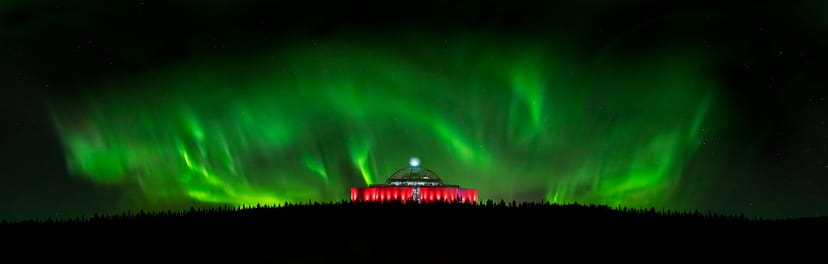
The Complete Guide to the Northern Lights in Iceland
Learn how the Northern Lights form, where to see them in Iceland, how to prepare, take photos, read the forecast, and improve your chances of a sighting.
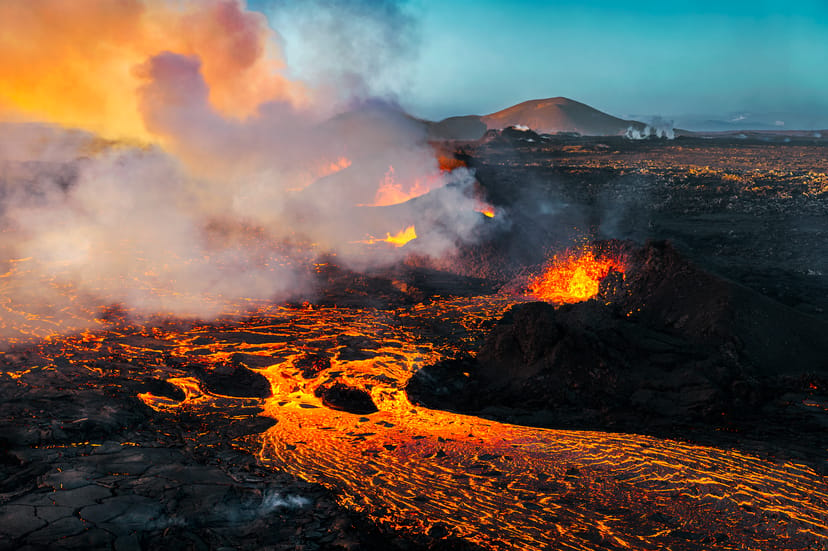
Let's Talk About the Volcano in Iceland About to Erupt
Is a volcano in Iceland about to erupt? Here’s what travelers should know about Svartsengi, Reykjanes activity, flights, safety, and the Blue Lagoon.

Solar Eclipse 2026 in Iceland | What Happened
Iceland experienced a total solar eclipse on August 12, 2026. Discover what happened in Reykjavík, eclipse times, totality locations and more.
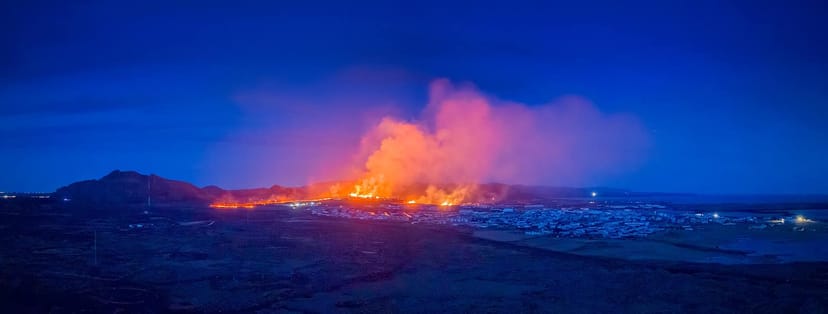
September 2026 updates on the Sundhnúkagígar Eruption in the Reykjanes Peninsula!
The current eruption in the Reykjanes Peninsula, is called Sundhnúkagígar Crater Row. See insights on the seismic activity and volcanic eruptions in the area!
Active Volcanoes in Iceland 2026
Active volcanoes aren't the same thing as active eruptions. A volcano can be considered active even when it is not ejecting ash, rock, gases and magma, so which are active in Iceland in 2026?
Top 10 Places To See the Northern Lights in Iceland
Discover the best places to see the Northern Lights in Iceland, from Jökulsárlón and Kirkjufell to Reykjavík, Þingvellir and North Iceland.
Ice Caves From Reykjavik
Planning an ice cave trip from Reykjavik? Compare Katla, Langjökull and Vatnajökull, travel times, seasons and Perlan’s ice cave in the city.