
Guide to Gjáin
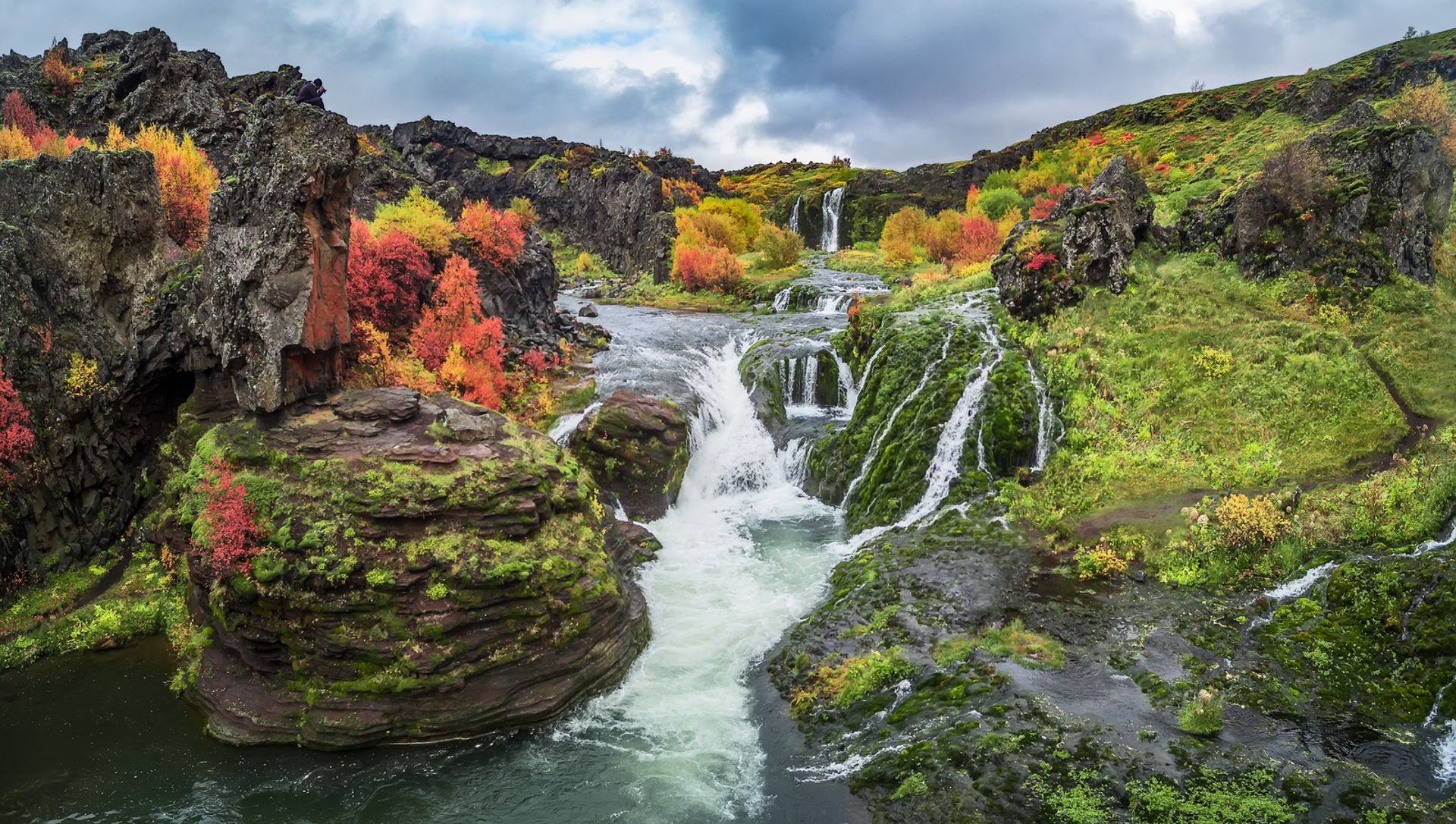
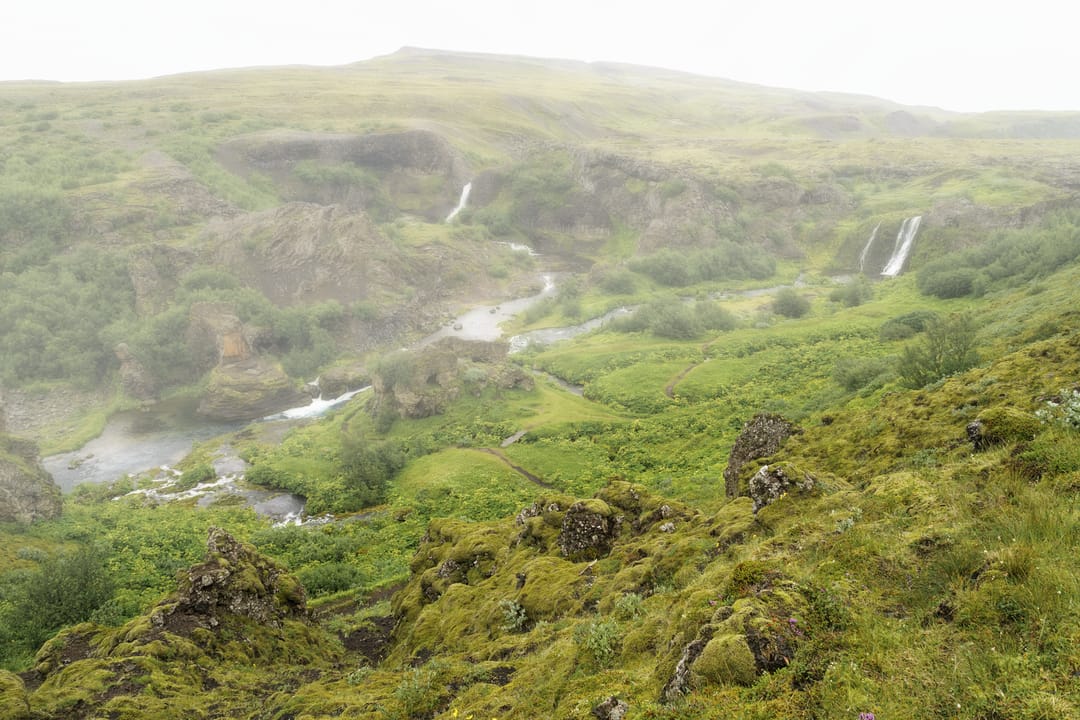
Gjáin is a lush, spring-fed gorge in Þjórsárdalur Valley. Surrounded by barren lava fields, this secluded pocket of nature is often described as a fairytale escape. For travellers looking to avoid the crowds, Gjáin is a top-tier detour with small waterfalls, basalt columns, and quiet trails.
The Formation of Gjáin
Geologically, Gjáin stands out from its surrounding terrain. While Þjórsárdalur Valley is largely lava fields, this small gorge is a sheltered oasis of water and greenery.
The canyon was formed as the Rauðá river carved through layers of ancient basalt. The striking hexagonal basalt columns lining the valley walls formed through "columnar jointing" thousands of years ago. During this process, thick, stagnant lava cools and contracts into perfect geometric pillars seen all over Iceland.
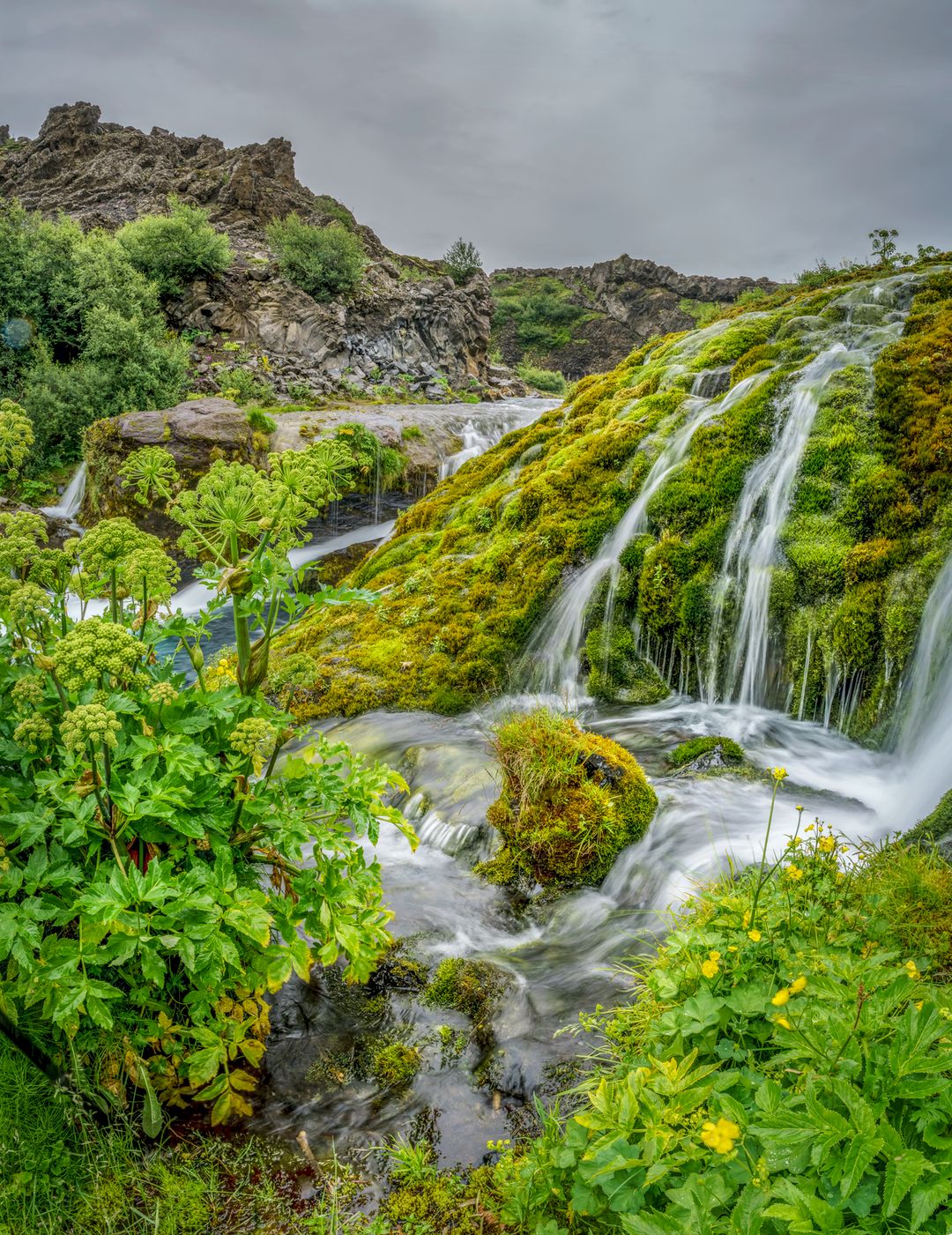
In some areas, the lava cooled so rapidly that it formed small caves and twisted, hollow volcanic structures. Because Gjáin sits lower than the surrounding plains, it benefits from a natural windbreak. This creates a moist microclimate where mosses, ferns, and wildflowers thrive. It’s a startling contrast to the gray, volcanic landscape just above the rim.
To truly understand the forces that created Gjáin, a visit to Perlan in Reykjavík is the perfect companion to your trip. At Perlan’s Forces of Nature exhibition, you can dive deeper into the geology of the Þjórsárdalur Valley. The exhibition showcases how natural events like eruptions and erosion shape (and continue to shape) Iceland today.
What to See in Gjáin
This small valley is a collection of natural Icelandic wonders. It’s a lush environment, with green moss and wildflowers against crystal-clear springs and dark volcanic rock. Even on a quick detour, Gjáin is a pleasant pocket away from the rest of the tourist rush. Here are some of the notable attractions within the valley.
Gjárfoss
The ravine is home to numerous small cascades, but the primary waterfall in Gjáin is Gjárfoss. Standing at a modest 49 feet (15 meters), it’s famous for being photogenic, regardless of its modest height.
Gjárfoss drops from the Rauðá River, framed by a semi-circular wall of hexagonal basalt columns. The water tumbles into a remarkably clear, deep plunge pool. On calm days, the reflection of dark basalt in the water makes it extra photogenic.
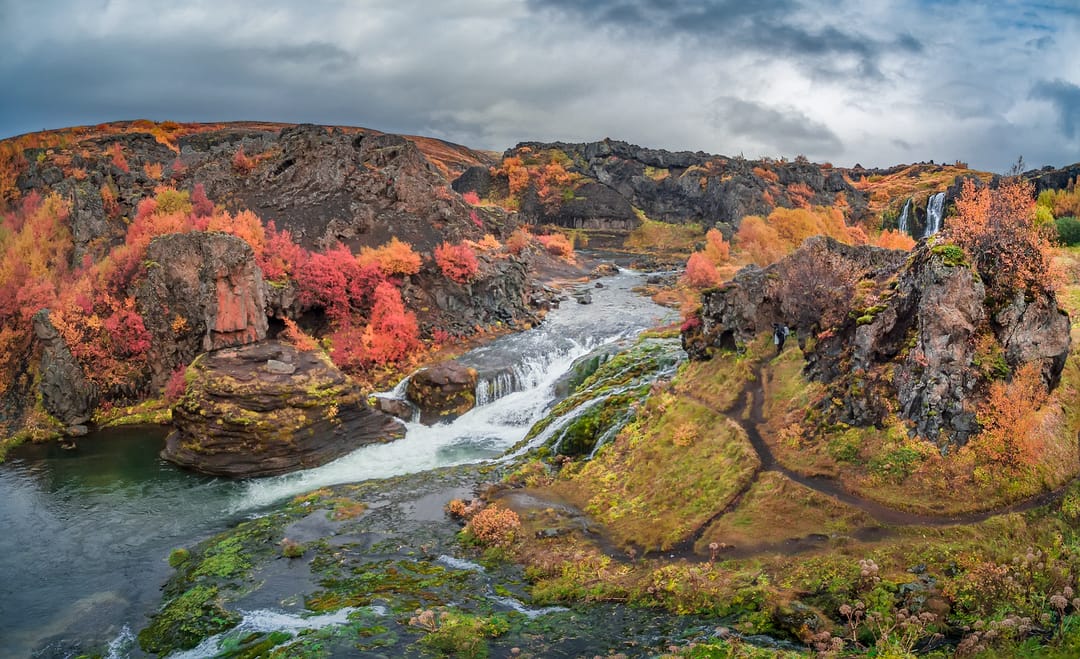
A narrow, slightly rocky trail allows you to walk right to the edge of the falls. For the best perspective, you can cross the river via the natural stepping stones to the opposite bank. Note that while the water may be tempting, it’s icy cold; only the bravest visitors attempt a dip.
Rauðá River
The Rauðá River, or the “Red River,” is the lifeblood of the valley. Unlike many of Iceland’s powerful, “milky” glacial rivers, this one is spring-fed. Because the water is naturally filtered through layers of volcanic rock, it is exceptionally clear.
The river weaves through the small valley in a series of gentle streams and ponds, creating the lush vegetation. As you explore, you'll find several natural stepping stones that make crossing easy. These paths allow you to get close to the various volcanic structures and smaller, unnamed falls.
The Game of Thrones connection
The otherworldly atmosphere of Gjáin caught the world’s attention when it served as a filming location for Game of Thrones. In Season 4, Episode 5 (“First of His Name”), it was a verdant backdrop for Arya Stark and the Hound’s journey. It’s here that Arya practices her "Water Dance" sword fighting with her beloved sword, Needle.
Because Gjáin is so naturally dramatic, very little CGI was used for these scenes. Fans of the HBO show can easily recognise the basalt walls and small caves where the characters camped.
For travellers visiting in winter, when Gjáin is a more challenging drive away, enjoy a day at Reykjavík’s Perlan. The museum’s Ice Cave is an enchanting alternative for Game of Thrones’ “winter is coming” vibe without the 4x4 drive.
Nearby Attractions: Haifoss and Stöng
If you are making the trip to Gjáin, it is worth exploring the other landmarks within the Þjórsárdalur Valley.
- Stöng: Located right at the start of the trail to Gjáin, these are the excavated ruins of a Viking-era manor. A reconstructed version, the Commonwealth Farm (Þjóðveldisbærinn), is located just a short drive away.
- Háifoss: A 25-minute drive from Gjáin leads to one of Iceland’s tallest waterfalls. Dropping 400 feet (122 meters) into a deep canyon, Háifoss (and its neighbour cascade Granni) is a magnificent sight.
How to Get There
Located in the southern highlands, Gjáin is roughly a two-hour drive from Reykjavík. Reaching the valley floor requires navigating Road 327. The road leading to the valley is a bumpy gravel track with potholes, so a 4x4 vehicle is strongly recommended.
If you are driving a smaller car, park at the Stöng ruins and take the short hike (about 15–20 minutes) into the valley. From the main parking lot, a quick walk down a stone path reveals the oasis below.
FAQs About Gjáin
Is Gjáin worth it?
Absolutely; Gjáin is often cited as one of Iceland's most magical "hidden gems." Its concentrated collection of waterfalls and basalt columns offers a high reward for a relatively short detour.
How to get to Gjáin Iceland?
From Reykjavík, follow Route 1 South, turn onto Route 30 (towards Flúðir), and then Route 32. Finally, turn onto Road 327. Follow 327 until you reach the Stöng ruins (for hikers) or the upper overlook (for 4x4 drivers).
Is Gjáin Valley close to the Golden Circle?
Yes, it is considered one of the best detours from the Golden Circle, located about 30–40 minutes from Gullfoss. Many travellers combine it with a visit to the Secret Lagoon or Hjálparfoss.
Is Gjáin Valley easily accessible?
Gjáin is moderately accessible during the summer months (June–September). While the hike into the valley is short and easy, Road 327 is a rough gravel track, so a 4x4 vehicle is recommended.
Is there an entrance fee to Gjáin?
No, there is currently no entrance fee or ticket required to visit Gjáin. Parking is also free, though facilities like restrooms are not available on-site.
When is the best time to visit Gjáin?
The best time is June through September. This is when the valley is at its emerald-green peak and the gravel roads are clear of snow.
Popular articles
The Complete Guide to the Northern Lights in Iceland
Learn how the Northern Lights form, where to see them in Iceland, how to prepare, take photos, read the forecast, and improve your chances of a sighting.
Let's Talk About the Volcano in Iceland About to Erupt
Is a volcano in Iceland about to erupt? Here’s what travelers should know about Svartsengi, Reykjanes activity, flights, safety, and the Blue Lagoon.
Solar Eclipse 2026 in Iceland | What Happened
Iceland experienced a total solar eclipse on August 12, 2026. Discover what happened in Reykjavík, eclipse times, totality locations and more.
September 2026 updates on the Sundhnúkagígar Eruption in the Reykjanes Peninsula!
The current eruption in the Reykjanes Peninsula, is called Sundhnúkagígar Crater Row. See insights on the seismic activity and volcanic eruptions in the area!
Active Volcanoes in Iceland 2026
Active volcanoes aren't the same thing as active eruptions. A volcano can be considered active even when it is not ejecting ash, rock, gases and magma, so which are active in Iceland in 2026?
Top 10 Places To See the Northern Lights in Iceland
Discover the best places to see the Northern Lights in Iceland, from Jökulsárlón and Kirkjufell to Reykjavík, Þingvellir and North Iceland.
Ice Caves From Reykjavik
Planning an ice cave trip from Reykjavik? Compare Katla, Langjökull and Vatnajökull, travel times, seasons and Perlan’s ice cave in the city.