
Guide to Hjálparfoss Waterfall
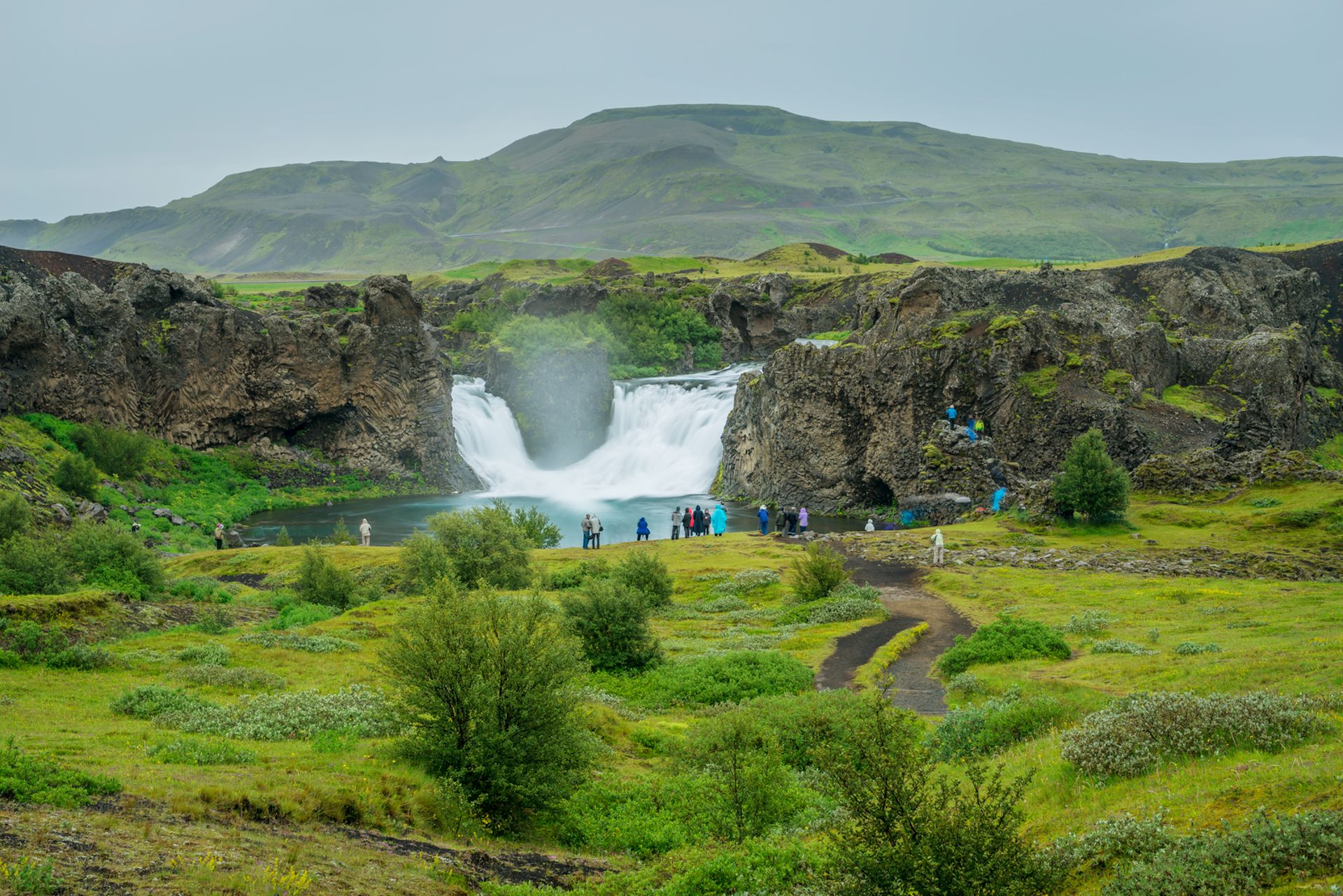
Located in the Þjórsárdalur Valley, Hjálparfoss is a scenic twin waterfall set against a backdrop of twisted rock formations. Its name translates to “Help’s Waterfall,” a nod to weary travelers crossing the highlands who historically rested in this lush valley. Locals also call it “Waterfall of Lovers,” as the two streams fall side-by-side before joining together in a shared pool.
This serene spot rests on the Fossá River, just before it merges with the mighty Þjórsá, Iceland’s longest river. Hjálparfoss is a quiet, pleasant alternative for travelers looking to escape the busy sites of the Golden Circle.
What is Hjálparfoss?
The picturesque Hjálparfoss is geologically unique, sitting near the confluence of the rivers Fossá and Þjórsá. It’s famous for its "twin" streams, which split as the water tumbles over ancient basalt weathered into jagged rock formations.
These basalt structures are at the edge of the Great Þjórsá Lava, the largest lava flow on Earth since the last Ice Age. The surrounding terrain of the Hjálparfoss is a rugged volcanic desert. However, the relentless Fossá River has carved a wide basin where the two cascades unite.
To understand the seismic power that created the Þjórsárdalur Valley, a visit to Perlan in Reykjavík is a must. At Perlan’s Forces of Nature exhibition, you can explore the science behind Iceland’s volcanic history and natural phenomena.
How to Get There
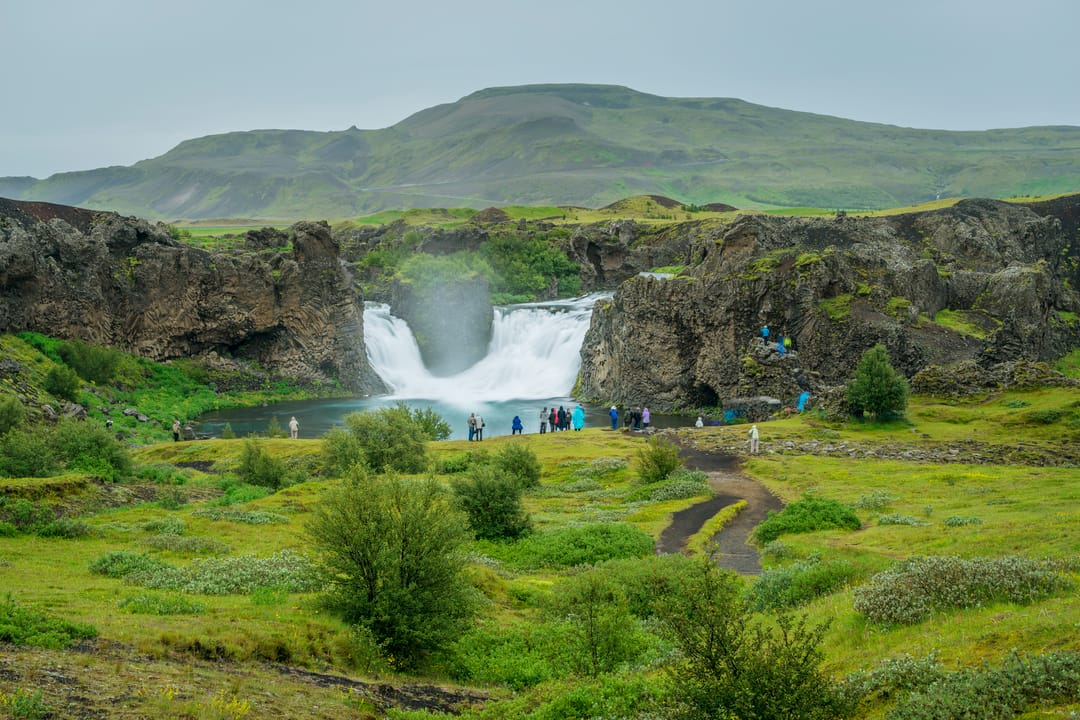
Hjálparfoss is located in South Iceland, nestled in the Þjórsárdalur Valley roughly 75 miles (120 kilometers) from Reykjavík. On clear days, Hekla volcano’s snow-capped peak provides a picture-perfect backdrop to the drive.
To reach Hjálparfoss from Reykjavík, follow the Ring Road east past Selfoss. Turn north onto Route 30 and continue until you reach the junction for Route 32. This leads you directly into the heart of Þjórsárdalur Valley. Watch for the sign for Hjálparfoss, where a short gravel turn-off leads to the parking area.
From the parking lot, an easy, five-minute walking path leads directly to a viewpoint overlooking the twin cascades. For a closer perspective, you can follow a slightly steeper dirt trail down to the water’s edge.
What to See at Hjálparfoss
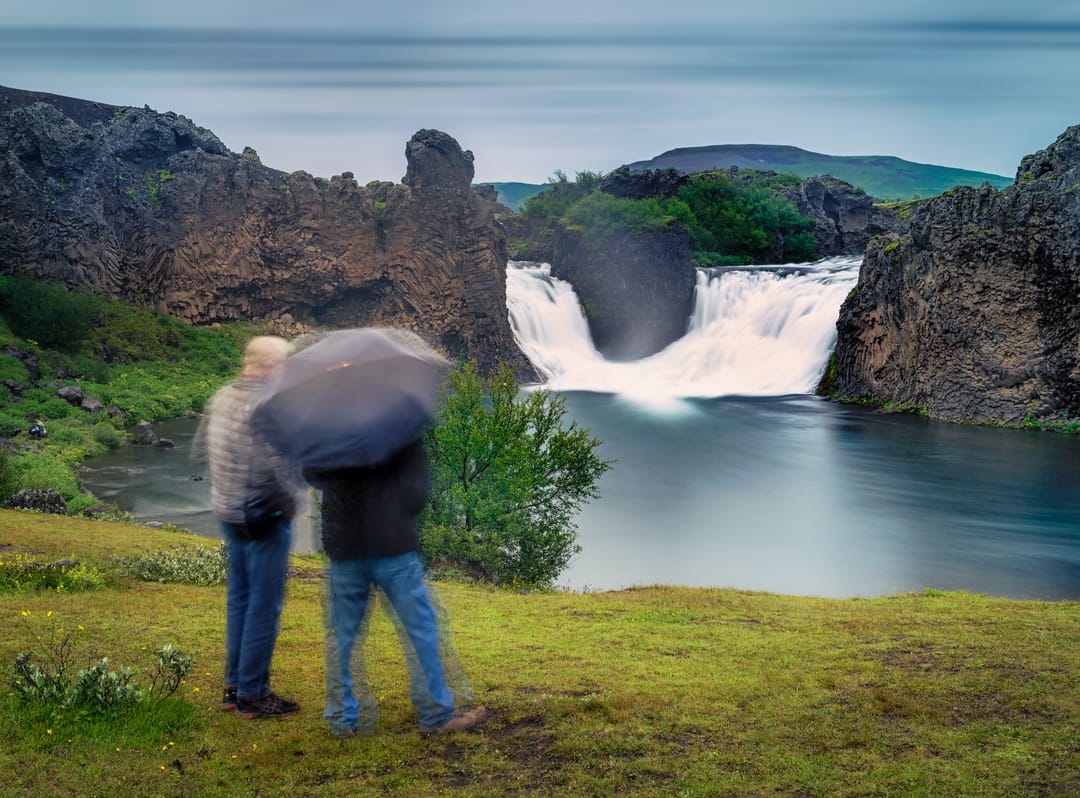
The most distinctive feature of Hjálparfoss is its twin cascades. Unlike many vertical falls, these two streams drop at roughly a 45-degree angle, leaning toward one another as they fall. The result is a striking "V" shape where the white, frothing water meets in a deep, teal-colored plunge pool.
As dramatic as the water’s journey is, the volcanic frame of the waterfall is. The pool is surrounded by basalt rock formations that are wildly contorted and twisted into swirling patterns. Unlike the perfectly straight pillars of Reynisfjara or Svartifoss, the basalt here cooled unevenly thousands of years ago. It resulted in chaotic, curved architecture seen in the cliff face today.
True to its name as “Help’s Waterfalls,” the area immediately around the pool is a sheltered oasis. While the surrounding lava fields can feel barren, the constant mist from the cascades supports a lush microclimate. Here, vibrant mosses and wildflowers thrive, providing a startling contrast to the dark, volcanic stone.
Nearby Attractions
Hjálparfoss lies near the other hidden wonders of the Þjórsárdalur Valley. After visiting the falls, these nearby landmarks are well worth the short drive:
- Gjáin: A fairytale-like oasis of small waterfalls and lush greenery tucked into a basalt canyon.
- Stöng: The excavated ruins of a Viking-era longhouse buried by Hekla’s 1104 eruption.
- Háifoss: One of Iceland’s tallest waterfalls, dropping into a massive, rugged canyon.
- Þjóðveldisbærinn: A reconstructed Commonwealth farm that brings the Viking history of the valley to life.
A Scenic Stop at Hjálparfoss
Hjálparfoss is undoubtedly a rewarding detour in South Iceland. It serves as a bridge between the popular Golden Circle and the raw, untouched beauty of the highlands.
To see the bigger picture of how these landscapes are born, be sure to visit Perlan in Reykjavík. Through immersive exhibits on Icelandic nature, you’ll gain a new appreciation for the forces that make sites like Hjálparfoss possible.
FAQs About Hjálparfoss
What is the best time to visit Hjálparfoss?
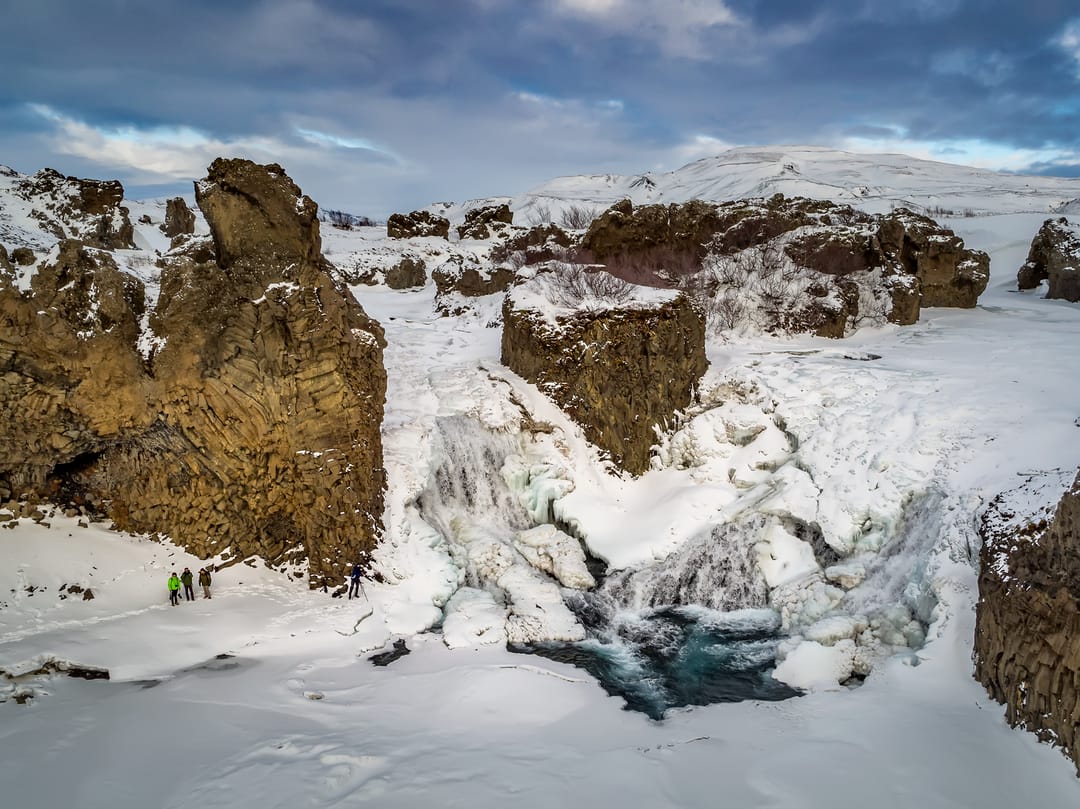
The best time to visit is from June to September when the valley is lush and the roads are clear of snow. However, autumn is also stunning as the vegetation turns to fiery shades of gold and orange.
How long does Hjálparfoss hike last?
The walk is extremely short, taking only about five minutes to reach the main viewpoint from the parking lot.
How to get to Hjálparfoss?
From Reykjavík, take the Ring Road south, turn onto Route 30, and then follow Route 32 into the Þjórsárdalur Valley. A short, well-marked gravel road will lead you directly to the waterfall's parking area.
What is the best waterfall to visit in Iceland?
Hjálparfoss is a contender for those seeking unique basalt rock formations and a quiet atmosphere. For sheer power, Gullfoss and Dettifoss are world-famous.
How much time should I spend at the waterfall?
Most visitors spend about 30 to 45 minutes at Hjálparfoss. The walk from parking to the viewpoint is very short, leaving plenty of time to explore and photograph the surroundings.
Is there an entrance fee for Hjálparfoss?
No, there is no fee to visit the waterfall or to use the parking area. Like many natural sites in Þjórsárdalur, it is free to the public, though there are no restroom facilities on-site.
Popular articles
The Complete Guide to the Northern Lights in Iceland
Learn how the Northern Lights form, where to see them in Iceland, how to prepare, take photos, read the forecast, and improve your chances of a sighting.
Let's Talk About the Volcano in Iceland About to Erupt
Is a volcano in Iceland about to erupt? Here’s what travelers should know about Svartsengi, Reykjanes activity, flights, safety, and the Blue Lagoon.

Solar Eclipse 2026 in Iceland | What Happened
Iceland experienced a total solar eclipse on August 12, 2026. Discover what happened in Reykjavík, eclipse times, totality locations and more.
September 2026 updates on the Sundhnúkagígar Eruption in the Reykjanes Peninsula!
The current eruption in the Reykjanes Peninsula, is called Sundhnúkagígar Crater Row. See insights on the seismic activity and volcanic eruptions in the area!
Active Volcanoes in Iceland 2026
Active volcanoes aren't the same thing as active eruptions. A volcano can be considered active even when it is not ejecting ash, rock, gases and magma, so which are active in Iceland in 2026?
Top 10 Places To See the Northern Lights in Iceland
Discover the best places to see the Northern Lights in Iceland, from Jökulsárlón and Kirkjufell to Reykjavík, Þingvellir and North Iceland.
Ice Caves From Reykjavik
Planning an ice cave trip from Reykjavik? Compare Katla, Langjökull and Vatnajökull, travel times, seasons and Perlan’s ice cave in the city.