
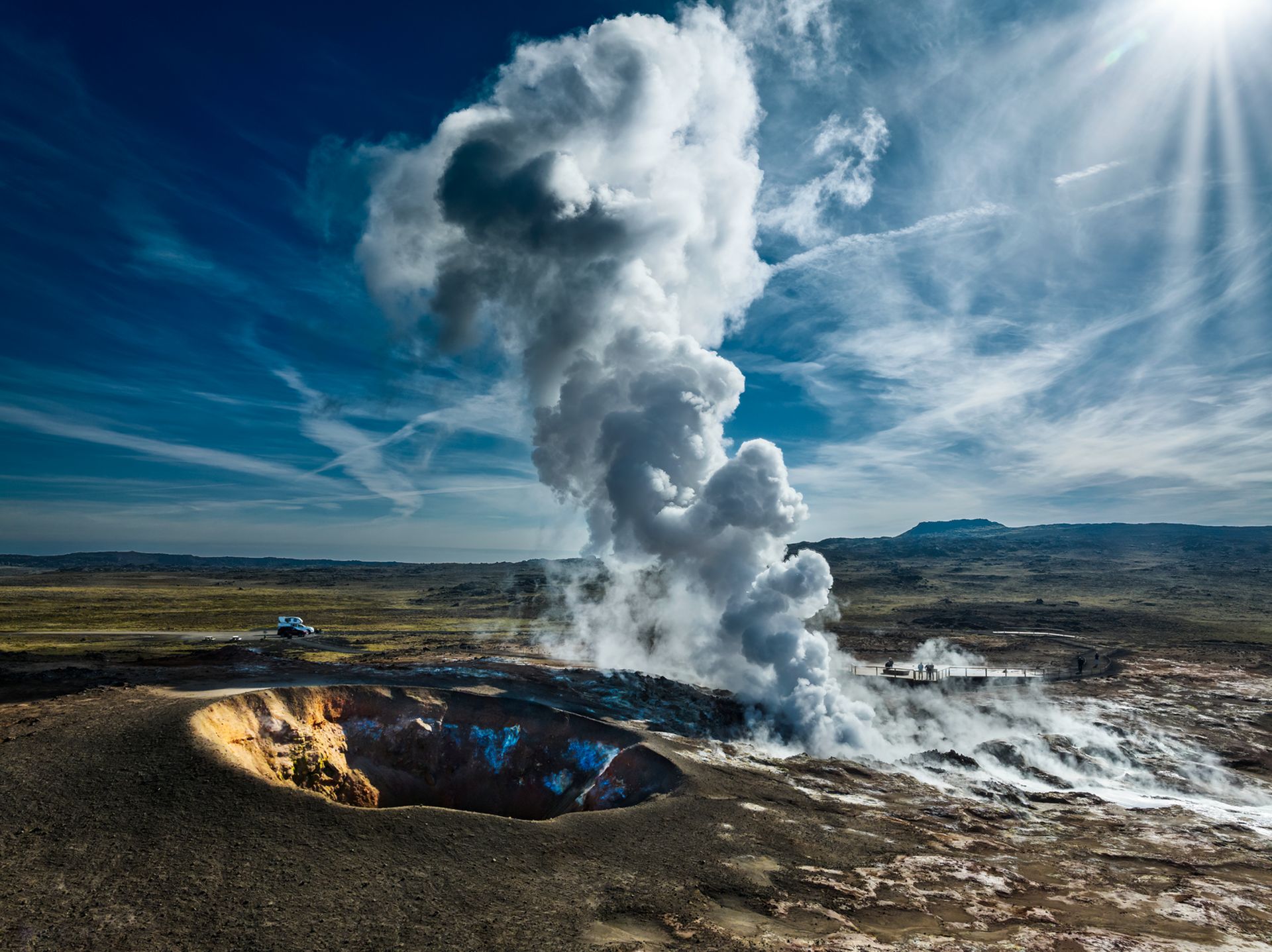
Guide to the Gunnuhver and the Reykjanes Geothermal Area
Explore Gunnuhver Geothermal Area, known for roaring steam vents, bubbling mud pools, Icelandic folklore, and dramatic Reykjanes scenery.
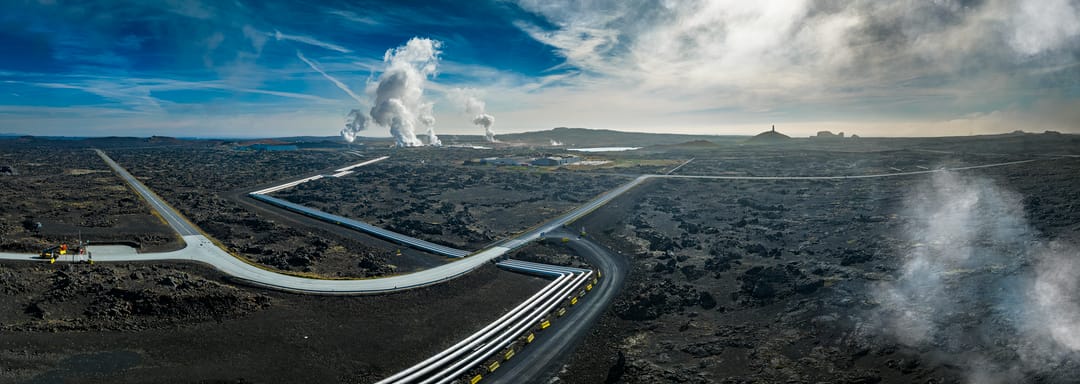
Gunnuhver is a powerful mud pool with hissing fumaroles within the Reykjanes Geothermal Area and UNESCO Global Geopark. The Geothermal Area reveals the intense heat churning beneath the earth’s surface. Even before travellers see its bubbling mud pools, the visceral roar of escaping steam commands attention. Thick clouds drift across mineral-stained ground painted in rich shades of rust, ochre, and pale clay. It is an otherworldly setting, one that fits perfectly into a Reykjanes road trip.
What Is the Reykjanes Geothermal Area?
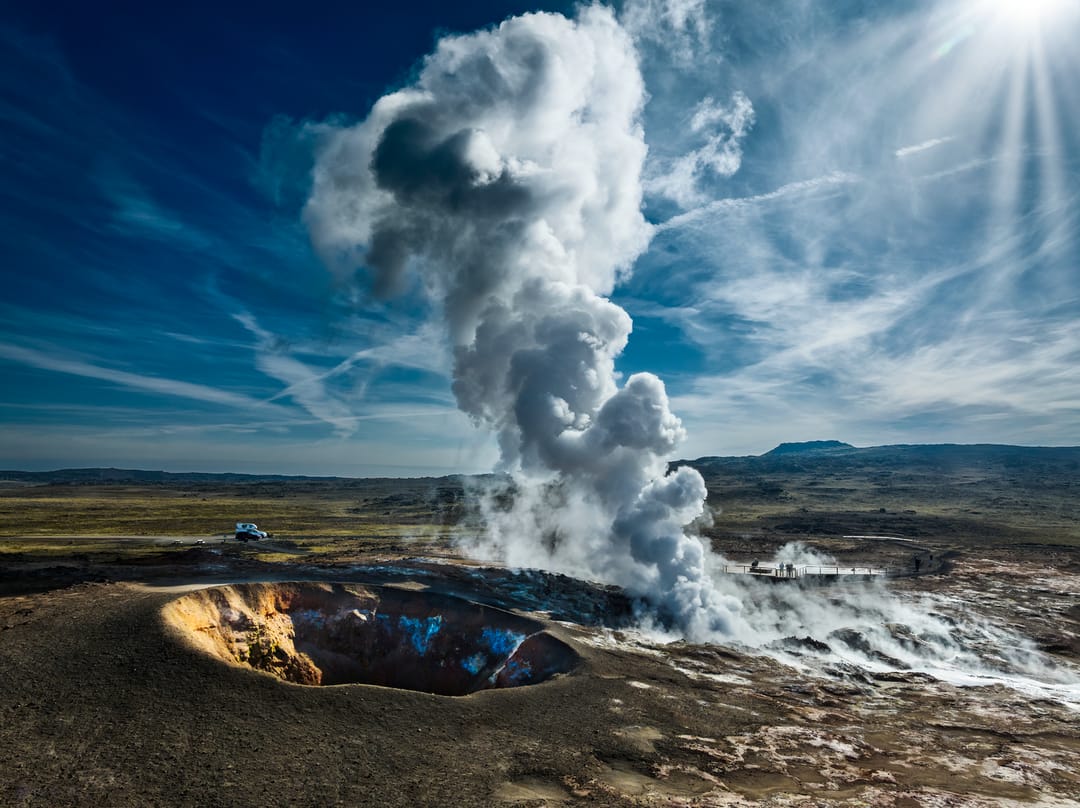
The Reykjanes Geothermal Area is an active geothermal field located on the SW tip of the Reykjanes Peninsula. It’s among the notable geosites within the Reykjanes UNESCO Global Geopark, a region recognised for geological significance and volcanic heritage. The peninsula lies along the landward continuation of the Mid-Atlantic Ridge, where the tectonic plates are gradually moving apart.
Here, travellers will find a fascinating collection of mud pools, mud pots, fumaroles, and steam vents. Unlike many geothermal areas in Iceland, the geothermal fluids here are highly saline, reflecting the system’s proximity to the sea. Deep below the surface, seawater circulates through fractured volcanic rock and is heated within the geothermal system.
As water boils within the geothermal reservoir, the resulting steam rises, condenses, and mixes with surface water. Gases, including carbon dioxide and hydrogen sulfide, make this water acidic, gradually altering the surrounding lava rock into soft clay. The result is a colourful and ever-changing landscape of steaming vents, bubbling mud, and mineral-stained ground.
Why Are Gunnuhver and Its Surroundings So Geothermally Active?
To understand the intense geothermal activity at Gunnuhver, it helps to consider the larger forces shaping Iceland. The country sits on the Mid-Atlantic Ridge and straddles the divergent boundary between the North American and Eurasian tectonic plates. As these plates move apart, they create a rift zone marked by cracks, fissures, and faults in the crust.
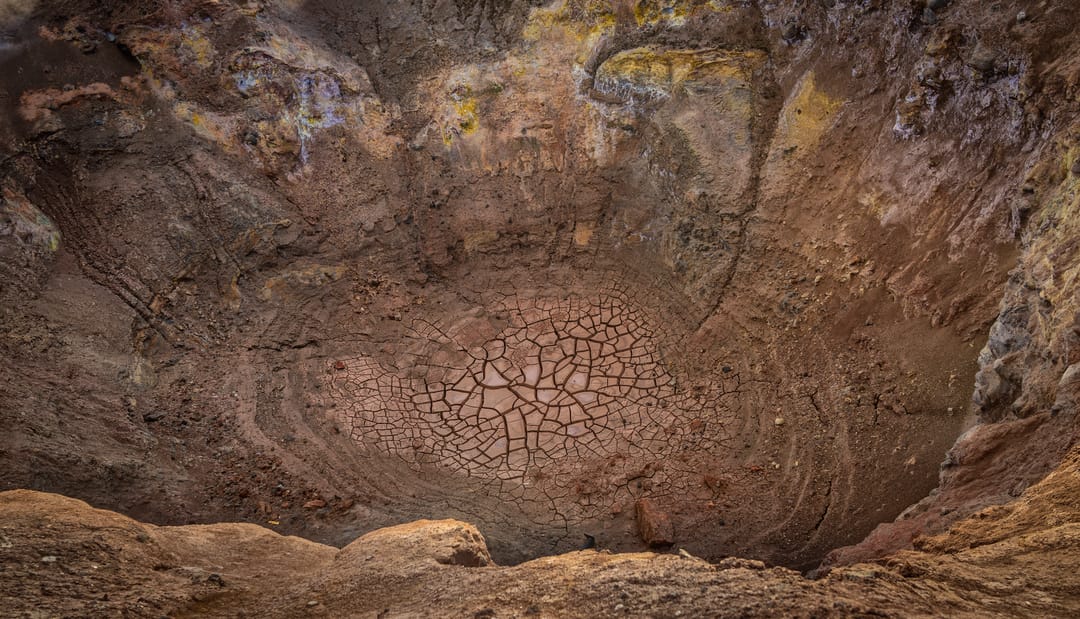
Water can travel deep underground through these fractures, where it encounters rock heated by Iceland’s volcanic systems. As the hot fluids boil at depth, they produce steam that rises through faults and openings in the ground. At the surface, it may escape through powerful fumaroles or mix with water and clay to create bubbling mud pools.
Gunnuhver belongs to the broader Reykjanes volcanic and geothermal system, where the Mid-Atlantic Ridge continues onto land. It is geologically dynamic, and the location and intensity of its steam vents and mud pools can change over time.
To see how magma, volcanic systems, and eruptions shape Icelandic landscapes, visit the Volcano Show at Perlan. This immersive exhibition explores the forces behind active volcanoes in Iceland, bringing recent Reykjanes eruptions vividly to life through state-of-the-art displays.
What to See at Gunnuhver Geothermal Area
The Gunnuhver Hot Springs site offers a close look at one of the Reykjanes Peninsula’s most dramatic geothermal landscapes.
The Main Bubbling Mud Pool
The most striking feature at Gunnuhver is its main mud pool, which spans roughly 20 meters (66 feet) in diameter. Thick, gray-brown clay boils, splashes, and pops with remarkable energy, creating a loud, rhythmic sound that carries across the field. Depending on the weather, light, and steam, it may resemble a dark, moody cauldron or a bright basin of churning clay.
Roaring Steam Vents
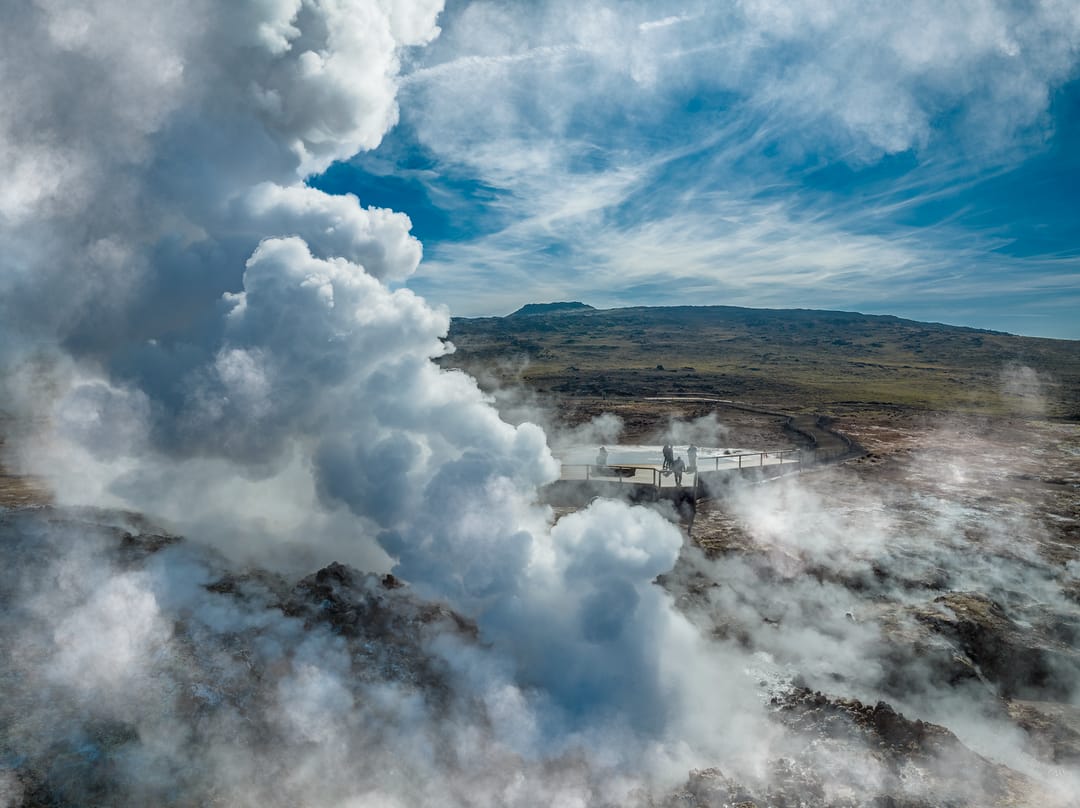
Surrounding the mud pools are steaming vents that release thick, billowing plumes of white vapour into the air. The forceful hiss and roar of escaping steam can be heard across the geothermal field, adding to Gunnuhver’s dramatic atmosphere. Shifting winds may suddenly carry dense steam across the viewing platforms, briefly reducing visibility along the boardwalks.
Mineral-Stained Ground
The ground surrounding the vents displays a striking spectrum of rust, yellow, white, grey, and deep reddish tones. These colours develop as acidic steam and hot fluids react with the basaltic rock and leave behind clay minerals and mineral deposits. The result is a richly textured landscape that reveals the powerful chemical processes taking place beneath the surface.
Viewing Platforms and Boardwalks
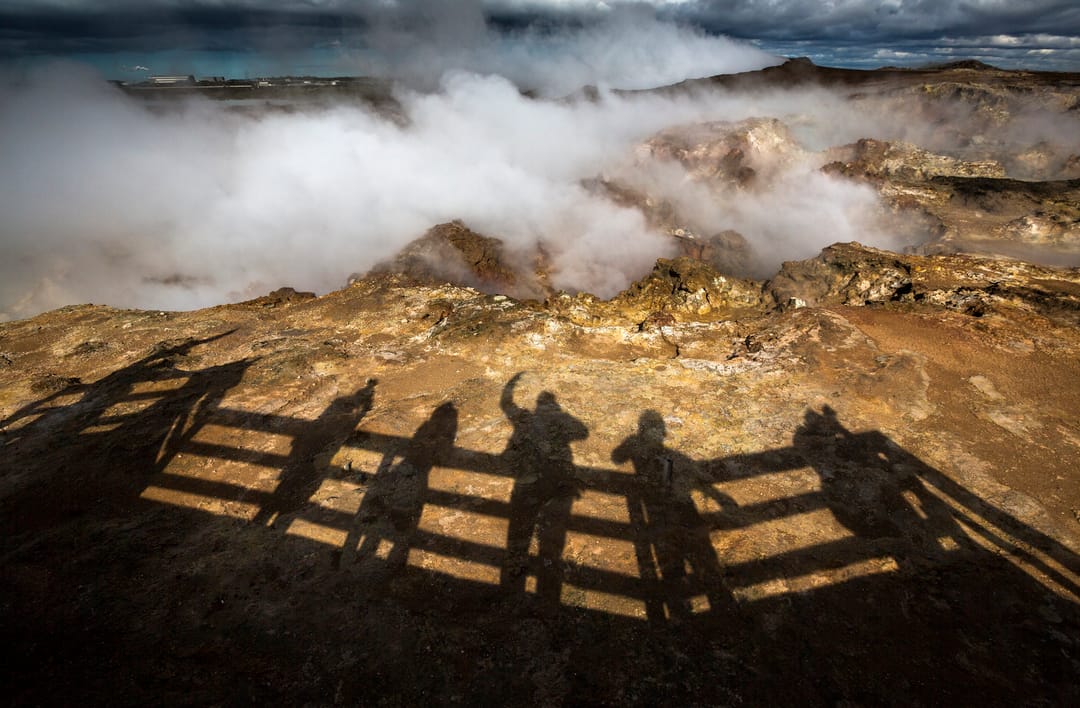
The Gunnuhver geothermal area has designated boardwalks and viewing platforms for observing its features from a safer distance. Two main timber viewing ramps overlook the site. One stands close to the main mud pool and steam vents, offering an impressive view of the activity below. The second is positioned higher on Kísilhóll, a nearby hill with views across the geothermal field, lava plains, and coastline.
Gunnuhver in Icelandic Folklore
Icelandic culture is rich in folklore, and Gunnuhver takes its name from one of the Reykjanes Peninsula’s best-known ghost stories. The name roughly means “Gunna’s hot spring,” referring to a woman named Guðrún Önundardóttir, commonly known as Gunna.
According to legend, Gunna became involved in a bitter dispute with a man named Vilhjálmur over unpaid rent. After he seized her cooking pot, she cursed him and died soon afterwards. Her spirit was then said to have returned as a vengeful ghost, frightening locals and causing great unrest in the area.
Unable to rid themselves of the ghost, residents turned to Eiríkur Magnússon, a priest who appears in many Icelandic folk tales. He devised a plan involving a ball of yarn, which was used to lure Gunna toward a boiling spring. She followed the unravelling thread until she was trapped within the geothermal field.
Different versions claim that Gunna either disappeared into the boiling spring or remained condemned to wander around its edge. As steam drifts and mud churns below, it's easy to see how this landscape inspired an enduring legend.
How to Get to the Gunnuhver Hot Springs
Gunnuhver is located near the southwestern tip of the Reykjanes Peninsula. Because of its remote coastal setting, it's easiest to reach by rental car or guided day tour. The main approach follows paved roads, although conditions can vary with the weather and the chosen route.
- From Reykjavík: The drive takes around one hour, depending on your starting point, route, traffic, and weather.
- From Keflavík International Airport: Gunnuhver is a 25- to 30-minute drive from the airport, a convenient stop to start or end a trip.
Road conditions and access can change quickly because of severe weather, volcanic activity, or temporary safety closures. Before departing, check current updates from the Icelandic Met Office, the Icelandic Road and Coastal Administration, and SafeTravel Iceland.
Best Time to Visit Gunnuhver
Gunnuhver can be visited year-round when roads and viewing areas are open, with each season offering a different atmosphere. Summer brings long daylight hours, generally easier driving conditions, and more flexibility for exploring the surrounding coast. Early morning or late evening visits can also be quieter, especially during the peak travel season.
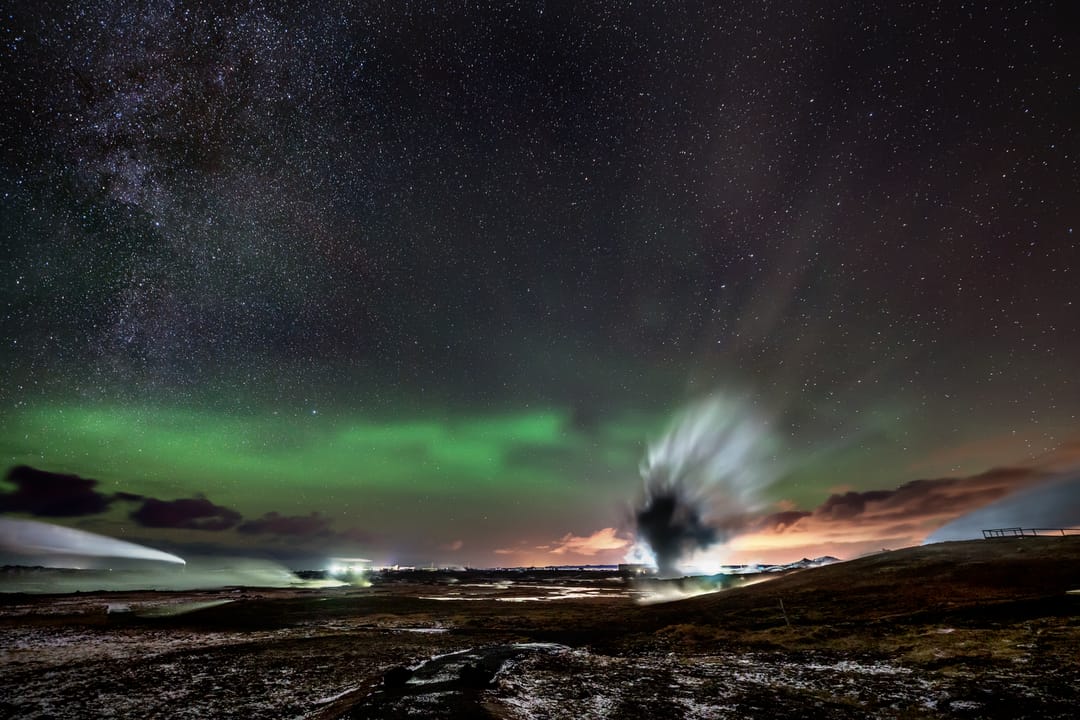
In winter, cold air can make the steam plumes appear especially thick and dramatic. However, strong winds, icy boardwalks, limited daylight, and snow-covered roads may require extra caution.
Safety Tips for Visiting the Gunnuhver Geothermal Area
The energy that makes Gunnuhver beautiful also makes it quite hazardous. Geothermal fields feature unstable ground, boiling fluids, and hidden steam vents that demand absolute respect from every visitor.
- Stay on Marked Paths: Remain on designated boardwalks, trails, and viewing platforms. Never step onto a mineral crust, even if it appears solid.
- Do Not Touch the Water or Mud: Geothermal fluids and bubbling mud can be hot enough to cause severe burns.
- Wear Reliable Footwear: The boardwalks can become slippery from moisture, mud, or winter ice. Sturdy shoes with excellent grip are recommended.
- Secure Loose Items: Strong coastal winds can easily blow hats, lens caps, or lightweight items over the railings.
- Avoid Dense Steam Plumes: Do not linger where wind carries thick steam across the path. It can reduce visibility, feel extremely hot, and irritate the eyes or respiratory system.
- Follow Official Signage: Geothermal activity and site conditions can change, so respect all warnings, closures, and temporary restrictions.
Nearby Attractions
A visit to Gunnuhver can easily be combined with several other natural and historical sights on the Reykjanes Peninsula.
- Reykjanesviti Lighthouse: Standing at the site of Iceland’s first lighthouse, Reykjanesviti offers sweeping views across the surrounding coast.
- Valahnúkamöl: This rugged shoreline near the lighthouse features sea stacks, steep coastal cliffs, rounded volcanic boulders, and powerful Atlantic waves.
- Bridge Between Continents: This symbolic footbridge crosses a sandy fissure within the boundary zone between the North American and Eurasian tectonic plates.
- Brimketill: Brimketill is a natural lava-rock pool shaped by centuries of wave erosion along the exposed southern coast.
- Seltún Geothermal Area: Located farther east within the Krýsuvík geothermal region, Seltún features hissing fumaroles, bubbling mud pots, and colourful mineral-stained hillsides.
FAQs
Yes, especially for travellers exploring Reykjanes by car. It is a compact but powerful geothermal stop, and it pairs easily with other attractions on the peninsula.
Gunnuhver is generally free to visit, with no standard entrance ticket required.
No, the water, mud, and steam are dangerously hot, and the ground can be unstable. Gunnuhver Hot Springs is an observation site, not a bathing area.
Most visitors need around 20–40 minutes. Allow longer if exploring both viewing areas or combining the stop with Reykjanesviti and the coast.
The site is generally accessible year-round when roads and viewing areas are open. Temporary closures can occur because of weather, maintenance or changing geothermal and volcanic conditions.
The name means “Gunna’s hot spring” and refers to the ghost Gunna from the local folk story.
Popular articles
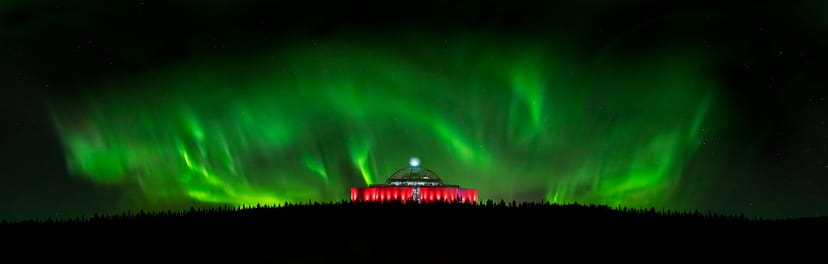
The Complete Guide to the Northern Lights in Iceland
Learn how the Northern Lights form, where to see them in Iceland, how to prepare, take photos, read the forecast, and improve your chances of a sighting.
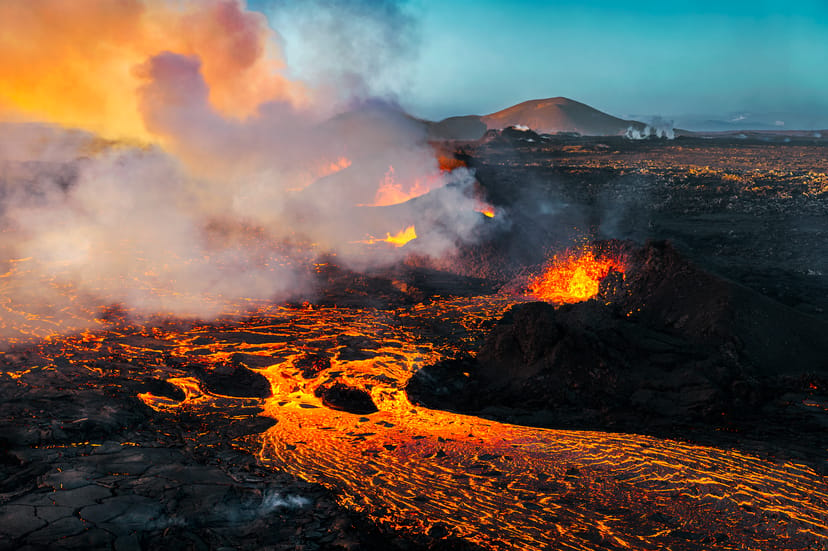
Let's Talk About the Volcano in Iceland About to Erupt
Is a volcano in Iceland about to erupt? Here’s what travelers should know about Svartsengi, Reykjanes activity, flights, safety, and the Blue Lagoon.
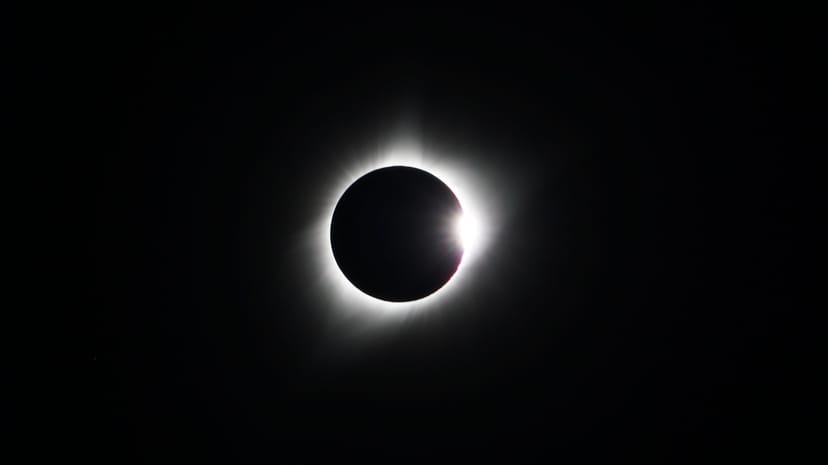
Solar Eclipse 2026 in Iceland | What Happened
Iceland experienced a total solar eclipse on August 12, 2026. Discover what happened in Reykjavík, eclipse times, totality locations and more.
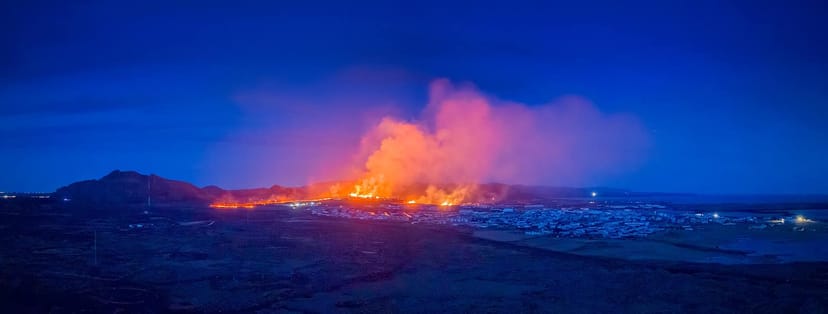
September 2026 updates on the Sundhnúkagígar Eruption in the Reykjanes Peninsula!
The current eruption in the Reykjanes Peninsula, is called Sundhnúkagígar Crater Row. See insights on the seismic activity and volcanic eruptions in the area!
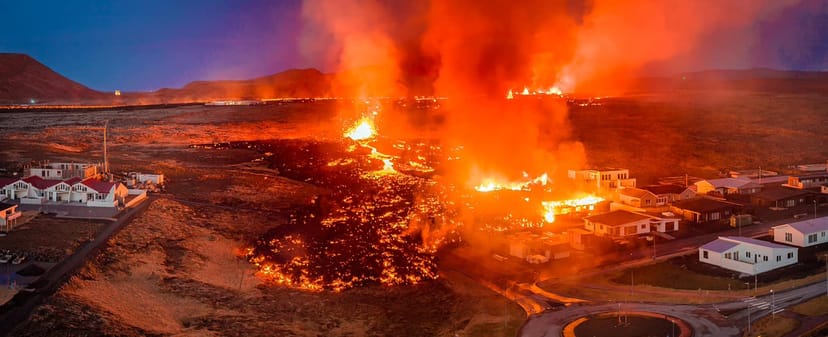
Active Volcanoes in Iceland 2026
Active volcanoes aren't the same thing as active eruptions. A volcano can be considered active even when it is not ejecting ash, rock, gases and magma, so which are active in Iceland in 2026?
Top 10 Places To See the Northern Lights in Iceland
Discover the best places to see the Northern Lights in Iceland, from Jökulsárlón and Kirkjufell to Reykjavík, Þingvellir and North Iceland.
Ice Caves From Reykjavik
Planning an ice cave trip from Reykjavik? Compare Katla, Langjökull and Vatnajökull, travel times, seasons and Perlan’s ice cave in the city.