
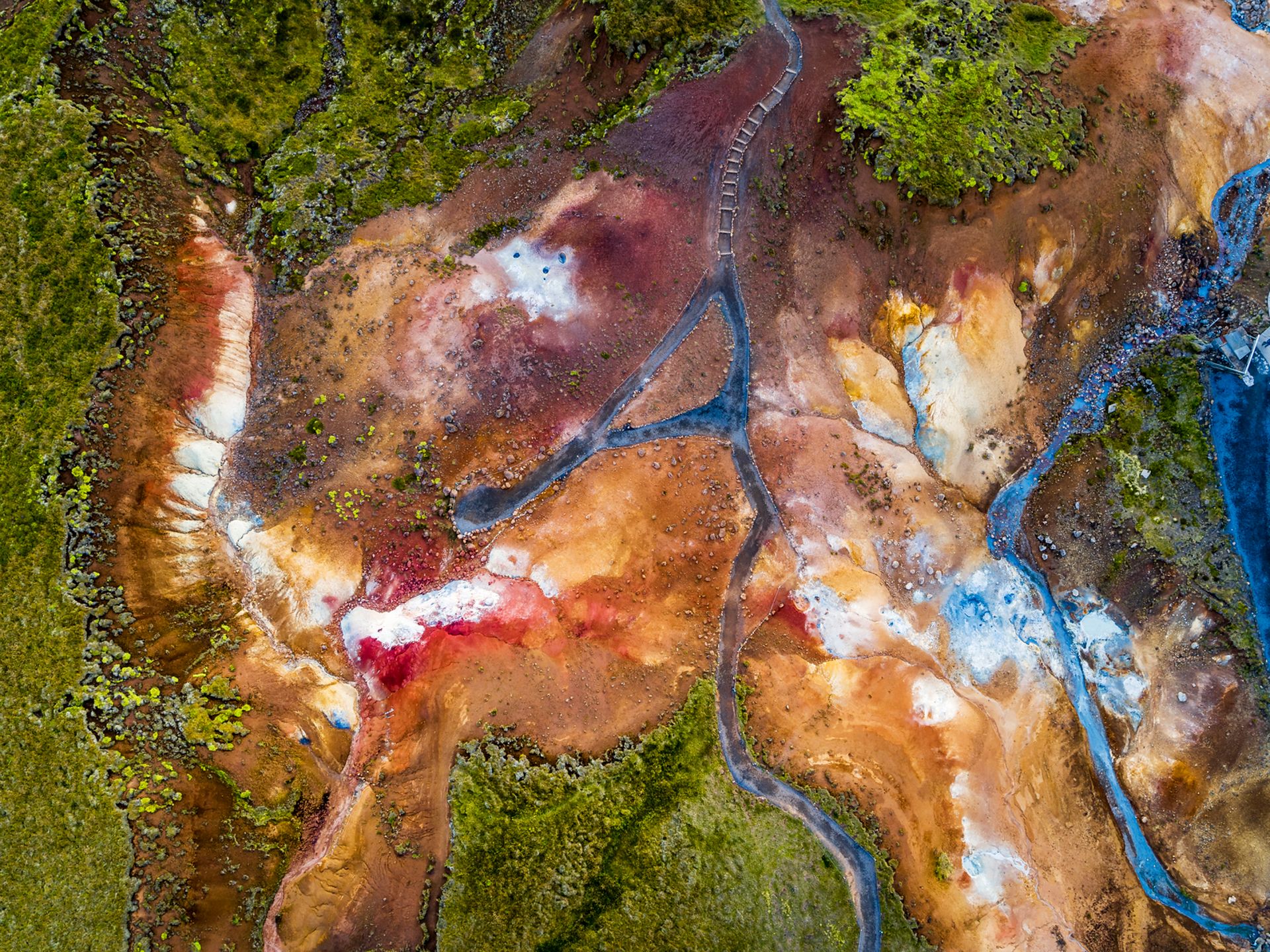
Guide to Seltún Geothermal Area
The moment you step out of your car at Seltún, you are drawn into a deeply sensory experience. Thick plumes of steam rising from underground carry the distinct aroma of sulfur. Around you, mineral-stained hillsides showcase a striking palette of reds, yellows, oranges, whites, and even cool blue tones. Its beauty is almost alien, yet the earth is visibly, intensely alive.
Tucked within the wider Krýsuvík volcanic region, Seltún is an exceptional introduction to Iceland’s restless tectonic activity. It makes a perfect addition to any Icelandic road trip, especially with its accessible location on the Reykjanes Peninsula. Here, visitors can experience geothermal Iceland up close while staying within easy reach of the capital.
What Is Seltún?
Seltún is a high-temperature geothermal area within the larger Krýsuvík geothermal system. It is known for its bubbling mud pools, hissing fumaroles, vents, and hot springs. Surrounding hillsides are painted in astonishing hues, caused by geothermal minerals reacting with the soil. Sulfur creates yellow tones, iron helps form the reds and oranges, and silica and clay add lighter whites and greys.
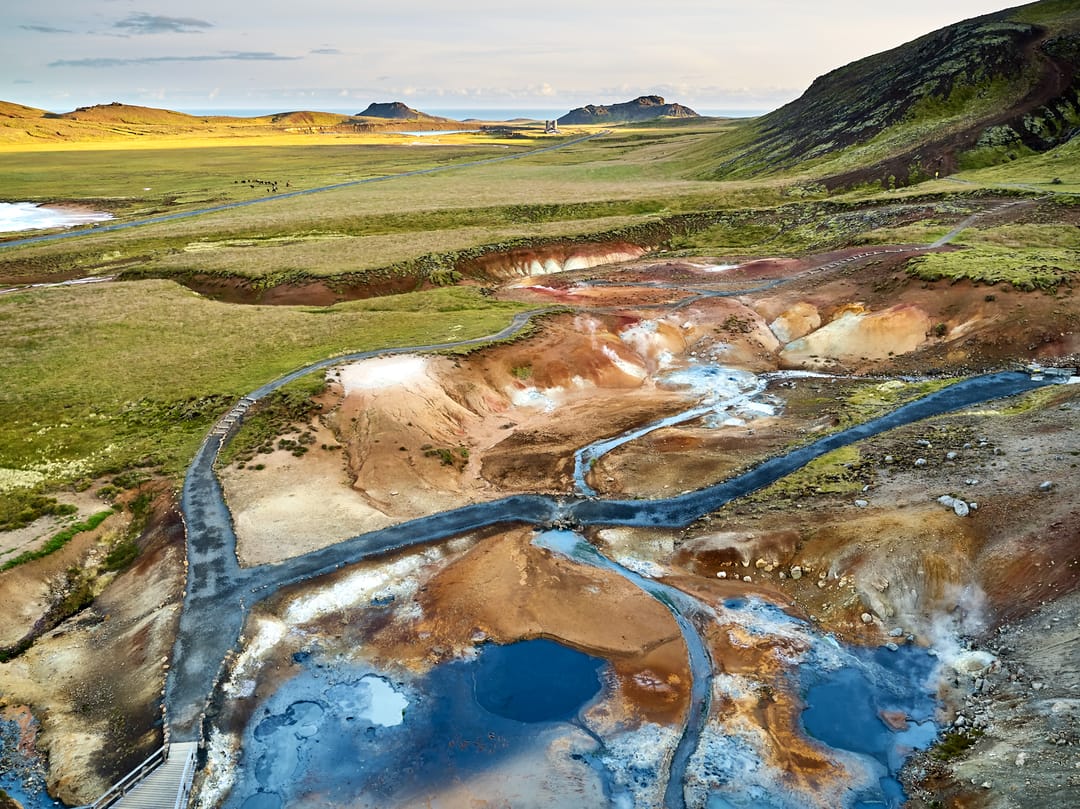
This dramatic, shifting landscape is shaped by the active geology of the Reykjanes Peninsula. The peninsula sits within the Mid-Atlantic Ridge system, where the North American and Eurasian tectonic plates are pulling apart. As the crust fractures along this rift zone, groundwater seeps deep below the surface. After encountering superheated volcanic rock underground, it can rise again as steam, hot water, and boiling mud.
After experiencing the geothermal forces of Seltún outdoors, visitors can learn more at Perlan’s Volcano Show. This cinematic experience offers an immersive look at Iceland’s historic and recent volcanic activity.
What to See at Seltún Geothermal Area
Visiting Seltún is all about stepping into a landscape that feels intensely alive. Wooden boardwalks and marked paths lead visitors through the steaming basin, offering close but safe views of the geothermal activity. Thick grey clay fields stretch alongside the route, where vents hiss and gurgle as gases rise through the mud. On overcast days, the steam billowing against the mountain backdrop can look especially dramatic.
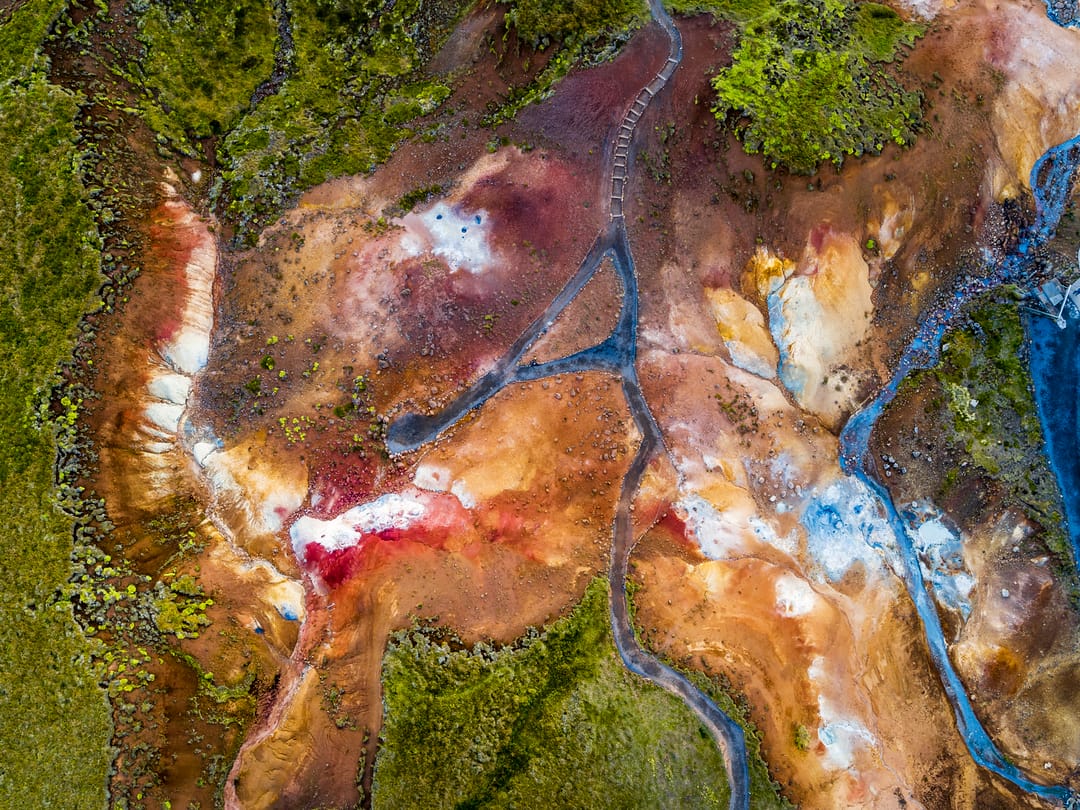
As the path continues along the slopes, the hillsides appear almost like an artist’s canvas. Mineral-stained earth creates vivid bands of yellow, red, orange, white, and blue-grey, while small thermal streams cut through parts of the ground. These waters may look clear and harmless, but they can be scalding. Visitors should stay on the viewing platforms and always keep a safe distance.
The main route also connects to short walking paths that climb gently up the hillside. After just a few minutes, visitors are rewarded with a panoramic view over the valley. From this elevated perspective, the colours of the Seltún geothermal area stand out even more against the dark lava fields.
Where Is Seltún and How to Get There
The site sits among lava fields and dark mountain slopes, making the journey feel like part of the adventure.
Seltún is located along Road 42 on the Reykjanes Peninsula, just past the shoreline of Kleifarvatn Lake. From downtown Reykjavík, the drive is roughly 40 kilometres (25 miles). It usually takes around 40 to 45 minutes, depending on traffic and road conditions. Parking is available in a designated area near the edge of the Seltún geothermal area.
Public transportation does not serve this specific site, so driving is the easiest and most practical way to visit. Seltún is a classic stop on a Reykjanes Peninsula road trip, especially when paired with Kleifarvatn Lake and other nearby landscapes. As with all travel in Iceland, it is highly recommended to check local weather forecasts and road conditions before heading out. In winter, wind, snow, and ice can change driving conditions quickly.
Nearby Attractions
To make the most of your journey into Krýsuvík, consider bundling your stop at Seltún with these nearby geographical gems:
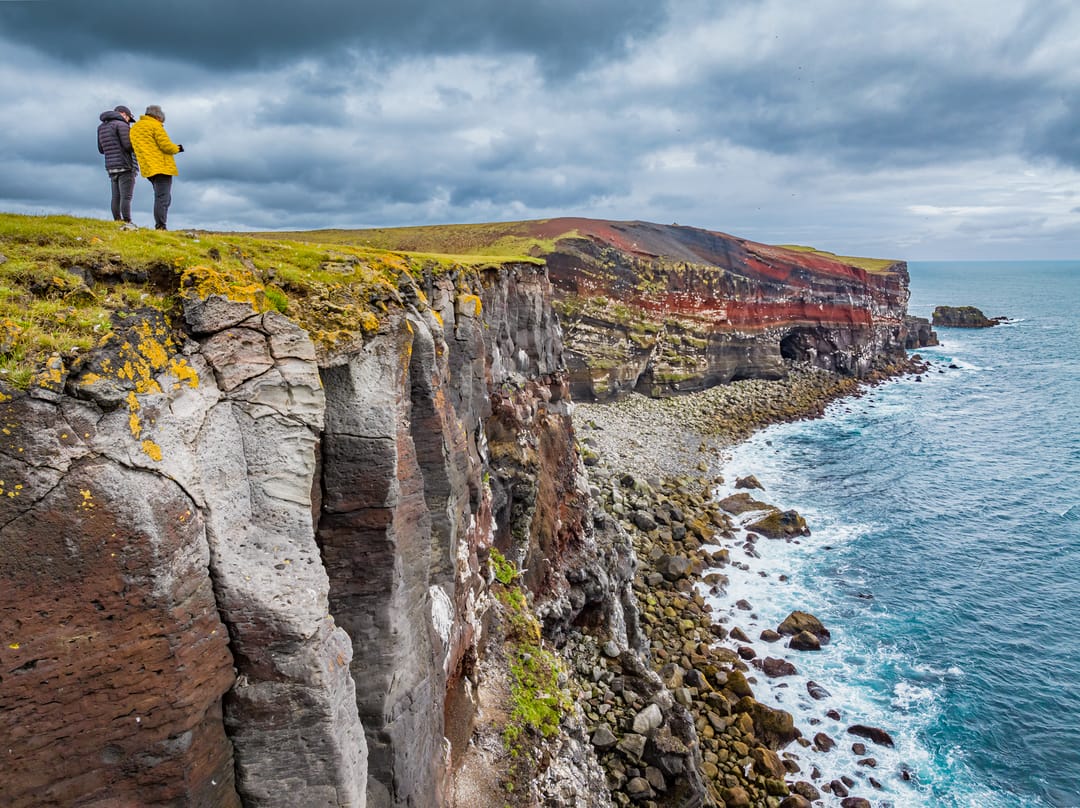
- Kleifarvatn Lake: The closest natural pairing, Kleifarvatn Lake, is bordered by dark volcanic slopes and black sand shorelines.
- Grænavatn: Just a few minutes south of Seltún, Grænavatn is a striking green lake set inside an old volcanic explosion crater. Its unusual colour is linked to minerals and the area’s geothermal character.
- Krýsuvíkurkirkja: A short drive down the road brings you to this small, minimalist country church. Surrounded by open fields and distant volcanic slopes, it offers a peaceful contrast to the Seltún geothermal area.
- Brimketill: Continue toward the rugged southern coastline near Grindavík to find Brimketill, a naturally carved lava rock pool shaped by powerful Atlantic waves.
- Reykjavík and Perlan: Returning to Reykjavík allows you to tie the whole experience together. While Seltún shows geothermal power at the surface, Perlan explains the volcanic systems and tectonic forces behind it.
FAQs
Seltún is located on the Reykjanes Peninsula in southwest Iceland. It sits within the broader Krýsuvík geothermal zone, just off Road 42 and just south of Kleifarvatn Lake.
There is generally no entrance fee to walk around Seltún. Travellers should always check current local rules regarding parking fees and site access before arriving.
Most visitors spend between 20 and 45 minutes at the site. This gives you enough time to stroll along the marked paths, read the informational safety signs, and photograph the landscape.
Yes, provided that you stay on the designated boardwalks, marked paths, and viewing platforms. The geothermal water, mud pots, and steam can be extremely hot, and the ground outside the marked trails may be unstable.
Absolutely. Seltún is a realistic self-drive half-day trip from the capital. It pairs perfectly with a scenic drive past Kleifarvatn Lake and other volcanic landscapes across the Reykjanes Peninsula.
Popular articles
The Complete Guide to the Northern Lights in Iceland
Learn how the Northern Lights form, where to see them in Iceland, how to prepare, take photos, read the forecast, and improve your chances of a sighting.
Let's Talk About the Volcano in Iceland About to Erupt
Is a volcano in Iceland about to erupt? Here’s what travelers should know about Svartsengi, Reykjanes activity, flights, safety, and the Blue Lagoon.
Solar Eclipse 2026 in Iceland | What Happened
Iceland experienced a total solar eclipse on August 12, 2026. Discover what happened in Reykjavík, eclipse times, totality locations and more.
September 2026 updates on the Sundhnúkagígar Eruption in the Reykjanes Peninsula!
The current eruption in the Reykjanes Peninsula, is called Sundhnúkagígar Crater Row. See insights on the seismic activity and volcanic eruptions in the area!
Active Volcanoes in Iceland 2026
Active volcanoes aren't the same thing as active eruptions. A volcano can be considered active even when it is not ejecting ash, rock, gases and magma, so which are active in Iceland in 2026?
Top 10 Places To See the Northern Lights in Iceland
Discover the best places to see the Northern Lights in Iceland, from Jökulsárlón and Kirkjufell to Reykjavík, Þingvellir and North Iceland.
Ice Caves From Reykjavik
Planning an ice cave trip from Reykjavik? Compare Katla, Langjökull and Vatnajökull, travel times, seasons and Perlan’s ice cave in the city.