
Guide to Waterfalls in North Iceland
If you ever need a reason to visit North Iceland, look no further than the waterfalls North Iceland is famous for. While the South Coast often steals the spotlight, the North offers a more rugged, untamed experience. Here, you’ll trade the crowds for a landscape of raw power, ancient basalt architecture, and a refreshing sense of solitude. From legendary cascades to smaller idylls in quiet canyons, this guide covers the most spectacular falls in the North.
Top Waterfalls in North Iceland
Goðafoss
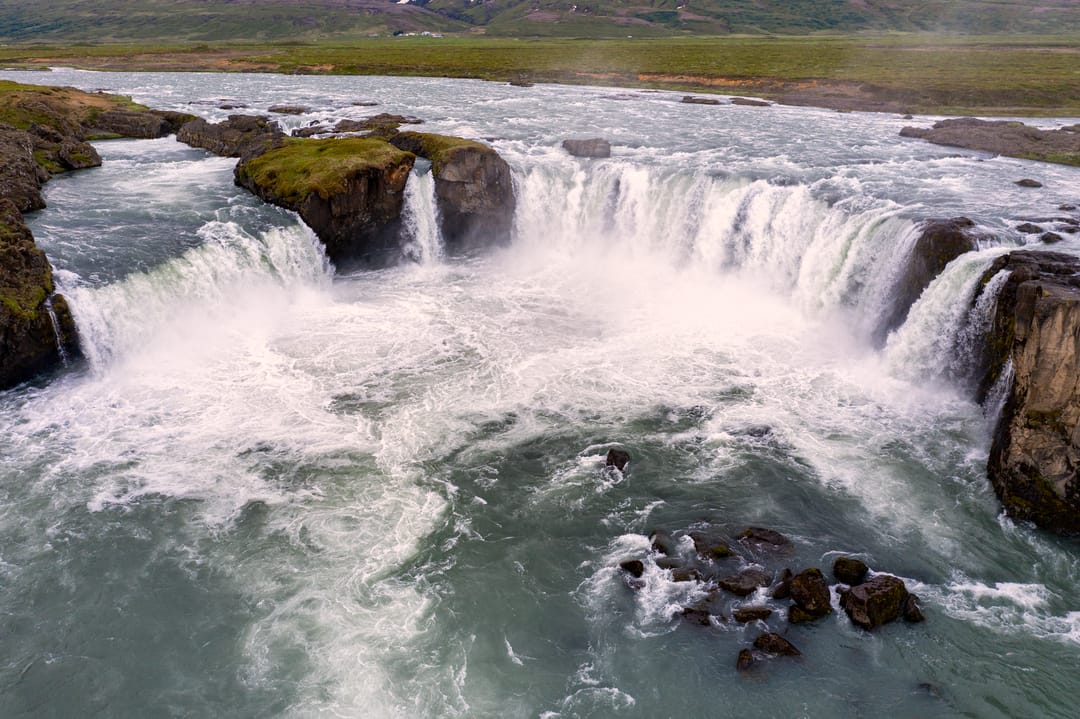
Located right off the Ring Road, Goðafoss is arguably the most famous of the waterfalls North Iceland has to offer. Known as the “Waterfall of the Gods,” its name comes from a pivotal moment in Icelandic history around 1000 AD. Legend has it that the lawspeaker Þorgeir Ljósvetningagoði threw his statues of the Norse gods into the falls here. The gesture marked the country’s official conversion to Christianity
Goðafoss is as magnificent as its name suggests. The waterfall forms a stunning 30-meter-wide (98-foot) horseshoe, where the Skjálfandafljót river drops 12 meters (39 feet) over a curved precipice. In certain light conditions, the water can appear a brilliant turquoise against the dark volcanic rock
Traveler’s Tip: You can access both sides of the falls via separate parking areas. The west bank offers the classic, panoramic head-on view of the horseshoe. For a more intimate perspective, head to the east bank, where paths lead you closer to the water’s edge.
Dettifoss
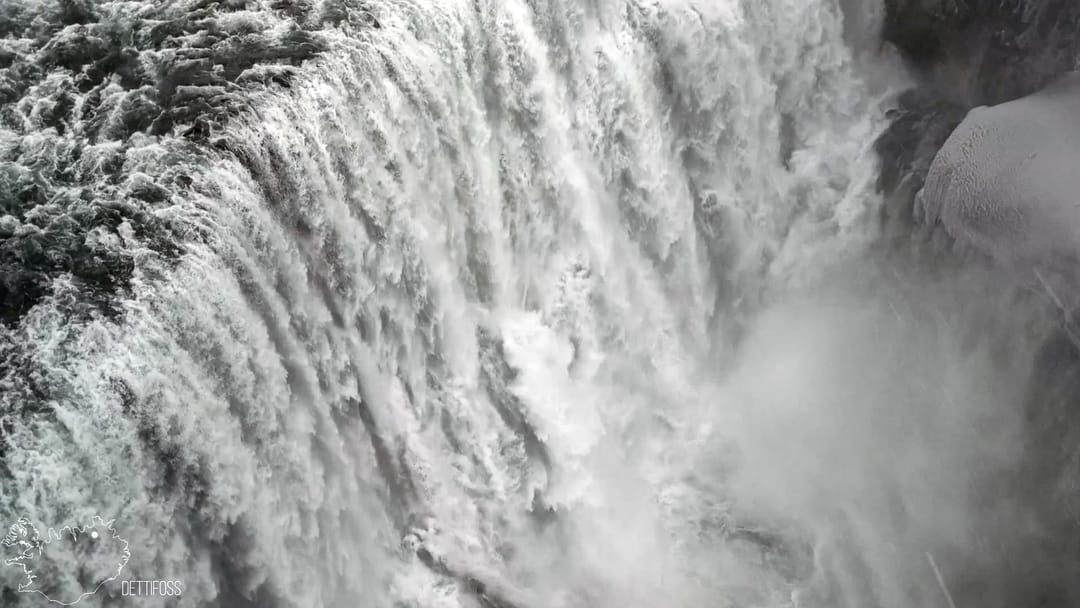
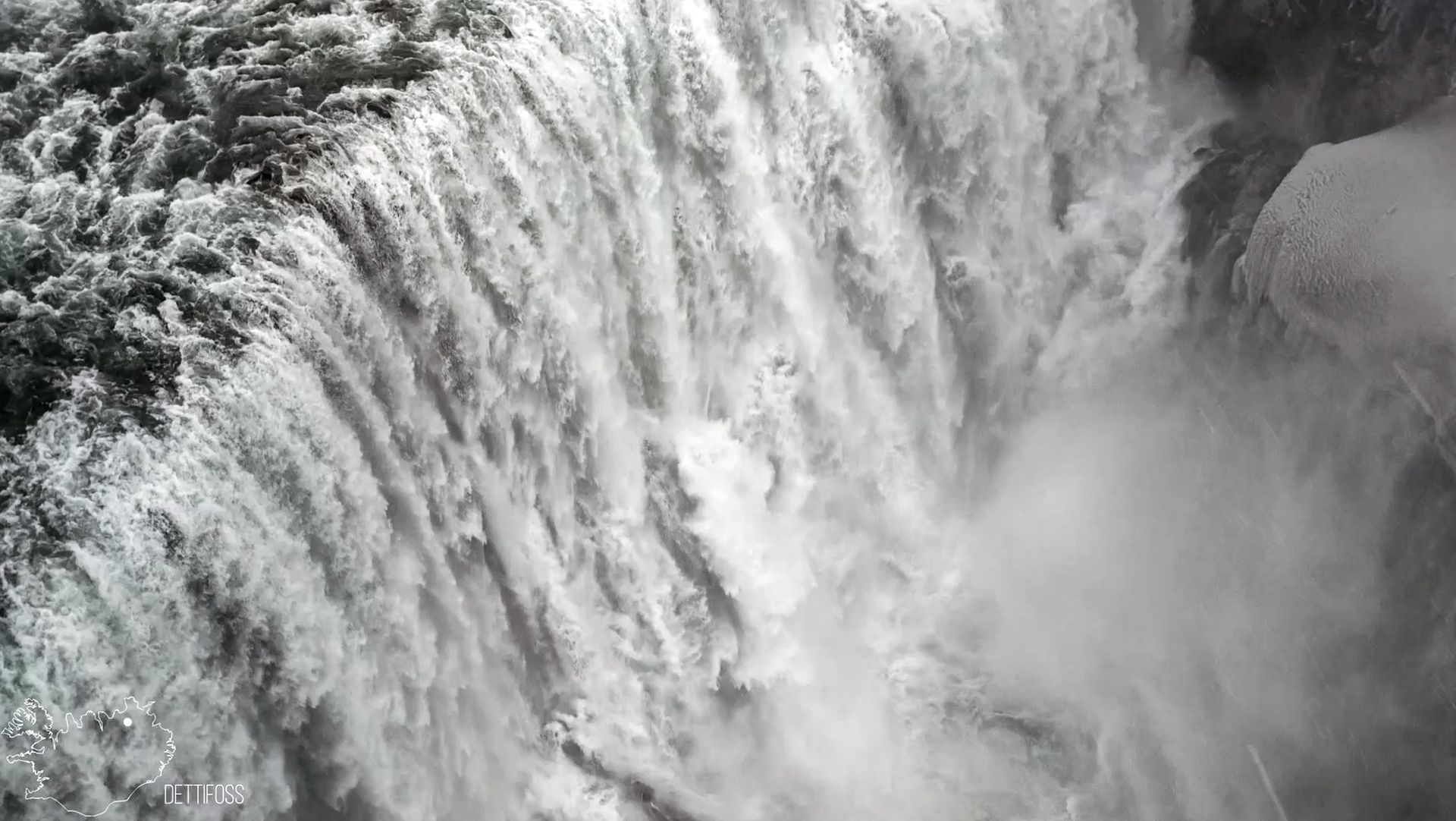
If Goðafoss is the most beautiful among northern cascades, Dettifoss is the most intimidating. Often described as the most powerful waterfall in Europe, it’s a centerpiece of the famous Diamond Circle route and a true titan of nature.
Fed by the Vatnajökull glacier, the water is a thick, sediment-rich grey thundering 44 meters (144 feet) into the Jökulsárgljúfur canyon. Stand by the water’s edge, and you can actually feel the basalt rock vibrating beneath your feet. The surroundings are vast and rocky, a stark volcanic desert that feels worlds away from the lush greenery of the south.
Selfoss and Hafragilsfoss
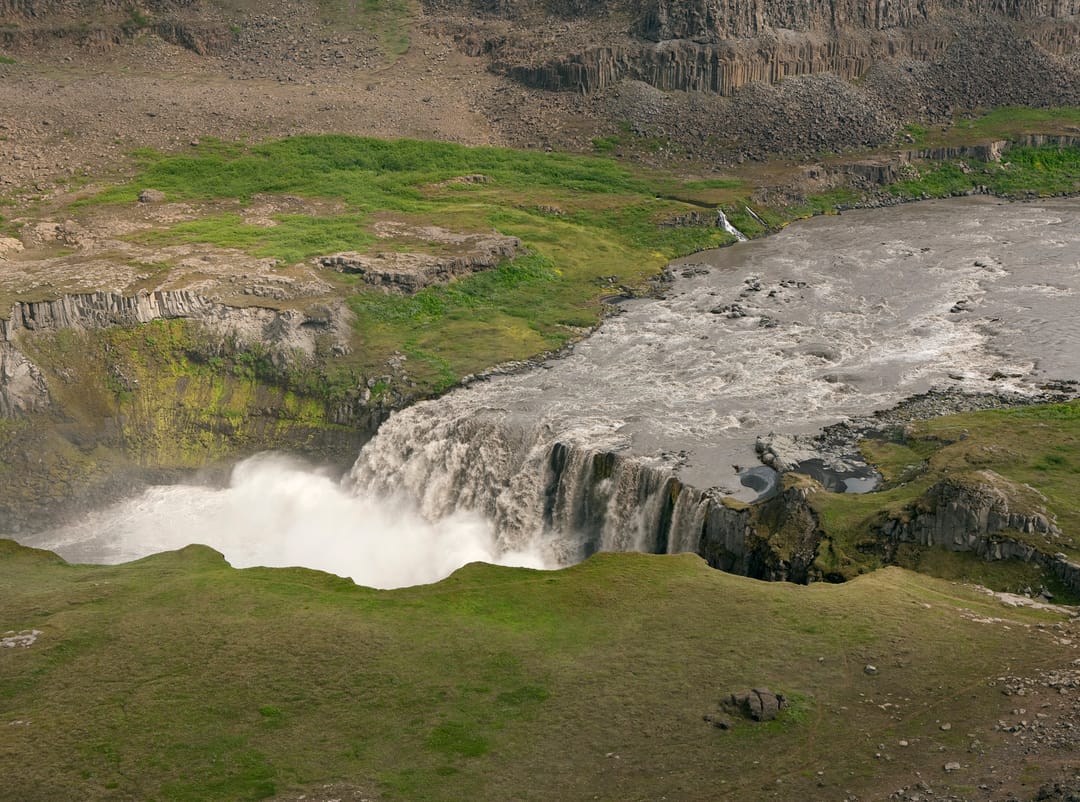
Just a short distance from Dettifoss sit two other impressive waterfalls that North Iceland travelers shouldn’t miss. Located upstream, Selfoss is a much gentler counterpart to its thundering neighbor. Rather than a single drop, it consists of a wide veil of water cascading over a series of basalt benches. A well-marked, easy hiking trail connects the Dettifoss parking area to Selfoss, offering a fantastic stretch of canyon scenery.
Further downstream sits Hafragilsfoss. Towering 27 meters (89 feet) high, this powerful waterfall provides one of the best perspectives of the Jökulsárgljúfur canyon. From the viewpoint, you can see the river cutting through deep red volcanic rock and ancient lava fields. While it lacks the sheer volume of Dettifoss, the surrounding geology makes it a photographic stop we highly recommend.
Aldeyjarfoss
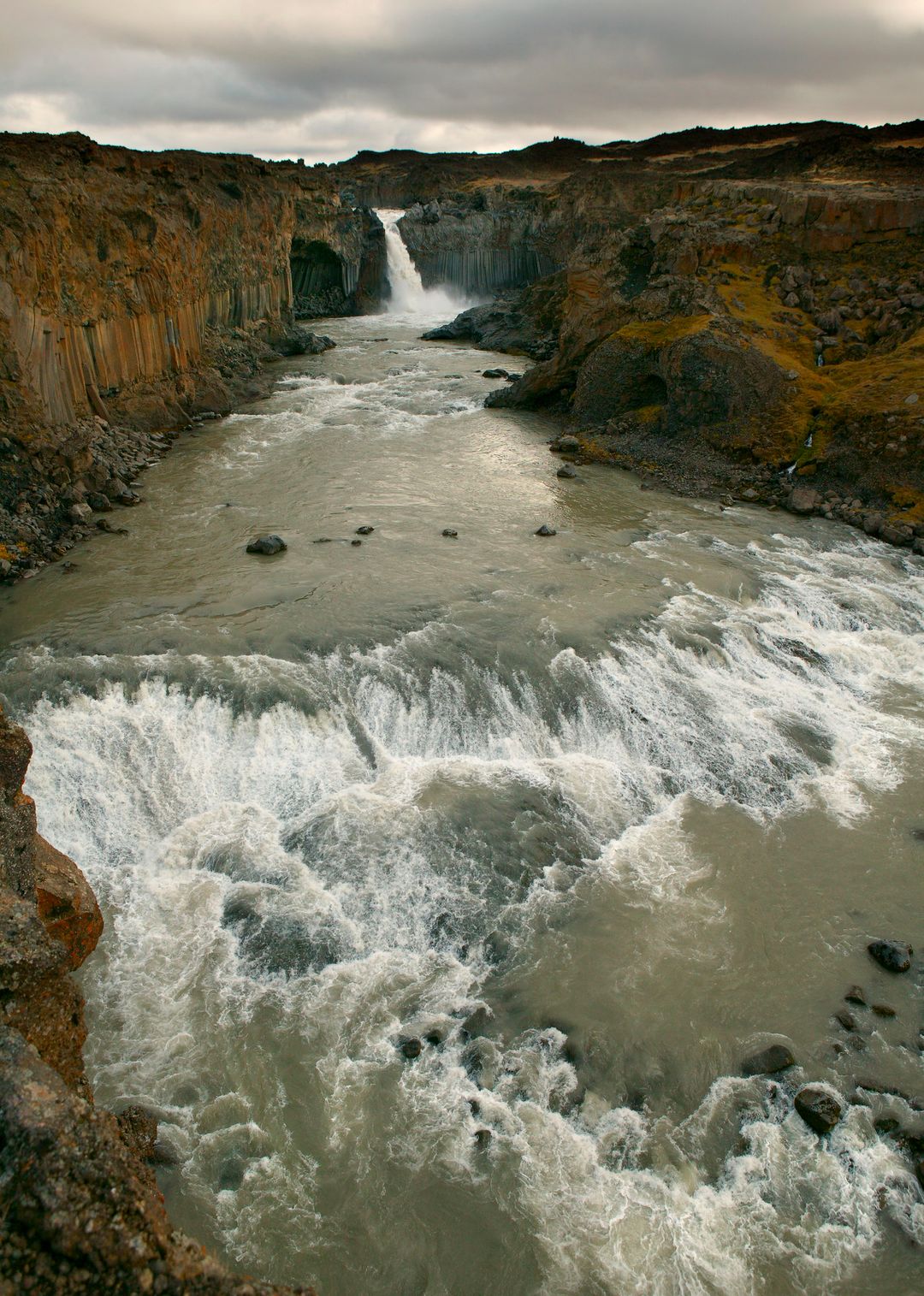
For some, Aldeyjarfoss is the most beautiful waterfall in Northern Iceland. It’s a breathtaking sight: perfectly symmetrical, hexagonal basalt columns almost completely envelop a turquoise lagoon. The stillness is broken only by a narrow chute of icy glacial water tumbling 20 meters (65 feet) from above. The contrast between the churning white water and the dark, architectural rock looks almost intentional.
Located near the northern approach to the Sprengisandur highland road, Aldeyjarfoss feels more remote than waterfalls closer to the coast. During the early spring and winter months, the road is often impassable for standard vehicles.
Reykjafoss
For a beautiful waterfall that feels a bit more intimate than the famous giants, head to Reykjafoss in the Skagafjörður region. This is one of the more serene waterfalls North Iceland is home to, where the water drops in wide, churning tiers. The result is a gushing white wall that’s especially majestic during the spring melt.
The combination of scenery and relaxation is a major draw here. Just a five-minute walk from the falls is Fosslaug, a small, natural stone-lined pool tucked right against the riverbank. A soak in these warm mineral waters is a blissful break in between chasing waterfalls in Iceland.
Kolugljúfur Canyon
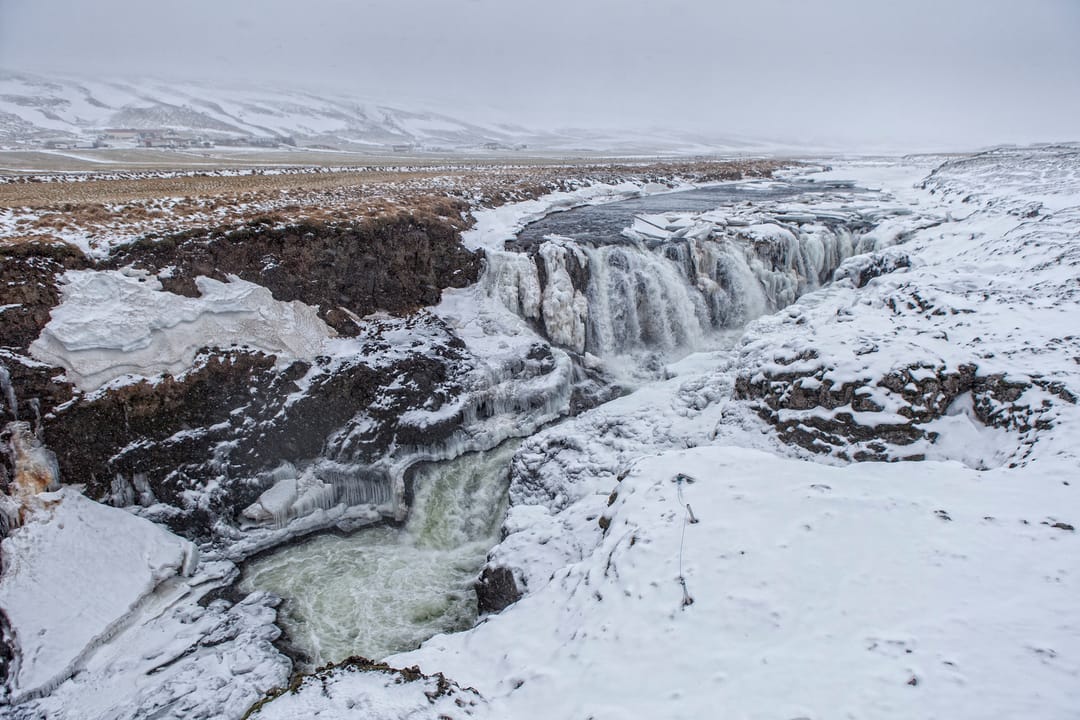
Named after the giantess Kola, who legend says carved the gorge with her bare hands, Kolugljúfur is a dramatic rift in the Earth. While many travelers skip it while driving the Ring Road, this 1-kilometer (0.6-mile) canyon is well worth the 10-minute detour.
The contrast is striking, with the Víðidalsá river flowing peacefully through the valley. Then, it suddenly plunges over the Kolufossar falls into a narrow, 50-meter-deep chasm of twisted volcanic rock. The sight of the water leaping into the abyss is one of the most ruggedly beautiful in the region. The waterfall is visible from the bridge spanning the canyon, but the best views are from the trails along the rim.
Bergárfoss
For travelers hoping to escape the more crowded waterfalls North Iceland is known for, Bergárfoss offers a quiet, “insider” secret. It is truly off the beaten path. Tucked away in the Víðidalur valley, this waterfall provides a meditative solitude that is rare to find at more famous landmarks.
The falls are a startling contrast to their quiet, pastoral surroundings. The Bergá river plunges through a narrow rock corridor, falling in dark, stony tiers and fanning out into a clear, wide pool. It’s the perfect spot for a moment of reflection before continuing your journey.
Keep in mind that getting to Bergárfoss involves a rough dirt road and a 20-minute hike. A 4x4 is highly recommended.
Best Time to Visit North Iceland Waterfalls
Timing your trip to the North is all about balancing water volume with road accessibility. While the waterfalls in North Iceland are beautiful year-round, each season offers an entirely different experience.
- Spring (April–May): This is the transition season. While coastal snow begins to melt, the Highlands remain frozen. It’s a great time for smaller crowds, but be aware that the most powerful glacial “thaw” hasn't fully hit yet, and some secondary roads remain impassable.
- Summer (June–August): This is the peak flow season for glacial giants like Dettifoss. June brings the Midnight Sun and the official opening of highland roads (F-roads). It’s the only time you can easily reach remote gems like Aldeyjarfoss. The rivers are at their most thunderous during these warmer months.
- Autumn (September–October): As the landscape turns to shades of gold and burnt orange, the crowds thin out. This is the ideal “shoulder season” to photograph the falls framed by fall colors. You’ll get your first chance of seeing the Northern Lights dancing over the water at night.
- Winter (November–March): The North transforms into a frozen kingdom of blue ice and snow-dusted basalt. While the Ring Road is well-maintained, reaching the falls requires a 4x4 and careful monitoring of road conditions. Some falls, like Goðafoss, remain accessible, while others may require a professional “Super Jeep” tour to reach safely.
Tips for Responsible Exploration in the North
The North Iceland landscape is as fragile as it is powerful. To ensure these sites remain pristine and you remain safe as you explore, keep the following in mind:
- Master Your Layers: Even in late spring, the North can be hit by biting Arctic winds. Use a three-layer system: a moisture-wicking base, an insulating fleece mid-layer, and a fully waterproof/windproof outer shell.
- Invest in Proper Footwear: Wear sturdy, waterproof hiking boots with deep tread. The paths around Kolugljúfur and Aldeyjarfoss can be incredibly slippery when wet or icy.
- Stay on the Marked Paths: During the spring thaw, the ground becomes a muddy soup. Stepping off-trail to avoid a puddle can destroy sensitive, ancient mosses that take decades to recover.
- Respect Wildlife Boundaries: From May to July, be mindful of ground-nesting birds like the Golden Plover. If a bird circles you or calls loudly, you are likely too close to a nest. Similarly, keep a wide berth from Arctic fox dens to ensure kits aren't abandoned.
- Know Your Vehicle’s Limits: While many falls are near the Ring Road, reaching Aldeyjarfoss or Bergárfoss often requires a 4x4. Attempting F-roads in a 2WD car is illegal, dangerous, and will void your insurance coverage entirely.
- Heed Safety Barriers: Never cross ropes or stone markers. The canyon edges in the North consist of brittle basalt that can crumble without warning under the weight of a person.
- Leave No Trace: Pack out all trash and secure your belongings. The fierce northern winds can easily blow lightweight plastic or paper out of your hands and into the pristine canyons.
FAQs
What is the most beautiful waterfall in Iceland?
While beauty is subjective, Aldeyjarfoss is often considered among the most photogenic due to its perfectly symmetrical basalt columns. Many also rank the horseshoe-shaped Goðafoss one of the most stunning waterfalls in the country.
Is Goðafoss waterfall worth it?
Absolutely; its combination of accessibility (located directly off the Ring Road) and raw natural beauty makes it a must-see. It is one of the few bucket list waterfalls you can fully enjoy without a long hike.
Can you walk behind any waterfalls in North Iceland?
No, unlike the famous Seljalandsfoss, most Northern falls are too powerful or geographically steep for paths behind the curtain. You can, however, get close enough to feel the spray at the base of Goðafoss and Bergárfoss.
Is there an entrance fee for these waterfalls?
Most waterfalls in North Iceland are free to visit, but parking fees are now common at the most popular sites.
Do I need a 4x4 to visit waterfalls in North Iceland?
For Goðafoss and the west side of Dettifoss, a standard car is fine in summer. However, a 4x4 is required for Aldeyjarfoss and is highly recommended for Bergárfoss and the east side of Dettifoss.
Can you see the Northern Lights at these waterfalls?
Yes, if you visit between September and April, waterfalls like Goðafoss and Dettifoss provide a spectacular foreground for the aurora. Just remember that paths can be extremely icy at night; crampons are highly recommended.
Popular articles
The Complete Guide to the Northern Lights in Iceland
Learn how the Northern Lights form, where to see them in Iceland, how to prepare, take photos, read the forecast, and improve your chances of a sighting.
Let's Talk About the Volcano in Iceland About to Erupt
Is a volcano in Iceland about to erupt? Here’s what travelers should know about Svartsengi, Reykjanes activity, flights, safety, and the Blue Lagoon.
Solar Eclipse 2026 in Iceland | What Happened
Iceland experienced a total solar eclipse on August 12, 2026. Discover what happened in Reykjavík, eclipse times, totality locations and more.
September 2026 updates on the Sundhnúkagígar Eruption in the Reykjanes Peninsula!
The current eruption in the Reykjanes Peninsula, is called Sundhnúkagígar Crater Row. See insights on the seismic activity and volcanic eruptions in the area!
Active Volcanoes in Iceland 2026
Active volcanoes aren't the same thing as active eruptions. A volcano can be considered active even when it is not ejecting ash, rock, gases and magma, so which are active in Iceland in 2026?
Top 10 Places To See the Northern Lights in Iceland
Discover the best places to see the Northern Lights in Iceland, from Jökulsárlón and Kirkjufell to Reykjavík, Þingvellir and North Iceland.
Ice Caves From Reykjavik
Planning an ice cave trip from Reykjavik? Compare Katla, Langjökull and Vatnajökull, travel times, seasons and Perlan’s ice cave in the city.