
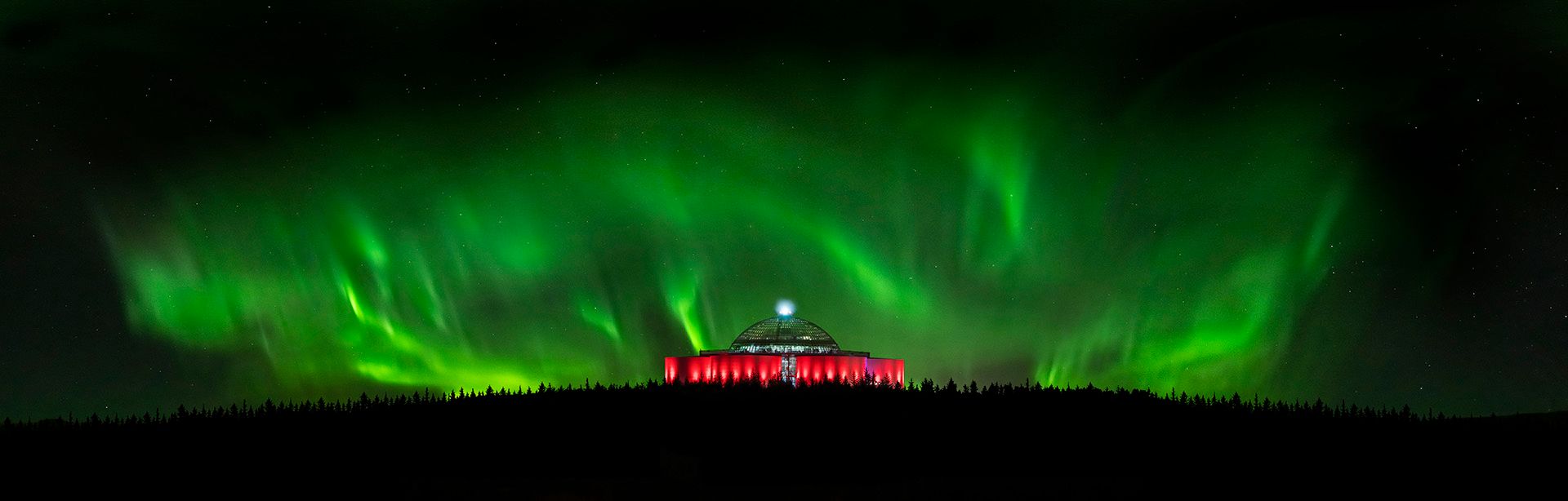
The Complete Guide to the Northern Lights in Iceland
Learn how the Northern Lights form, where to see them in Iceland, how to prepare, take photos, read the forecast, and improve your chances of a sighting.
The Northern Lights are one of Iceland’s best-known natural phenomena, but seeing them outside is never guaranteed. You need darkness, clear weather conditions, and enough aurora activity at the same time.
That does not mean you have to leave everything to luck. Knowing when to look, how to read the forecast, where to go, and what to bring can improve your chances of seeing the Northern Lights in Iceland.
This guide covers the main things to know before heading out. For more detail on specific topics, you can follow the related guides linked throughout.
What Are the Northern Lights?
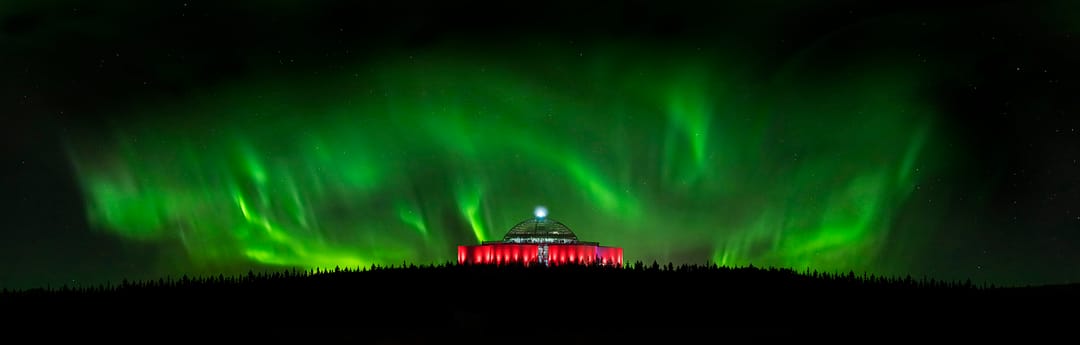
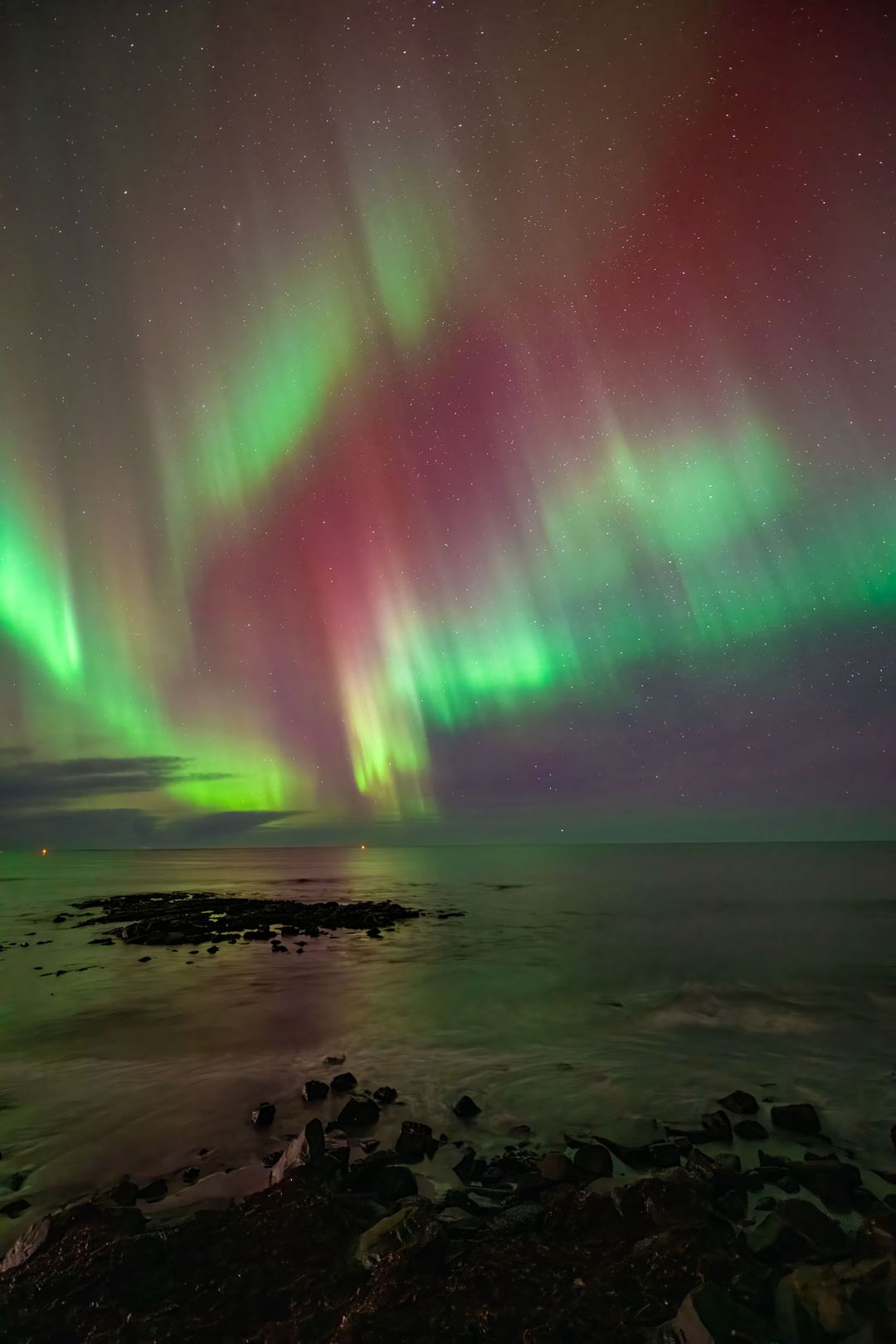
What are the Northern Lights? In simple terms, they are natural displays of coloured light that appear in the night sky at high northern latitudes, including Iceland. They can appear as faint bands, arcs or larger areas of moving light. Green is the colour most people recognise, but red, pink, purple and blue can also appear.
Some displays last only a few minutes, while others remain active for much longer. Their shape, brightness and colour can also change quickly. The scientific name for the Northern Lights is the Aurora Borealis. The same phenomenon also occurs in the Southern Hemisphere, where it is known as the Aurora Australis.
How the Northern Lights Form
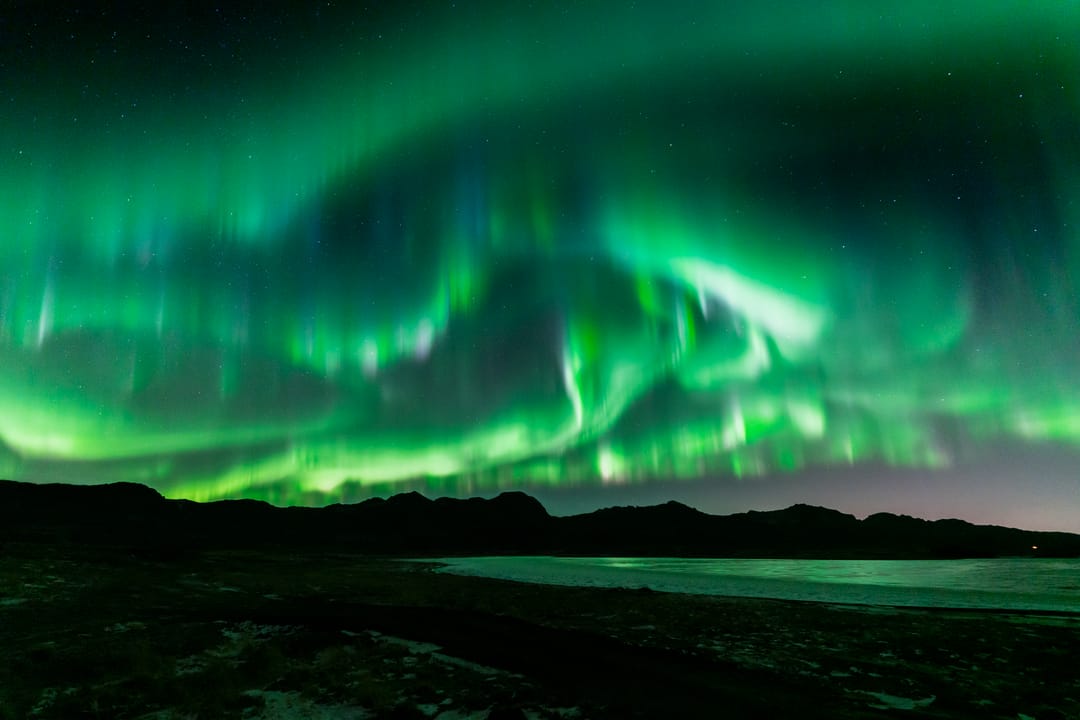
The Northern Lights begin with activity on the Sun. Charged particles travel towards Earth through the solar wind, where Earth’s magnetic field guides many of them towards the polar regions. They then collide with gases in the upper atmosphere, releasing energy as visible light.
If you want to understand more about what causes the northern lights, solar activity, Earth’s magnetic field, and atmospheric gases all play a role. Stronger solar activity can lead to more intense displays, but from the ground, darkness and cloud cover still make a big difference.
Why the Northern Lights Have Different Colours?
Green is the most common Northern Lights colour, but it is not the only one.
The colour depends mainly on:
- which gas is involved
- how high the interaction happens
- how strong the aurora activity is
Oxygen commonly produces green and red light, while nitrogen can contribute blue and purple tones. A camera may also record colour more strongly than the human eye. A faint aurora can look pale or grey in person but appear much greener in a photograph.
Why Iceland Is a Good Place to See the Northern Lights
Iceland’s northern location makes it well placed for aurora viewing.
The country sits close to the auroral oval, the region around the magnetic poles where Northern Lights activity is most common. During the darker part of the year, Iceland also has long periods when the sky is dark enough for the aurora to be visible.
Outside Reykjavík and other towns, there are large areas with relatively little light pollution. That can make weaker activity easier to see.
Travellers following the Ring Road, visiting the Golden Circle or staying in rural areas may have good viewing opportunities close to where they are staying.
Iceland’s location helps, but it does not guarantee a sighting. Weather conditions on the specific night still matter.
When Can You See the Northern Lights in Iceland?
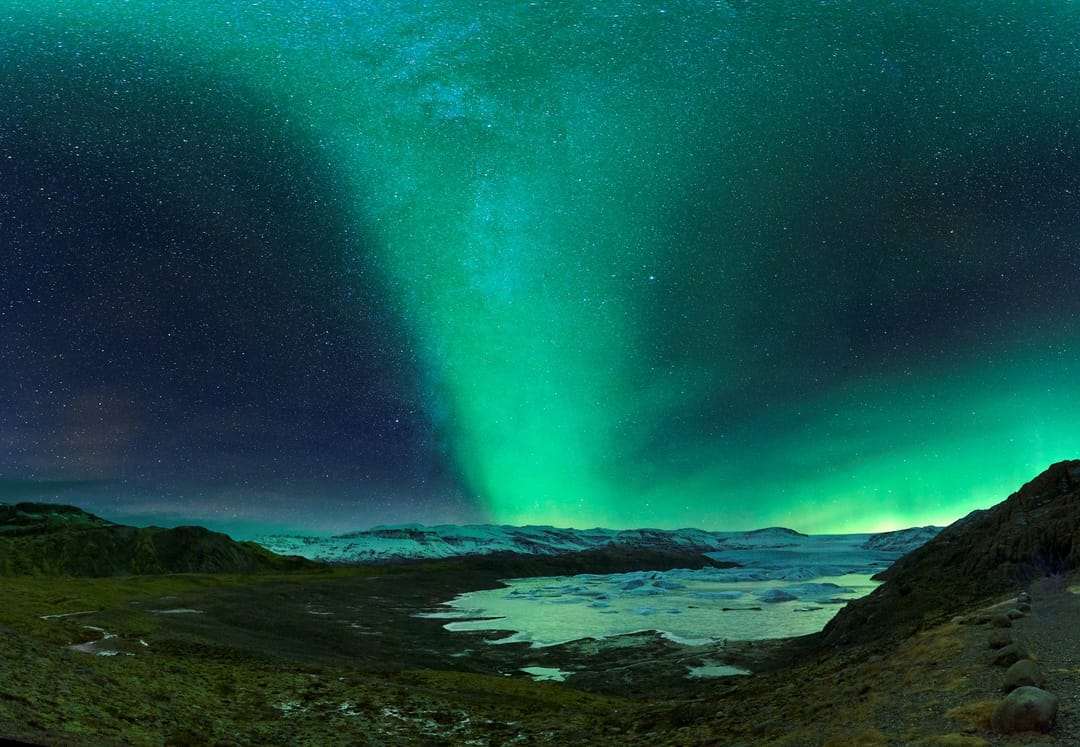
The best time to see the Northern Lights in Iceland is not simply “winter”. You can see the northern lights from late August into early April because that is when Iceland gets enough darkness. The auroras occur throughout the year, but summer skies make it too bright to see them.
A clear night in September can be better than a cloudy night in January, so the month alone does not determine your chances. If your travel dates are already fixed, the Northern Lights in Iceland by month gives a closer look at daylight and viewing conditions across the season.
Understanding the Northern Lights Forecast
A Northern Lights forecast is most useful when you read several conditions together.
Check:
- Cloud cover: Can you actually see the sky?
- Aurora activity: Is geomagnetic activity expected?
- Darkness: Will it be dark enough?
- Timing: Do the clearest conditions and activity overlap?
The Kp index and solar wind can help indicate aurora activity, but they should not be read on their own. A strong aurora forecast under thick cloud is not much use. A modest forecast with clear skies can still be worth watching.
Weather forecasts can also change quickly in Iceland. It is often worth checking again later in the day, especially if the morning forecast looked poor. Before going out and searching yourself, it is good to know how to read the Northern Lights forecast.
Improving Your Chances of Seeing the Northern Lights
There is no way to guarantee an outdoor sighting, but a few practical choices can improve your chances of seeing the Northern Lights in Iceland.
- Give yourself more than one night.
- Start checking conditions early in your trip.
- Look at cloud cover as well as aurora activity.
- Recheck the forecast later in the day.
- Move away from strong light pollution where practical.
- Do not save your only attempt for the final night.
A clear sky is often more important than a very high forecast number. You can also improve your odds by staying flexible about where and when you go out and by learning how to find the Northern Lights.
Choosing a Good Northern Lights Location
The most useful location is somewhere with a dark sky, a wide view and safe access.
Good locations usually have:
- limited city lights
- an open view of the horizon
- somewhere safe to park
- suitable weather conditions
- little obstruction from buildings or terrain
Before going out to find them on your own, make sure to check the forecast and some of the best places to see the Northern Lights in Iceland for the best chances of seeing them.
Can You See the Northern Lights in Reykjavík?
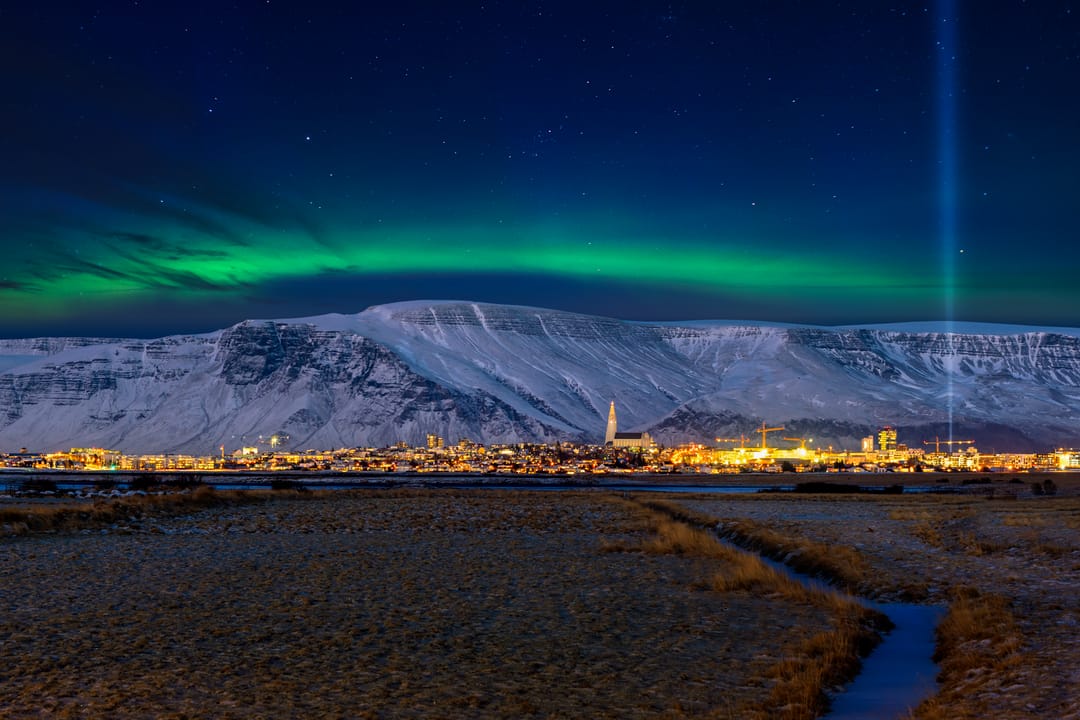
Yes, you can see the Northern Lights from Reykjavík. Strong aurora activity can be visible even from central parts of the city, although light pollution makes weaker displays harder to notice. If the weather forecast is promising, look for darker areas with a wide view of the sky rather than assuming you need to leave Reykjavík completely.
City lights do not make the aurora disappear. They just make it harder to see faint activity. A general tip is that if you can see the stars, you have a great chance of seeing the Northern Lights in Reykjavík.
Guided Tours vs Seeing Them on Your Own
A guided tour does not guarantee a sighting. The Northern Lights still depend on cloud cover, darkness and aurora activity.
A guided tour may suit you if:
- you do not have a car
- you are not comfortable driving at night
- you want someone else to monitor the weather forecast
- you prefer local guidance on where to go
Going independently may suit you if:
- you have your own transport
- you are comfortable checking road and weather conditions
- you want more flexibility
- you have several nights available
If you are planning a Northern Lights tour in Iceland, booking one earlier in your stay gives you more flexibility if conditions are poor on the first evening.
What to Wear and Bring
Dress warmer than you would for normal sightseeing. Northern Lights viewing often means standing still outside for a while, which can feel much colder than walking around during the day.
For a more detailed packing list, see what to wear and bring to see the Northern Lights.
Useful clothing includes:
- a thermal or wool base layer
- an insulating mid-layer
- a waterproof and windproof outer layer
- gloves
- a warm hat
- thick socks
- insulated or waterproof footwear
It is also worth bringing a charged phone, portable battery and head torch. If you plan on photographing the Northern Lights, bring your camera gear and a tripod if you use one.
Photographing the Northern Lights
You do not need professional equipment to get a good photo, but keeping the camera steady makes a big difference.
With a dedicated camera, a tripod and manual settings give you more control over shutter speed, aperture, focus and ISO. If you want to get more specific with settings, photographing the Northern Lights covers both camera and phone photography.
Modern smartphones also work really well. Use night mode if available, turn off the flash and keep the phone as still as possible. Cold temperatures can drain batteries more quickly, so it is worth carrying a spare if you plan to stay out for a while.
Staying Safe While Looking for the Northern Lights
Northern Lights viewing often means driving and walking in darkness, sometimes in difficult weather conditions.
Keep these basics in mind:
- Do not stop on the side of the road for a photo.
- Use proper parking areas.
- Check road and weather conditions before driving.
- Avoid unfamiliar icy or uneven ground in the dark.
- Do not drive into poor weather just because the aurora forecast is strong.
A good forecast is never more important than safe conditions. If you have never visited Iceland before, it is especially important to remember that wind, ice and visibility can change quickly.
Seeing the Northern Lights With Children
Seeing the Northern Lights with children usually works best when you keep the plan flexible. A long drive followed by an hour of waiting in the cold can be a lot, especially with younger kids.
Choose somewhere easy to reach and ideally close to where you are staying. If the aurora does not appear quickly, you want the option to head back without turning the evening into a major outing.
Warm layers, snacks and a charged phone are useful, but timing matters too. With younger children, it can be easier to go out on a night when activity is expected earlier rather than planning around midnight.
It also helps to set expectations before you leave. The Northern Lights are not always bright green or immediately obvious, and weaker displays can look pale at first.
Northern Lights in Icelandic Culture
Before the science of the aurora was understood, people explained the Northern Lights through stories, signs and beliefs. In Iceland, those ideas became part of local folklore, with different meanings attached to when and how the lights appeared. You can read more about Icelandic folklore and the Northern Lights.
The aurora is not unique to Iceland. In the Southern Hemisphere, the same type of phenomenon is known as the Aurora Australis, while auroras have also been observed on other planets in the solar system.
If you are interested in the science beyond Earth, Northern Lights on other planets looks at where auroras have been observed and how they differ from those we see here. Research is also continuing into how changes in the atmosphere may affect auroral conditions over time, including the relationship between climate change and the Northern Lights.
See and Learn About the Northern Lights at Perlan
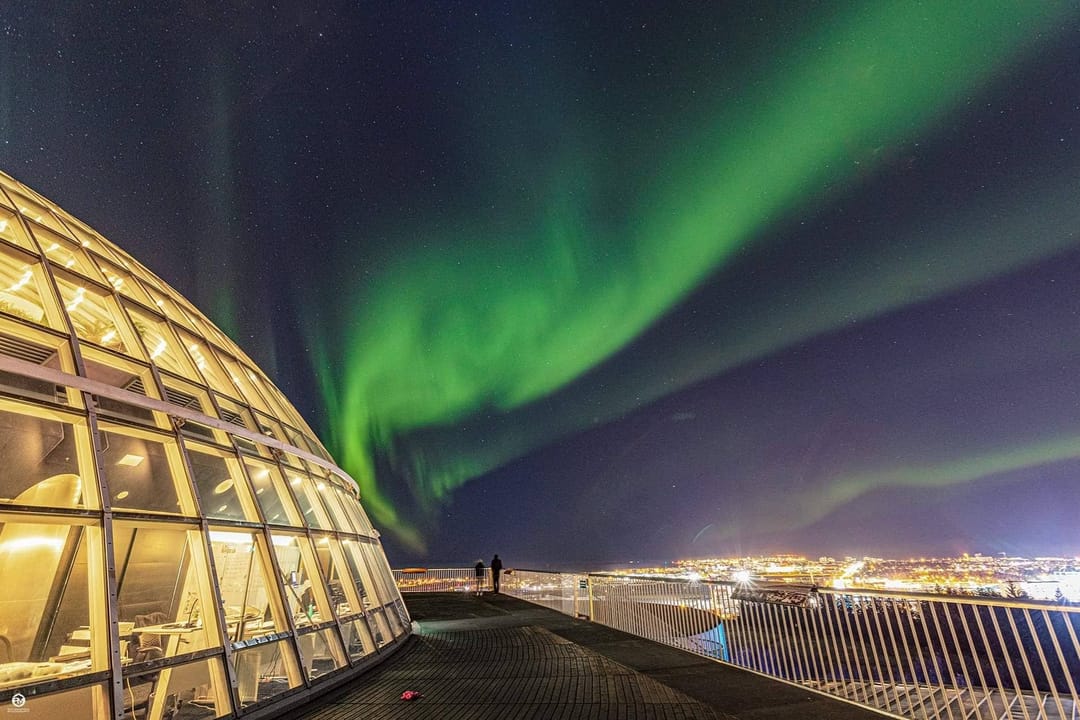
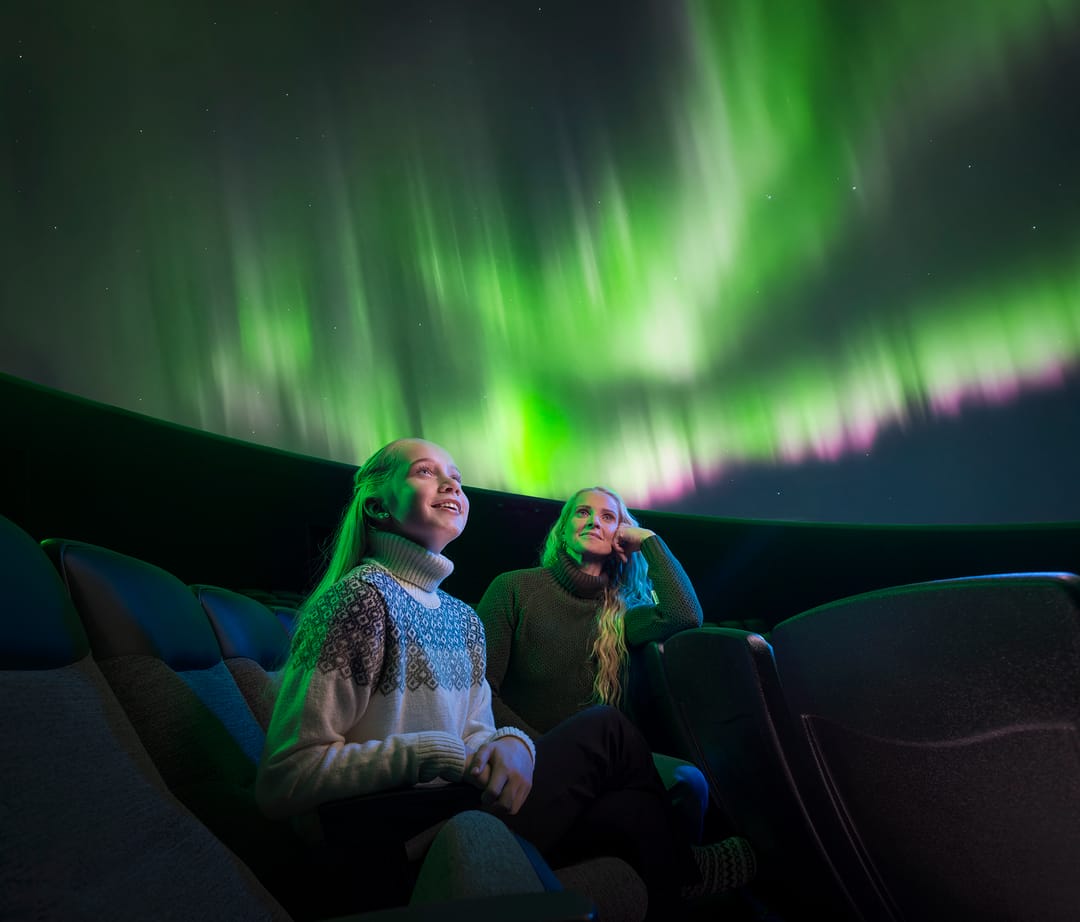
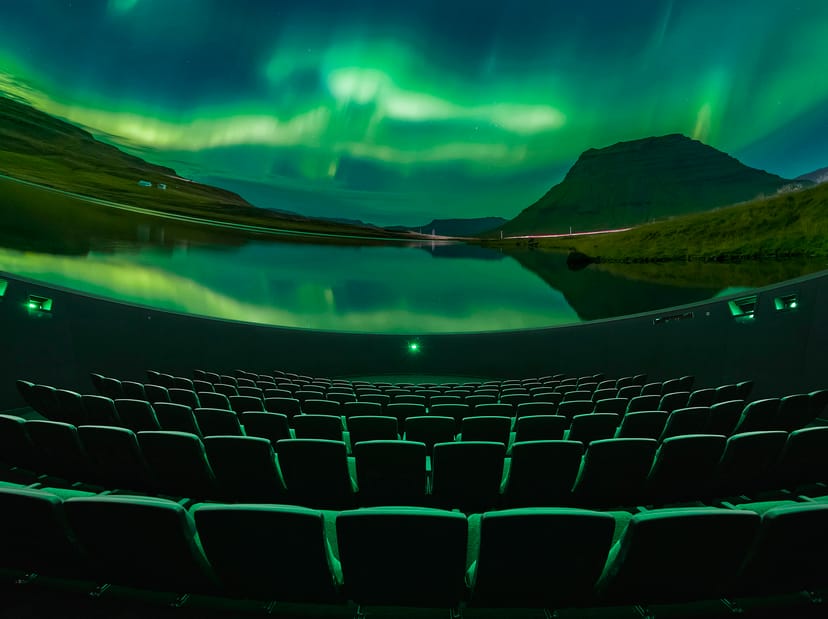
Seeing the Northern Lights outside always depends on the weather. Perlan’s Áróra show gives visitors a closer look at the aurora inside Iceland’s planetarium. The 8K show combines Northern Lights footage with explanations of the science and Icelandic stories connected to the phenomenon.
It can be useful before heading out to look for the real thing, especially if you want to understand what causes the aurora and why it changes. It also gives you a way to experience the Northern Lights if cloud cover or poor weather gets in the way during your trip.
Make the Most of Your Northern Lights Trip
Seeing the Northern Lights in Iceland comes down to a combination of planning and conditions you cannot control.
Check the weather forecast, pay attention to cloud cover and aurora activity, and give yourself several opportunities if possible. You do not need the coldest night or the highest forecast number. You need enough darkness and a clear sky to see what is happening above you.
Whether you join a guided tour, head somewhere darker on your own, or simply step outside your accommodation, staying flexible gives you the best chance of catching a clear window. And if the weather does not cooperate, there is still plenty to learn about the science, colours and stories behind the aurora while you are in Iceland
FAQs
The viewing season generally runs from late August into early April, when there is enough darkness. Clear skies and aurora activity on the specific night matter just as much as the month.
Yes. Strong displays can be visible from Reykjavík, although moving away from bright city lights can make weaker activity easier to see.
No. You can look for them independently if you have safe transport and are comfortable checking the weather and aurora forecast yourself.
Charged particles from the sun travel towards Earth in the solar wind and interact with gases in the atmosphere, producing visible light.
Yes. Many modern phones can photograph the aurora using night mode. Keep the phone as still as possible and turn off the flash.
No. Cold temperatures do not create stronger aurora activity. Northern Lights are associated with colder months because that is when Iceland has enough darkness to see them.
Popular articles
Let's Talk About the Volcano in Iceland About to Erupt
Is a volcano in Iceland about to erupt? Here’s what travelers should know about Svartsengi, Reykjanes activity, flights, safety, and the Blue Lagoon.
Solar Eclipse 2026 in Iceland | What Happened
Iceland experienced a total solar eclipse on August 12, 2026. Discover what happened in Reykjavík, eclipse times, totality locations and more.
September 2026 updates on the Sundhnúkagígar Eruption in the Reykjanes Peninsula!
The current eruption in the Reykjanes Peninsula, is called Sundhnúkagígar Crater Row. See insights on the seismic activity and volcanic eruptions in the area!
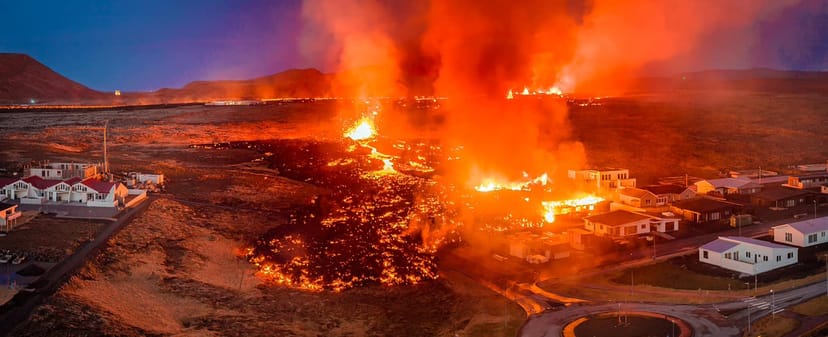
Active Volcanoes in Iceland 2026
Active volcanoes aren't the same thing as active eruptions. A volcano can be considered active even when it is not ejecting ash, rock, gases and magma, so which are active in Iceland in 2026?
Top 10 Places To See the Northern Lights in Iceland
You can see the northern lights across the country, but some spots are more suitable than others. Find the best place to see the northern lights in Iceland.
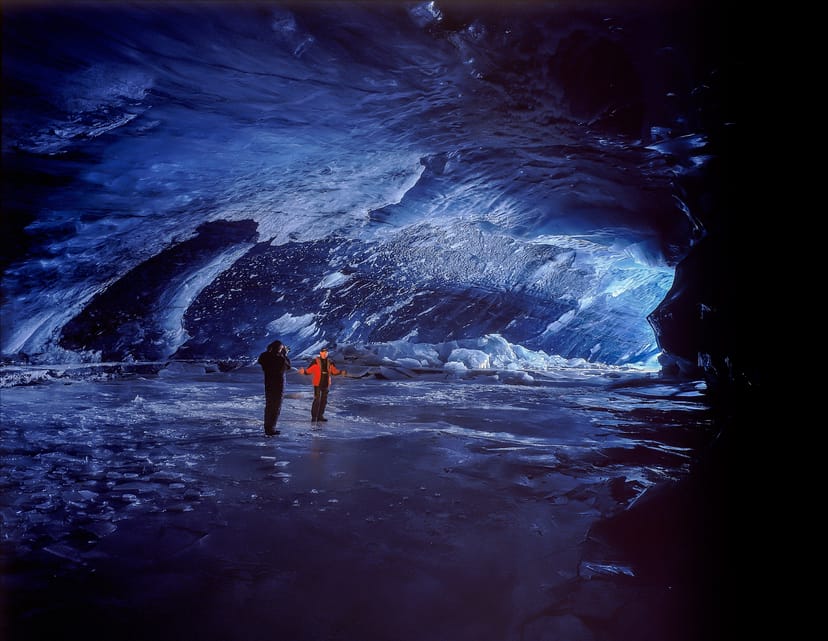
Ice Caves From Reykjavik
Travel beyond the capital for a closer look at an ice cave under one of Iceland’s glaciers. If you can’t spare the time, experience Perlan’s ice cave in Reykjavik.