
Guide to Arnarstapi Village
Arnarstapi combines dark cliffs, sea arches, birdlife, and Icelandic folklore. Here’s how to fit the coastal village into a Snæfellsnes Peninsula itinerary.
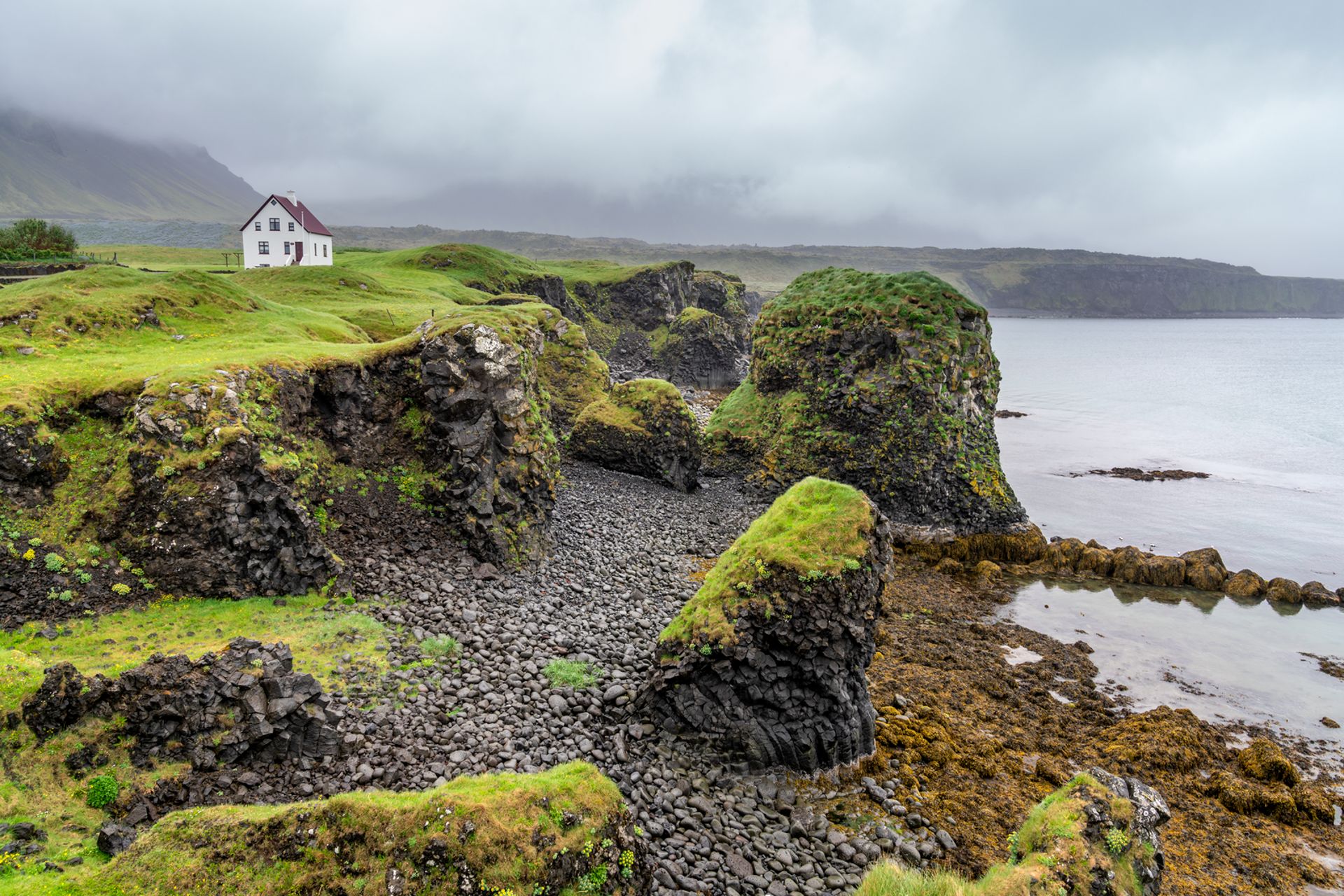
Sitting beneath the snow-capped Snæfellsjökull Glacier, Arnarstapi is a scenic corner of the Snæfellsnes Peninsula. Once a thriving fishing hub, it's now famous for its cliffs, basalt formations, sea arches, and quiet walking paths. Seaside trails extend along the Atlantic coast, passing nesting bird colonies and continuing towards the neighbouring village of Hellnar. If you are exploring the peninsula, visiting Arnarstapi makes for a worthwhile stop.
What Is Arnarstapi?
The location of Arnarstapi is along the southern side of the Snæfellsnes Peninsula. It remains a small settlement, centred around a natural harbour sheltered by jagged cliffs and rock formations.
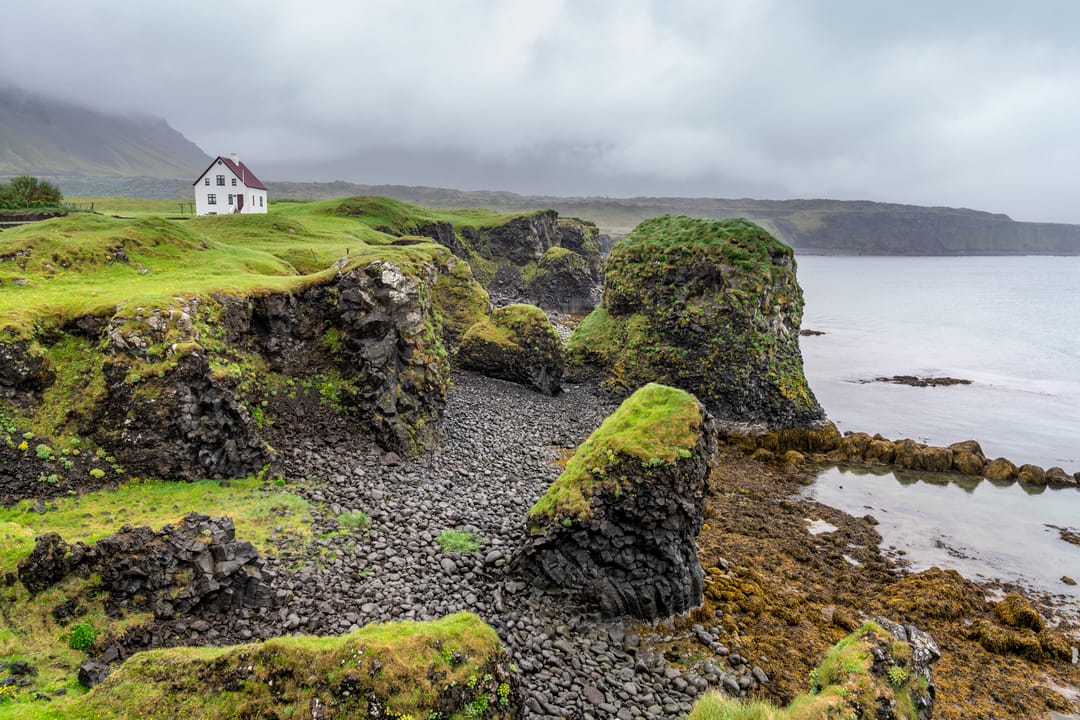
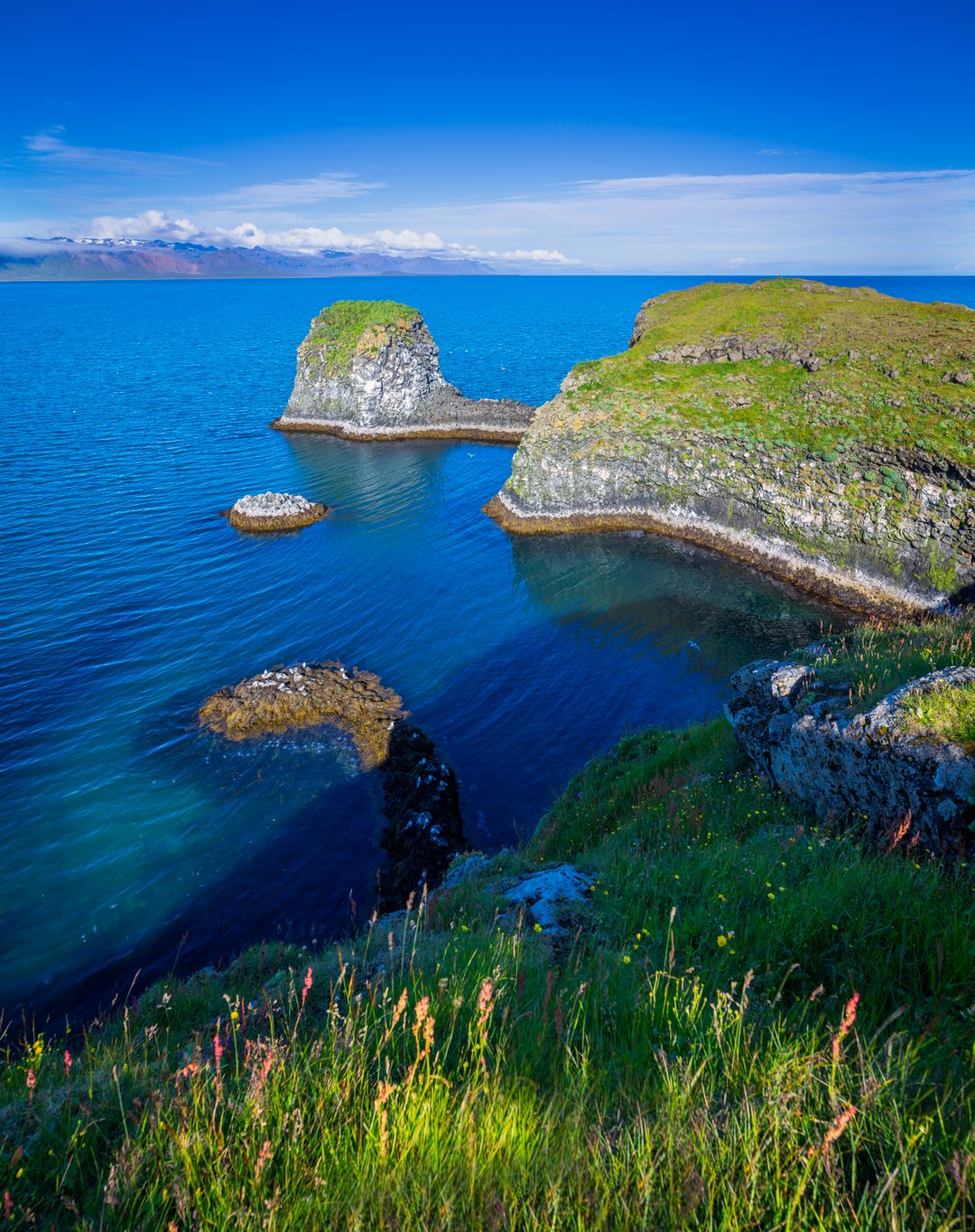
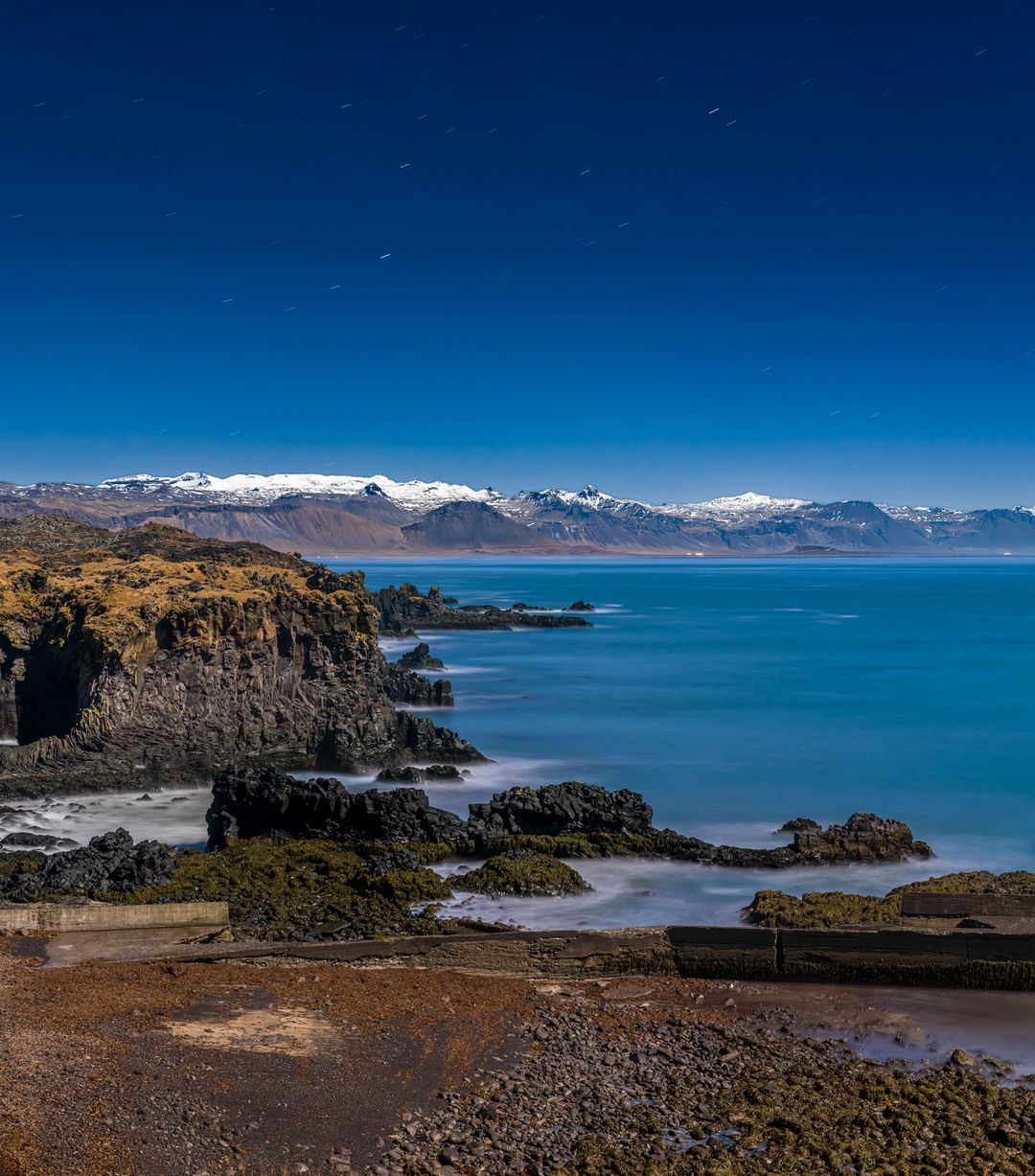
The coastline was formed by volcanic activity, and later shaped by Atlantic waves and erosion. Basalt column formations, sea caves, ravines, and stone arches line the shore, creating one of the peninsula’s key coastal features.
History and Folklore of Arnarstapi
Nowadays, Arnarstapi is a relaxed coastal stop. However, this charming village holds a long, rich history tied to regional trade and ancient lore.
Trading and Fishing Heritage
By the 18th century, Arnarstapi was an important trading post and one of the harbours operated under the Danish trade monopoly. Thanks to the natural shelter offered by its coastal cliffs, its natural harbour provided good landing conditions for small fishing boats.
Fishing remained central to daily life for generations, with the local industry adapting to developments such as motorised boats. Over time, however, fishing declined at many of the traditional landing places around Snæfellsnes. As a result, Arnarstapi developed into the much smaller year-round community seen today.
Bárður Snæfellsás
In Iceland, local geography is often intertwined with medieval stories. Arnarstapi is closely associated with the Icelandic saga Bárðar saga Snæfellsáss about a legendary half-human, half-supernatural figure known as Bárður. According to the saga, Bárður settled in the region near Arnarstapi before a series of family tragedies led him to withdraw into Snæfellsjökull. He later became known in folklore as a guardian spirit of the peninsula.
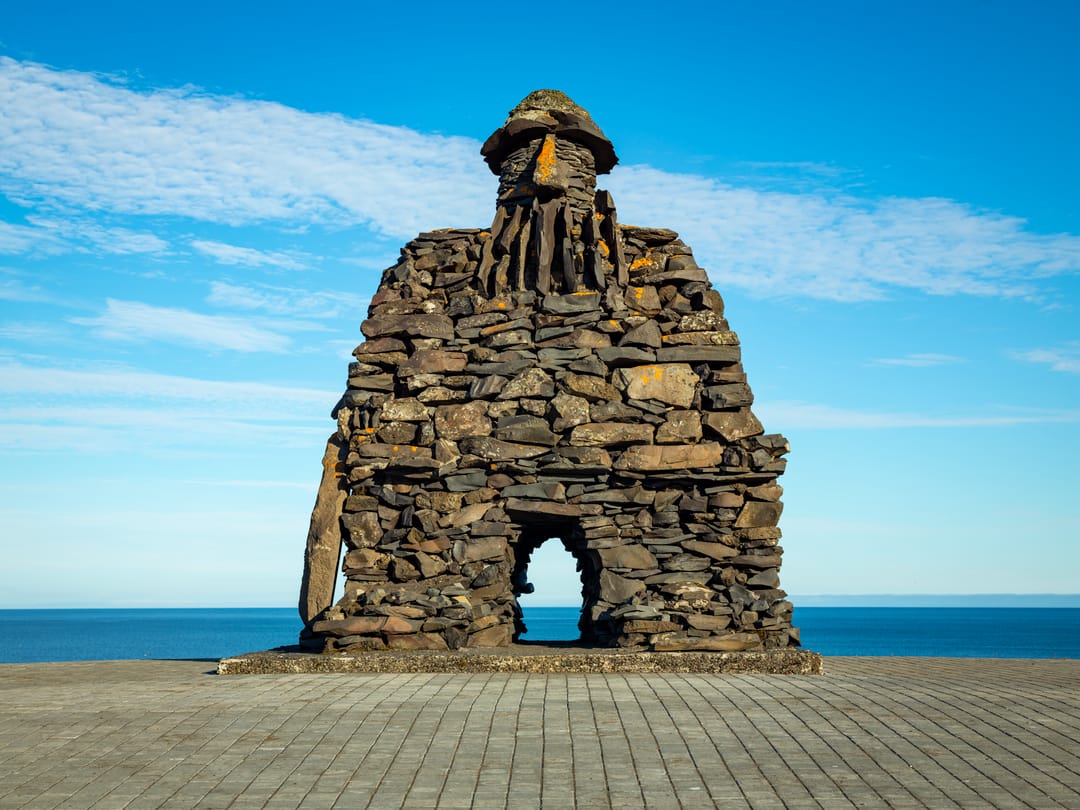
Today, a large stone sculpture representing Bárður stands near the coastline on the edge of the village.
Things to See and Do in and Around Arnarstapi
The village offers the ideal detour, with a mix of coastal views, historic landmarks, and birdwatching spots. Best of all, it’s easily explored by foot.
Walk the Arnarstapi Coast
Gravel paths and sections of boardwalk trace the sea cliffs around Arnarstapi’s harbour. Along the way, you can look down into narrow ravines where waves break against the dark rocks. The route passes rock formations and several viewpoints that provide clear views over the coast.
See Gatklettur Sea Arch
Among the most famous sights along the walk is Gatklettur, a wave-eroded rock formation shaped like a circular arch. The Atlantic waves have carved a wide opening through the basalt, framing the sea and breaking waves below. It is one of the most photographed geological features along the Arnarstapi coast.
Visit the Bárður Snæfellsás Sculpture
Designed by Ragnar Kjartansson, the large monument to Bárður Snæfellsás stands near the coastal walking paths in Arnarstapi. It’s both a striking landmark and a tribute to the legendary guardian who is said to watch over the peninsula.
Look for Seabirds
During spring and summer, the cliffs around Arnarstapi become lively nesting sites. Travellers can often spot kittiwakes and fulmars along the sheer rock faces, while the village also supports a large Arctic tern colony. However, terns are fiercely protective of their ground-level nests. Keep a respectful distance and stay on marked paths to avoid disturbing the birds or being swooped at.
Hike Between Arnarstapi and Hellnar
The coastal path linking Arnarstapi and Hellnar is one of the most popular walks in the area. Stretching approximately 2.5 kilometres (1.5 miles) one way, the trail crosses 1800 years old lava flow from Slæfellsjökull Top Crater and follows the edge of sea cliffs and rock formations. This coastline has been protected as a nature reserve since 1979, and it makes for an exceptionally scenic stroll. When exploring the route, you’ll get sweeping ocean views on one side and volcanic slopes on the other.
The Volcanic Landscape at Arnarstapi
The rugged terrain around Arnarstapi offers a clear example of the volcanic and coastal forces that have shaped the Snæfellsnes Peninsula. Ancient lava flows reached towards the sea, cooling and contracting into distinctive basalt formations. Over time, Atlantic waves eroded the coastline, carving cliffs, arches, grottoes, and other unusual rock formations.
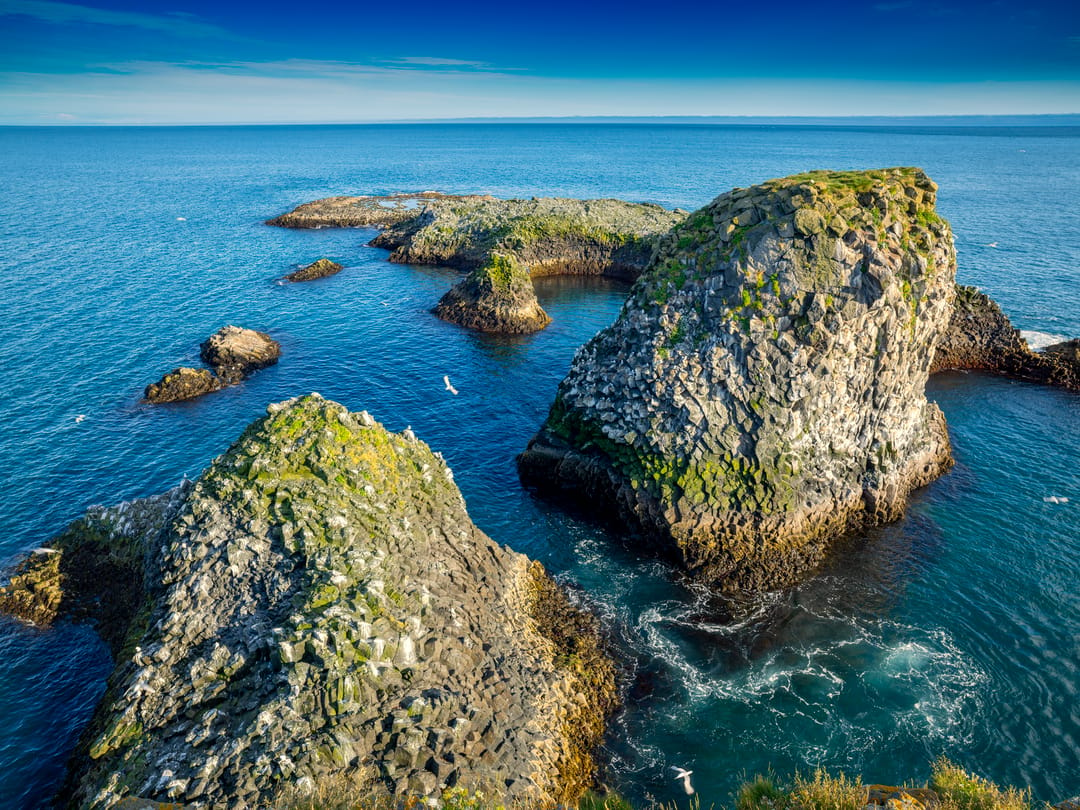
To explore the volcanic and tectonic systems behind formations like these, visit Perlan’s Forces of Nature exhibition in Reykjavík. Here, interactive displays explore the power of volcanoes, earthquakes, and geothermal activity across the country.
How to Get to Arnarstapi
The easiest way to reach Arnarstapi is by car, with the drive from Reykjavík taking around 2 to 2.5 hours. Follow the Ring Road north through Borgarnes, then take Route 54 west along the southern side of the Snæfellsnes Peninsula. Parking is available near the harbour and the Bárður Snæfellsás sculpture.
The village lies just east of Snæfellsjökull National Park. Thus, Arnarstapi is a convenient gateway for exploring the park and its surrounding volcanic landscapes.
Best Time to Visit Arnarstapi
Each season offers a different experience for travellers passing through Arnarstapi. Summer delivers long daylight hours, making it easy to explore as much of the village as possible. Trails are generally more accessible, while nesting seabirds are especially active along the cliffs.
On the other hand, the snow-dusted scenery of winter is equally mesmerising. However, conditions can be more challenging. Icy paths, strong coastal winds, and limited daylight require extra care, particularly near exposed cliff edges.
Spring and autumn offer a good middle ground, with fewer visitors and generally quieter walking conditions than in peak summer.
Nearby Attractions
- Hellnar: A neighbouring historic settlement connected to Arnarstapi by the scenic coastal trail, with cliffs and ocean views along the way.
- Snæfellsjökull National Park: A protected wilderness surrounding Snæfellsjökull, home to lava fields, black-sand beaches, volcanic craters, and rugged coastal scenery.
- Vatnshellir Cave: Located inside the national park, this 5,000- to 8,000-year-old lava tube can be explored on guided lava-caving tours.
- Búðir: Known for its small black wooden church, set against the rugged Búðahraun lava field and open coastal landscape.
- Lóndrangar Basalt Cliffs: A short drive west of Arnarstapi, these twin basalt sea stacks rise above the coast and provide nesting habitat for seabirds.
FAQs
Yes, it offers some of the most accessible coastal basalt cliffs, arches, and sea views in West Iceland. Additionally, it’s home to easy walking paths and historical folklore.
Most visitors spend an hour or two taking in the harbour views and coastal cliffs. If you plan to walk the trail connecting Arnarstapi and Hellnar, allow 1.5 to 2 hours for a round trip.
Yes, an easy-to-follow coastal trail leads through protected lava fields between the two settlements. It takes around 45 to 60 minutes one way.
No, Arnarstapi sits just outside the eastern boundary of Snæfellsjökull National Park. However, the coastal village is a common entry point for travellers heading into the park.
Arnarstapi is renowned for its distinctive rock formations, including the Gatklettur arch. It is also known for columnar basalt cliffs, Arctic tern colonies, and the medieval Icelandic saga of Bárður Snæfellsáss.
Popular articles
The Complete Guide to the Northern Lights in Iceland
Learn how the Northern Lights form, where to see them in Iceland, how to prepare, take photos, read the forecast, and improve your chances of a sighting.
Let's Talk About the Volcano in Iceland About to Erupt
Is a volcano in Iceland about to erupt? Here’s what travelers should know about Svartsengi, Reykjanes activity, flights, safety, and the Blue Lagoon.

Solar Eclipse 2026 in Iceland | What Happened
Iceland experienced a total solar eclipse on August 12, 2026. Discover what happened in Reykjavík, eclipse times, totality locations and more.
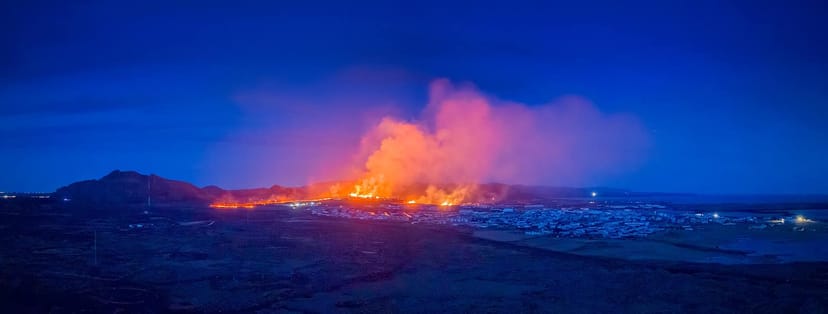
September 2026 updates on the Sundhnúkagígar Eruption in the Reykjanes Peninsula!
The current eruption in the Reykjanes Peninsula, is called Sundhnúkagígar Crater Row. See insights on the seismic activity and volcanic eruptions in the area!
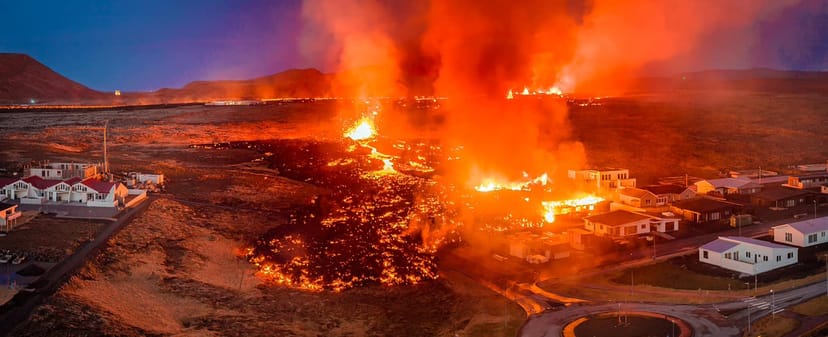
Active Volcanoes in Iceland 2026
Active volcanoes aren't the same thing as active eruptions. A volcano can be considered active even when it is not ejecting ash, rock, gases and magma, so which are active in Iceland in 2026?
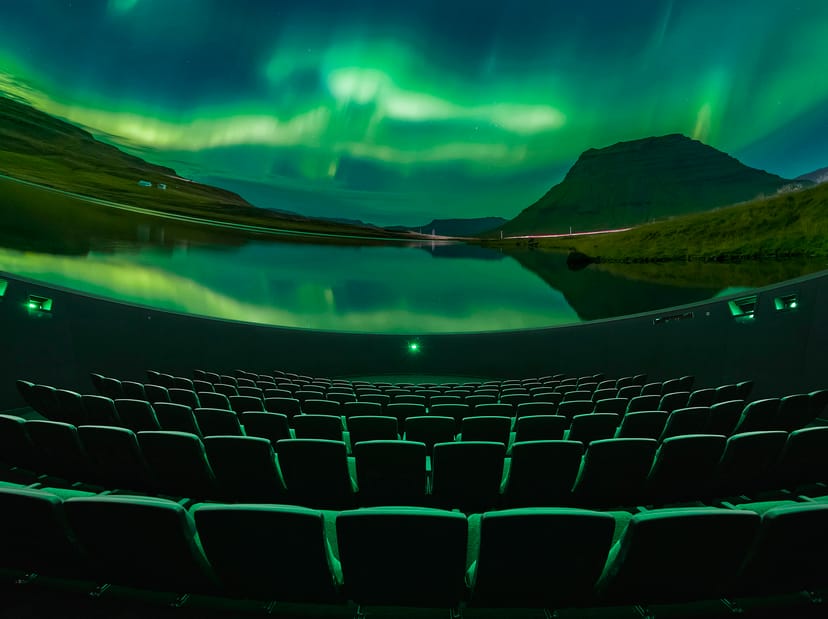
Top 10 Places To See the Northern Lights in Iceland
Discover the best places to see the Northern Lights in Iceland, from Jökulsárlón and Kirkjufell to Reykjavík, Þingvellir and North Iceland.
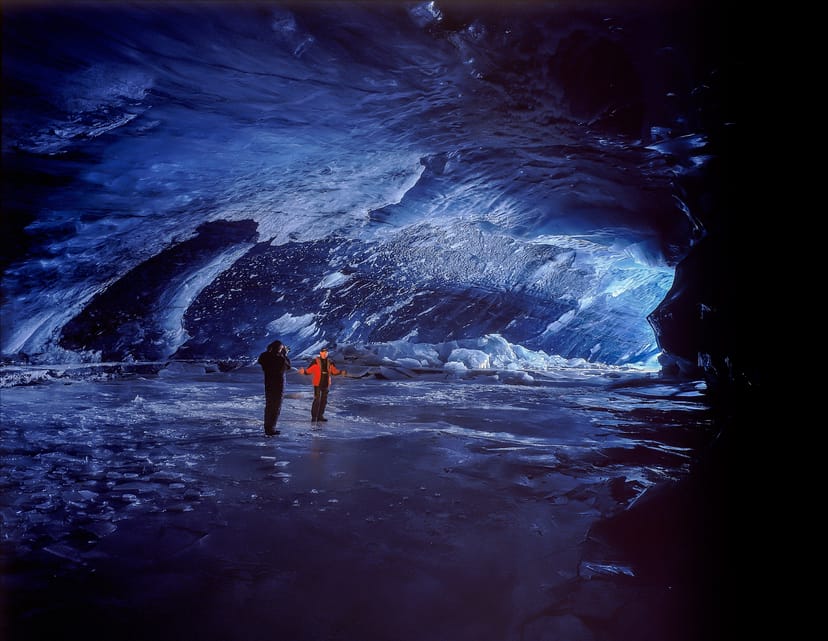
Ice Caves From Reykjavik
Planning an ice cave trip from Reykjavik? Compare Katla, Langjökull and Vatnajökull, travel times, seasons and Perlan’s ice cave in the city.