
Humpback Whales in Iceland
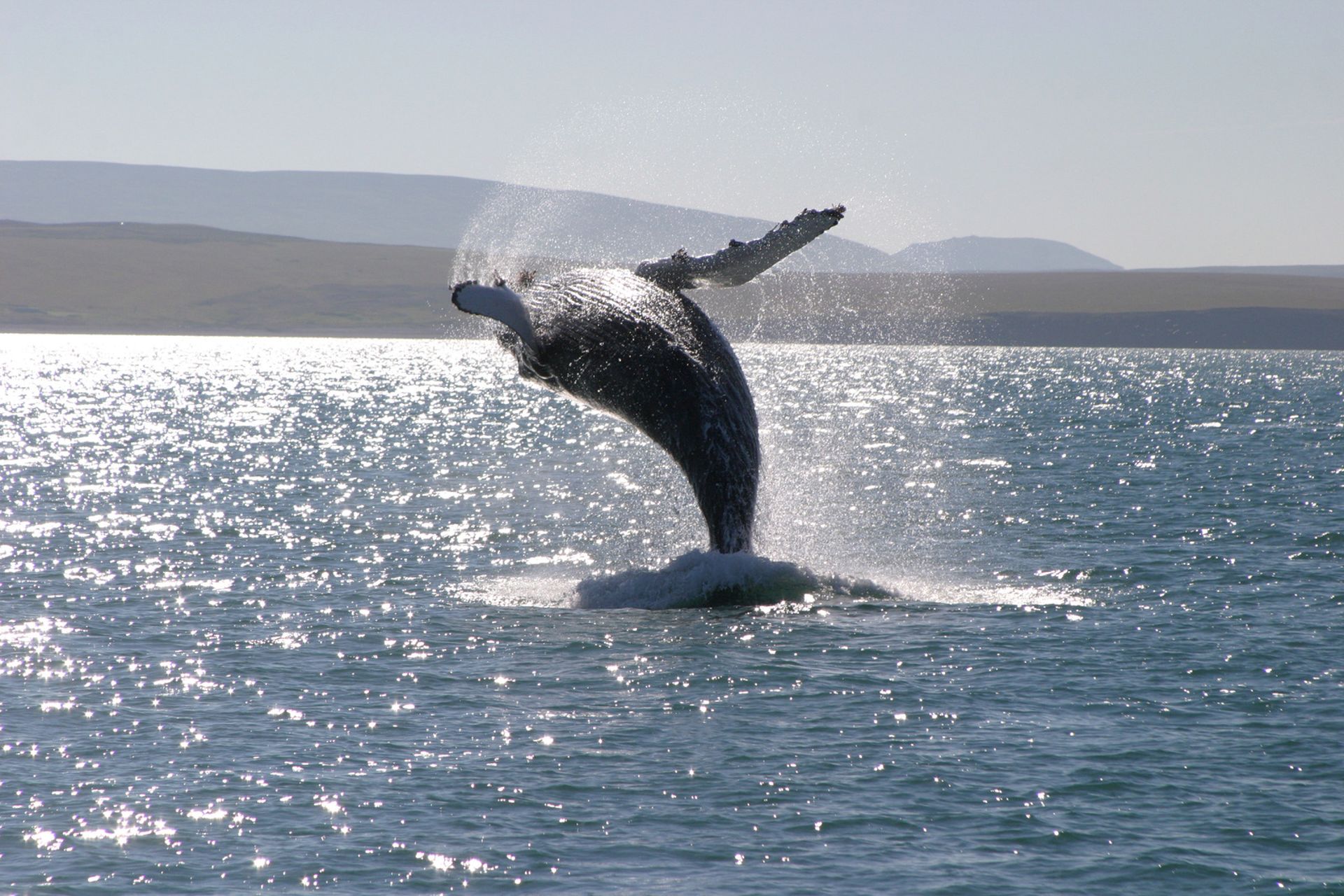
Humpback whales are among the most captivating marine mammals found in the North Atlantic. Each summer, thousands migrate to Icelandic waters to feed in the cold, nutrient-rich seas. Their acrobatic displays of tail slapping and leaping from the water make them a highlight of Iceland’s whale watching tours.
The scientific name of the humpback whale is Megaptera novaeangliae, which means “big-winged New Englander.” It refers to their long pectoral fins. They are the longest of any cetacean species and can reach up to ⅓ of their body length.
Humpbacks are baleen whales, meaning they have no teeth. Instead, their upper jaws hold baleen plates made of keratin, which act like a sieve. They take in large mouthfuls of water and push it out through the baleen, trapping krill and small fish inside.
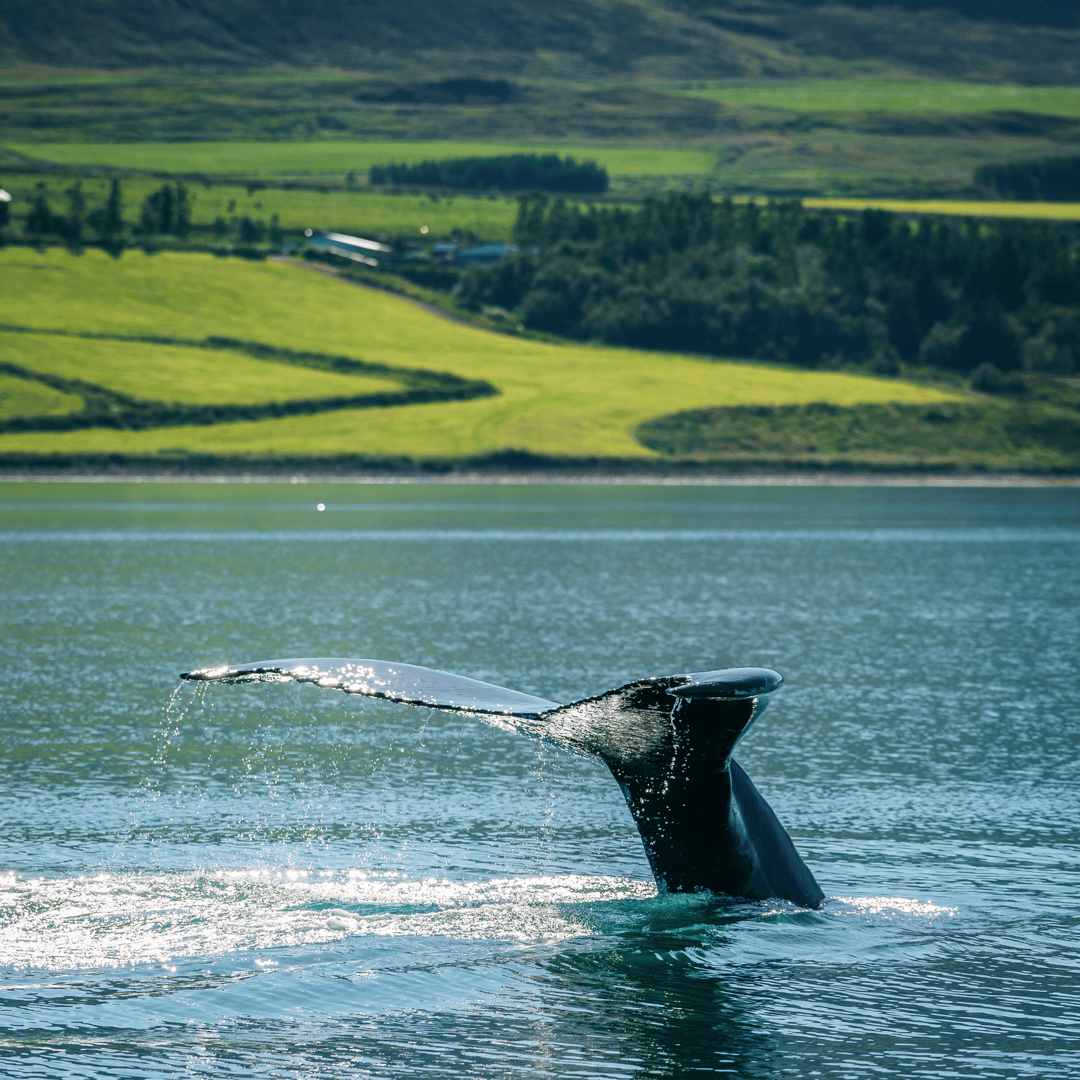
An adult humpback whale can grow 14–17 meters long and weigh up to a staggering 40 metric tons. Their small dorsal fin sits on a hump, and their dark bodies often feature white patches on the belly and tail. Each whale’s fluke pattern is unique, like a fingerprint, allowing researchers to identify individuals.
Visitors to Iceland often witness their dramatic peduncle throw, when a whale lifts its tail high and slams it back into the water with a powerful twist. Males are also known for their haunting songs, which travel for miles beneath the surface. Scientists believe these melodies help attract mates and communicate across vast distances in the ocean.
Read more about other types of whales that can be spotted in Iceland.
Best Time to See Humpback Whales in Iceland
The best time to see humpback whales in Iceland is during the summer, when the island’s cold northern waters turn into rich feeding grounds. From April to late September, thousands of humpbacks arrive to feed on krill and small fish, and it’s during these months that whale watching tours are at their very best.
The peak season is June through August, when the days are long, the weather is milder, and the sea is full of activity. During this time, tours leave daily from Reykjavík, Húsavík, and Akureyri, and chances of seeing humpbacks breaching or flicking their tails are incredibly high. The midnight sun adds a special touch, casting golden light over the ocean as the whales surface.
Although most sightings happen in summer, some humpback whales stay in Icelandic waters even through winter. It’s rarer, but if you’re lucky, you might spot one while the northern lights dance overhead, a once-in-a-lifetime sight that combines two of Iceland’s greatest wonders.
Best Places to See Humpback Whales in Iceland
Here are the best places to see Humpback Whales in Iceland:
- Húsavík: Often called the whale watching capital of Iceland. Many tours depart from the harbour. Humpbacks are frequently spotted.
- Akureyri (Eyjafjörður): Calm fjord waters in the north with reliable sightings.
- Reykjavík (Faxaflói Bay): Tours leave from the old harbour. Marine life is diverse, including humpbacks.
- Snæfellsnes Peninsula: Famous for orcas; humpbacks are also seen.
- Westfjords: Wild, unspoiled viewpoints with regular humpback sightings.
For more information, discover the best places to whale watch in Iceland in detail.
How Humpback Whales Feed and Migrate
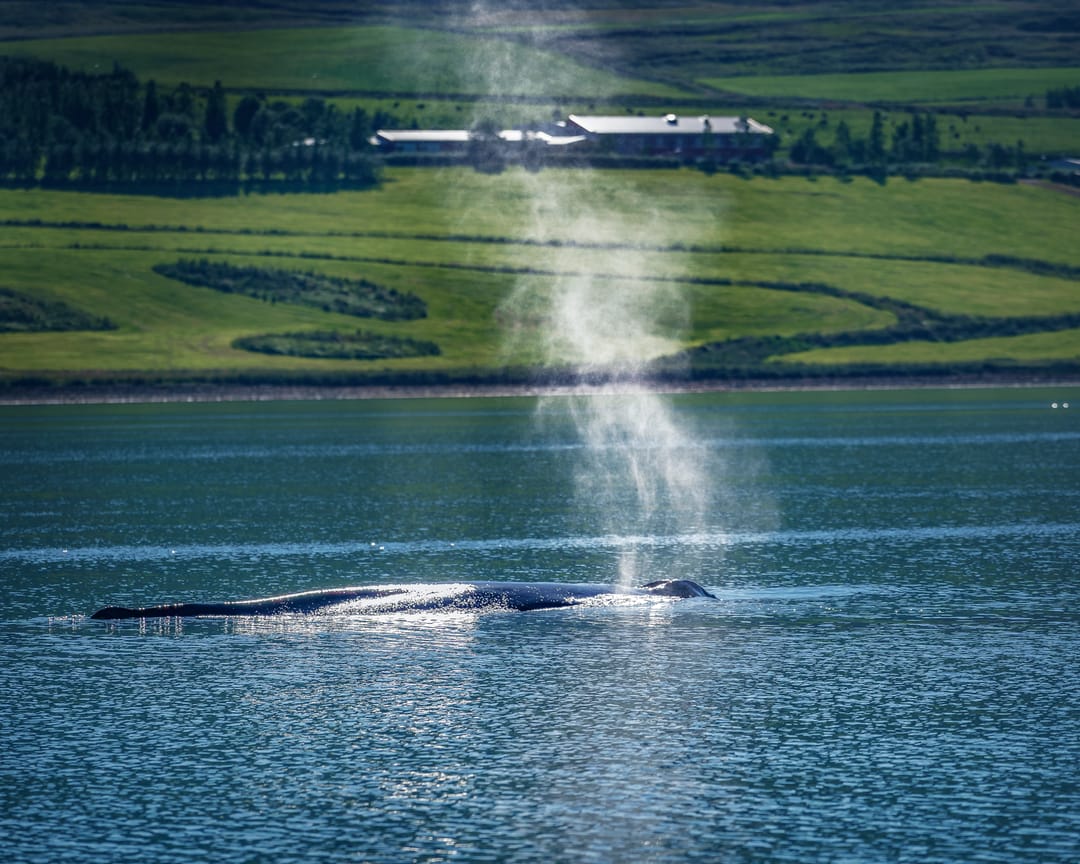
Humpbacks feed in cold, productive waters known as feeding grounds. In the Northern Hemisphere, these extend from the Gulf of Maine to Norway. They consume krill and schooling fish.
A remarkable technique is bubble net feeding. Whales work together. They blow bubbles to form a net. Fish are trapped near the surface. Whales lunge through the center to feed.
After feeding, whales migrate to warmer breeding grounds. Migrations span thousands of miles. Some North Atlantic populations travel to the West Indies. Calves are born in warm waters and grow quickly before returning north.
Conservation and Threats to Humpback Whales
The conservation status of humpback whales has improved. This is thanks to international conservation efforts. However, they still face significant threats. Historically, commercial whaling severely depleted humpback whale populations. Millions were killed for their oil and blubber. While whaling is now largely banned, other dangers remain.
One major threat is entanglement in fishing gear. Whales can become trapped in nets and lines. This can lead to injury, starvation, or drowning. Ship strikes are another concern. Collisions with large vessels can be fatal. Ocean noise pollution also impacts humpback whales. It can disrupt their communication and navigation. Climate change also poses a long-term threat. It affects their food sources and habitats.
Where to Learn More About Humpback Whales
To learn more about humpback whales in Iceland, visit Perlan in Reykjavík. Inside The Ocean Exhibition, visitors can explore Iceland’s underwater world through an immersive and interactive experience that is both fun and educational. The exhibition showcases how marine life, including humpback whales, thrives in Icelandic waters, where species from across the globe meet and coexist.
One of the highlights is Blue, the sky-sailing whale, gliding gracefully beneath Perlan’s glass dome. The exhibit takes you on a journey through the country’s rich marine ecosystems, offering a deeper understanding of these majestic creatures and the importance of protecting their fragile environment.
FAQs about Humpback Whales in Iceland
What makes humpback whales special?
Humpback whales are known for their acrobatic leaps, powerful tail slaps, and haunting songs that echo through the ocean. Each whale has unique tail patterns, making them easy for researchers to identify. Their playful and curious behaviour makes them one of the most loved marine mammals in Icelandic waters.
When is the best time to see humpback whales in Iceland?
The best time to see humpback whales in Iceland is from May to September, when they migrate to feed in the rich northern waters. Peak sightings happen in June, July, and August, with tours operating daily across the country. During this season, the long daylight hours give travelers more chances to spot these incredible animals.
Where can you see humpback whales in Iceland?
You can see humpback whales along Iceland’s north and west coasts, especially in Húsavík, Akureyri, and Reykjavík’s Faxaflói Bay. These areas offer calm fjords and abundant food sources, attracting whales close to shore. Whale watching tours depart daily during the summer months.
Are humpback whales friendly?
Yes, humpback whales are known for their gentle and curious nature. They often approach boats calmly and seem comfortable around people, though it’s important to always observe them respectfully. In Iceland, experienced guides ensure that whale watching follows safe and eco-friendly practices.
How likely is it to see whales in Iceland?
During the summer, whale watching tours in Iceland boast success rates above 95%. Humpbacks are among the most frequently sighted species, often seen breaching or flicking their tails near tour boats. Even in spring and autumn, chances of spotting them remain high in the north.
How many humpback whales are there in Iceland?
Researchers estimate that around 15,000 humpback whales migrate through Icelandic waters each year. These whales travel from their tropical breeding grounds to feed in Iceland’s cold seas, where food is plentiful. The country is one of the most important feeding areas in the Northern Hemisphere.
Can you swim with humpback whales in Iceland?
No, swimming with humpback whales in Iceland is not permitted. These are wild, protected animals, and strict regulations ensure their safety and well-being. The best way to experience them is through guided whale watching tours, where you can observe them respectfully from the boat.
How intelligent are humpback whales?
Humpback whales are highly intelligent and social creatures. They cooperate when hunting and communicate using complex songs that can last up to 30 minutes. Scientists believe their intelligence helps them form long-term bonds and adapt to changing ocean environments.
What threats do humpback whales face today?
Although their conservation status has improved, humpback whales still face modern threats. These include entanglement in fishing gear, ship strikes, and the effects of climate change on their feeding grounds. Conservation programs and awareness campaigns in Iceland help protect these remarkable marine mammals for future generations.
Popular articles
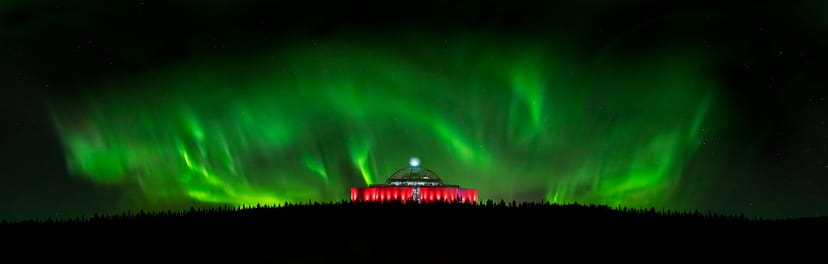
The Complete Guide to the Northern Lights in Iceland
Learn how the Northern Lights form, where to see them in Iceland, how to prepare, take photos, read the forecast, and improve your chances of a sighting.
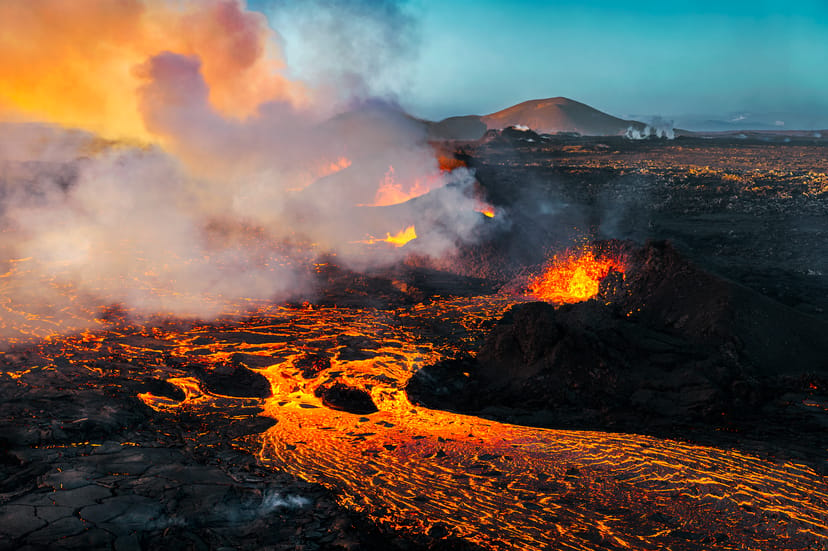
Let's Talk About the Volcano in Iceland About to Erupt
Is a volcano in Iceland about to erupt? Here’s what travelers should know about Svartsengi, Reykjanes activity, flights, safety, and the Blue Lagoon.
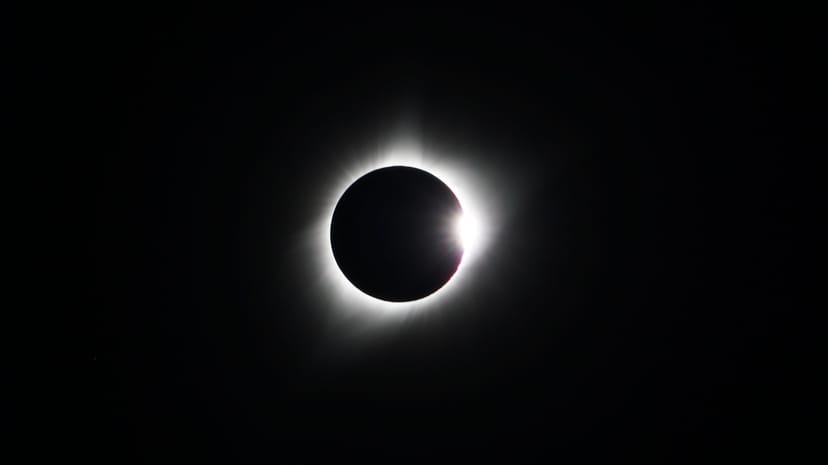
Solar Eclipse 2026 in Iceland | What Happened
Iceland experienced a total solar eclipse on August 12, 2026. Discover what happened in Reykjavík, eclipse times, totality locations and more.
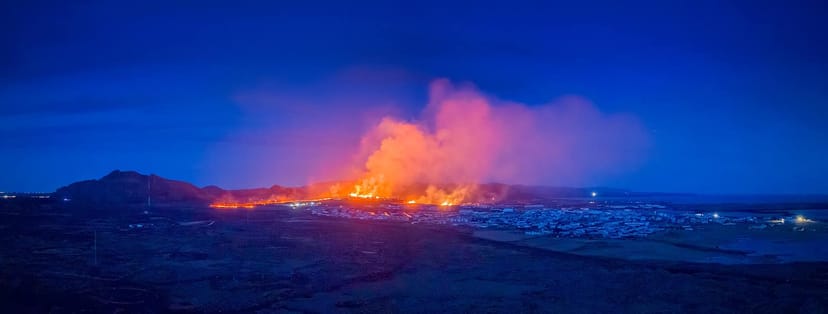
September 2026 updates on the Sundhnúkagígar Eruption in the Reykjanes Peninsula!
The current eruption in the Reykjanes Peninsula, is called Sundhnúkagígar Crater Row. See insights on the seismic activity and volcanic eruptions in the area!
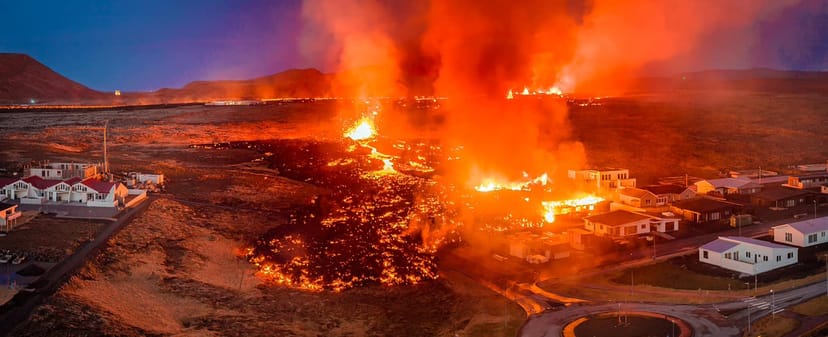
Active Volcanoes in Iceland 2026
Active volcanoes aren't the same thing as active eruptions. A volcano can be considered active even when it is not ejecting ash, rock, gases and magma, so which are active in Iceland in 2026?
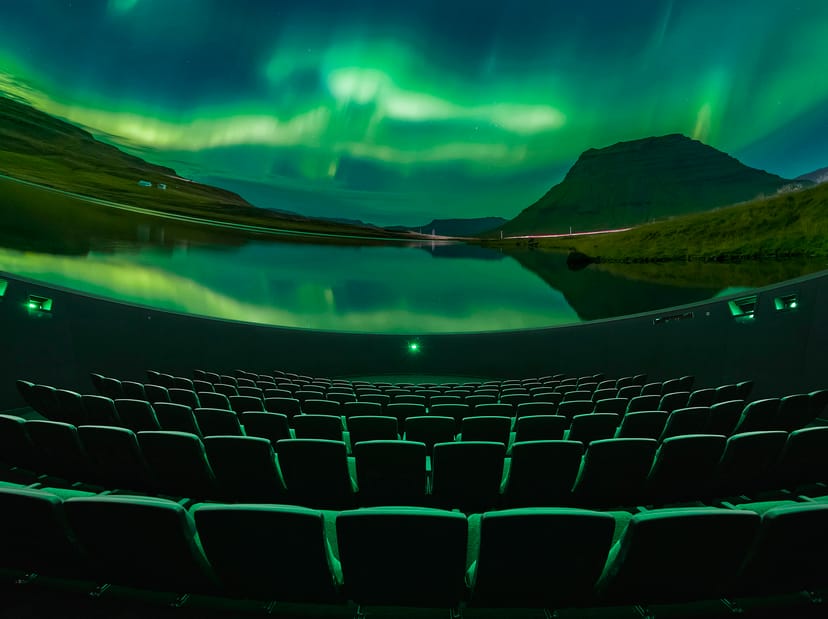
Top 10 Places To See the Northern Lights in Iceland
Discover the best places to see the Northern Lights in Iceland, from Jökulsárlón and Kirkjufell to Reykjavík, Þingvellir and North Iceland.
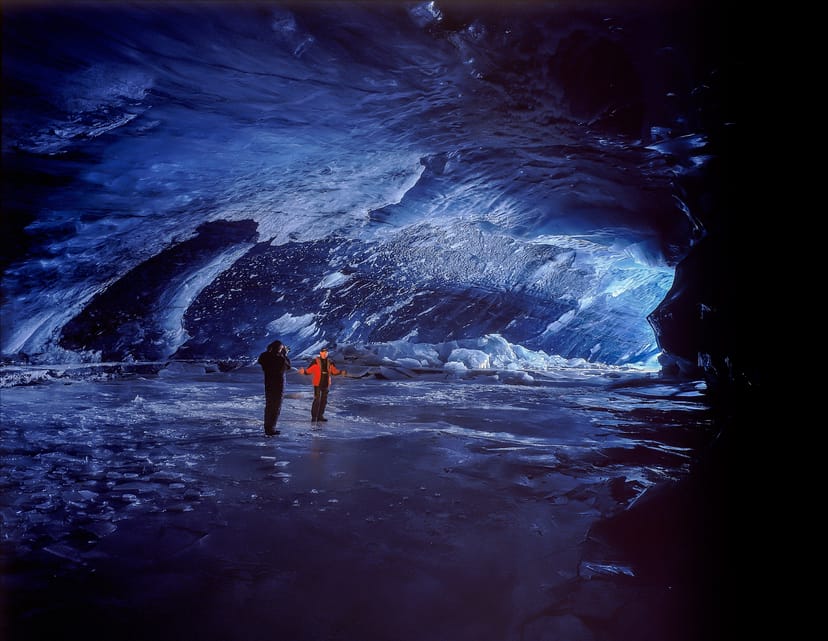
Ice Caves From Reykjavik
Planning an ice cave trip from Reykjavik? Compare Katla, Langjökull and Vatnajökull, travel times, seasons and Perlan’s ice cave in the city.