
Guide to Fjallsárlón Glacier Lagoon
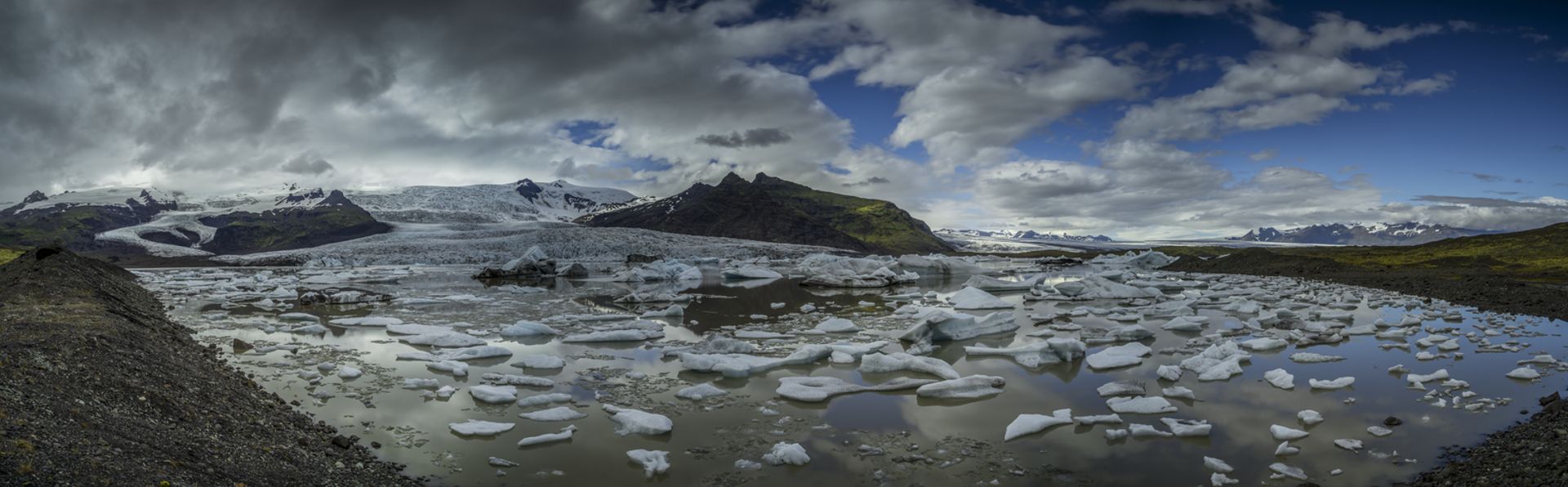
Fjallsárlón is a mesmerizing glacial lagoon located at the southern edge of the Vatnajökull ice cap. Less famous than its neighbor, Jökulsárlón, it offers a quieter and more intimate perspective of Iceland’s shifting ice. The lagoon is a prime destination for adventurers seeking nearby glacier hikes, boat tours, and close encounters with giant icebergs. Keep reading to discover the beauty, science, and essential tips for visiting the Fjallsárlón Glacier Lagoon.
What Is Fjallsárlón?
The name Fjallsárlón is a three-part Icelandic compound: fjall (mountain), á (river), and lón (lagoon), together meaning “Lagoon of the Mountain River.” It is roughly pronounced “fyatls-aur-lon.”
Fjallsárlón sits at the southern edge of Vatnajökull Glacier, the largest glacier in Europe by volume. Fed by the retreating Fjallsjökull outlet glacier, it’s one of the most accessible ways to witness Iceland’s ice up close. As it is smaller and more contained than Jökulsárlón Glacier Lagoon, visitors can stand much closer to the glacier’s massive ice wall.
Situated just off the Ring Road, it has become a staple for South Coast itineraries. Travelers often combine this visit with the nearby Jökulsárlón to explore two extraordinary glacial lagoons
Things to Do at Fjallsárlón
Boat Tour
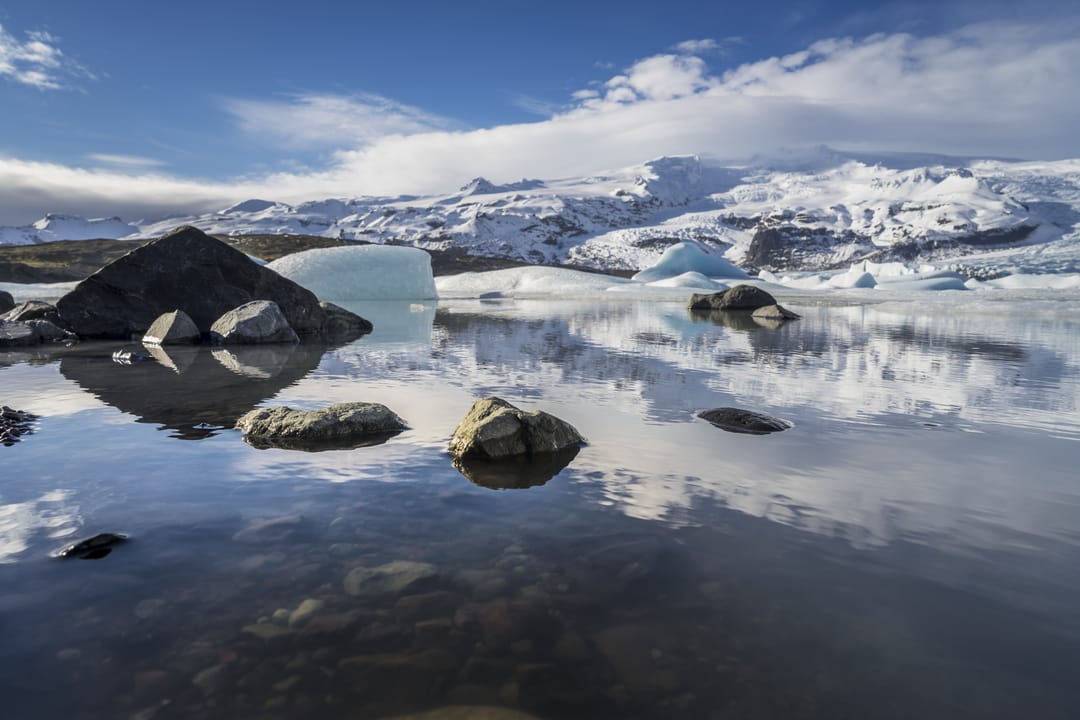
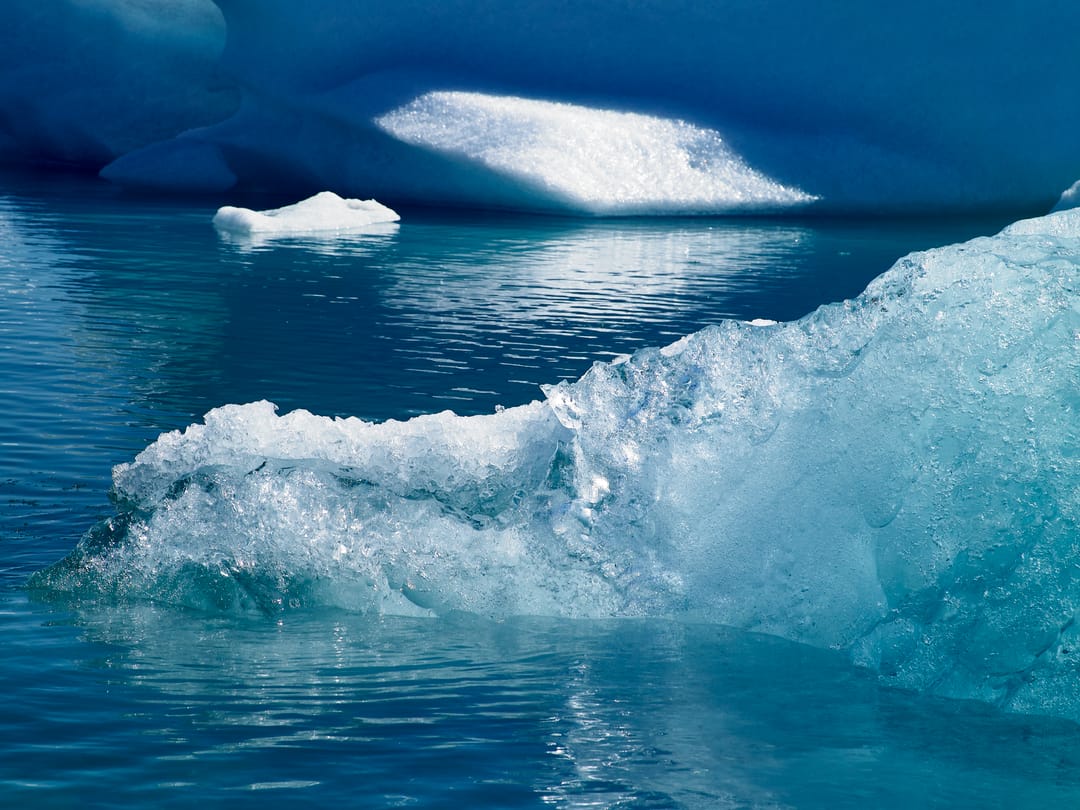
Taking a boat tour of the glacial lagoon is one of the best ways to experience the scale of Fjallsárlón. Tours typically use small Zodiac boats that sit lower in the water than larger vessels. This allows visitors to get closer to the floating ice sculptures and the towering Fjallsjökull glacier wall. From the lagoon, you can observe the outlet glacier up close, where icebergs calve and drift across the water. The journey provides excellent opportunities for photography, with vivid blue ice set against the vast Vatnajökull ice cap.
Glacier Hike
For a more immersive adventure, consider embarking on a glacier hike to get a deeper appreciation of Iceland’s ice. Many guided hikes leave from the nearby Skaftafell Nature Reserve, taking you onto the rugged outlet glaciers of Vatnajökull. This adventure allows you to tread across the glacier’s ancient, blue-tinted surface, navigating crevasses, ridges, and other ice formations. From the glacier, you’ll enjoy sweeping views of the surrounding landscapes.
Iceberg Watching
Travelers who prefer a more relaxed experience can spend time along the shoreline observing the lagoon's drifting ice. As icebergs break away from the Fjallsjökull glacier front (a process known as calving), they form an ever-changing mosaic of deep blues and brilliant whites. From the shore, you may hear the occasional crack or distant rumble as the ice shifts and settles. It gives you a visceral sense of the glacier’s immense power, especially with the Öræfajökull volcano in the background.
Scientific and Environmental Significance
Beyond its striking blue icebergs and panoramic views, Fjallsárlón serves as a living laboratory. Researchers monitor Fjallsárlón to track the dynamics of ice calving, glacial melt, and the flow of glacial rivers. As the Fjallsjökull glacier thins and retreats, the lagoon expands in its wake. It is a valuable tool for scientific insights.
Moreover, glacial lagoons like Fjallsárlón serve as a focal point for environmental awareness, offering visual evidence of glacial retreat. At the water’s edge, visitors can witness the impact of climate change firsthand, highlighting the importance of preserving these delicate ecosystems.
To deepen your understanding of how these frozen giants formed, visit the Glacier Exhibition at Perlan in Reykjavík. Here, walk through a real indoor ice cave and learn about Iceland’s water systems before seeing the lagoons in person.
Wildlife at Fjallsárlón
The icy waters of the lagoon may seem inhospitable, but Fjallsárlón is actually home to a surprisingly diverse ecosystem. There are several interesting wildlife sightings that visitors can encounter in and around Fjallsárlón.
Birdlife
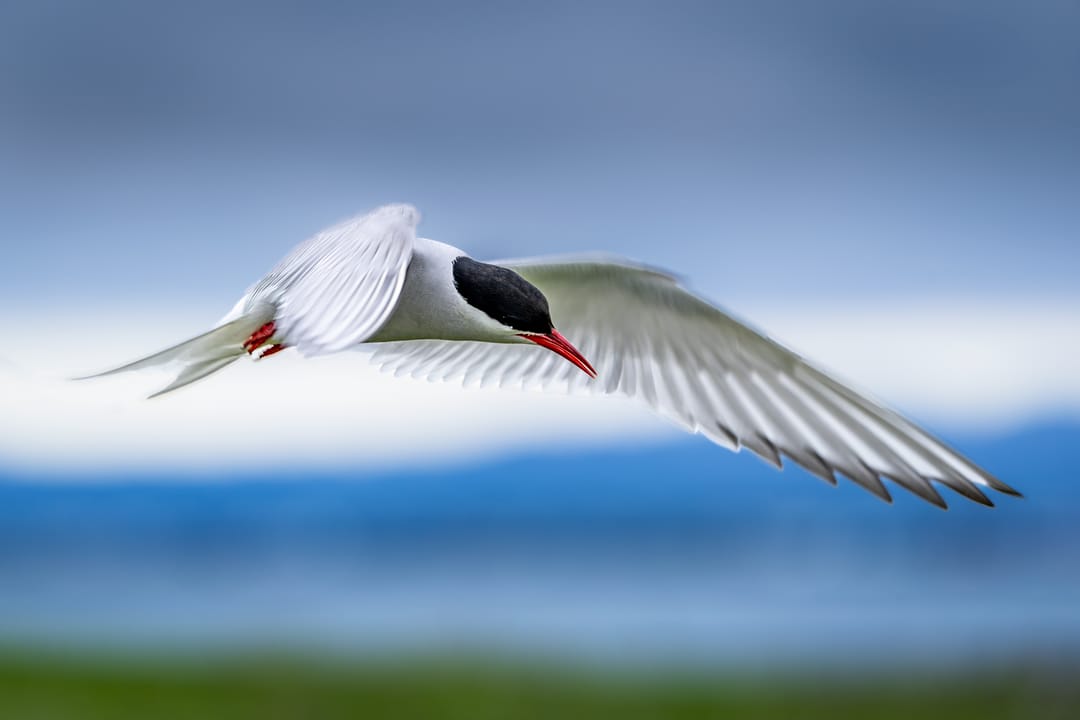
The area surrounding Fjallsárlón is a haven for birdwatchers, especially during the summer breeding season. While the lagoon itself is not a major nesting site, a variety of birds can be seen in the wider region, especially along the shoreline and nearby wetlands. Common sightings include swans, ducks, geese, and other waterfowl. During summer, Arctic terns may be spotted diving for fish, while the great skua can sometimes be seen in the Öræfi area.
Seals
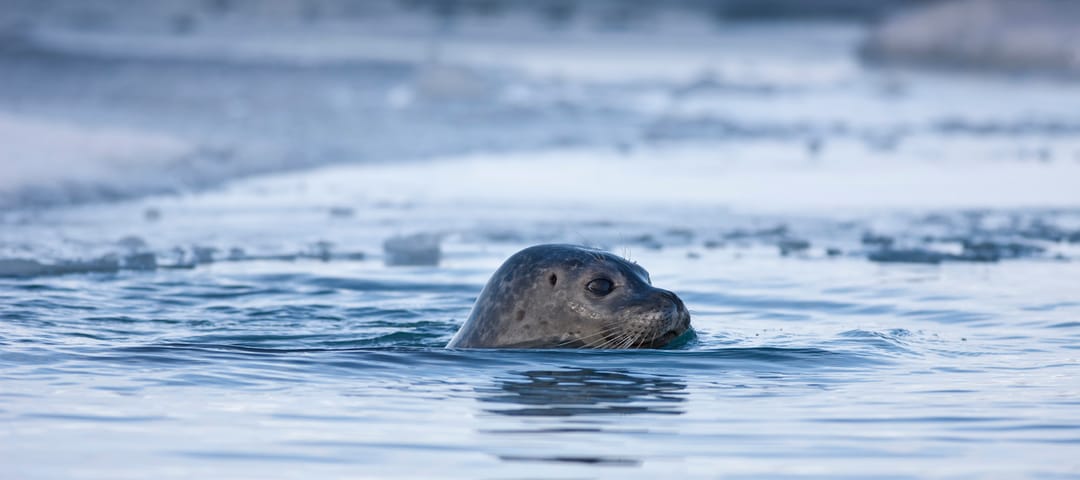
While Jökulsárlón is better known for its seal population, seals can occasionally be spotted in Fjallsárlón Glacier Lagoon. Both harbor seals and gray seals are found along Iceland’s coast and may venture inland in search of food. Visitors might see them swimming among the icebergs or, more rarely, resting on floating ice. Sightings are not guaranteed, but encountering one adds an unexpected highlight to a visit.
Arctic Fox
As Iceland’s only native land mammal, the Arctic fox is a rare and rewarding sight. While more common in remote regions like the Westfjords, it can also be found in and around Vatnajökull National Park. Sightings near Fjallsárlón are uncommon but memorable. In winter, their brown and gray summer coats change to white, helping them blend seamlessly into the snowy landscape.
How to Get to Fjallsárlón
Fjallsárlón is located on Iceland’s South Coast, approximately 370 kilometers (230 miles) from Reykjavík. The drive along the Ring Road typically takes around 4.5 to 5.5 hours, depending on road and weather conditions. Due to the distance, it’s worth visiting as part of a multi-day itinerary rather than a single-day trip.
- By Car: From Reykjavik, drive east on the Ring Road. The journey takes you past Vík and Skaftafell Nature Reserve before reaching the clearly marked turnoff for Fjallsárlón. Parking is generally free at the site.
- By Bus and Guided Tours: If you prefer not to drive, regular guided tours depart from Reykjavik. Many South Coast tours include stops at both Jökulsárlón and Fjallsárlón. Traveling with a guide provides additional insight into the region’s geology, glaciers, and natural history along the way.
Best Time to Visit Fjallsárlón Glacial Lagoon
Fjallsárlón is a year-round destination, but the experience shifts dramatically with the seasons.
- Summer (June–August): This is the peak season for visiting. Temperatures are milder, and the Midnight Sun provides nearly 24 hours of daylight for photography and extended exploration. Boat tours typically operate during this period, weather permitting.
- Shoulder Seasons (May and September): These months offer fewer crowds. Softer lighting conditions, especially during sunrise and sunset, can make the icebergs glow in shades of pink and orange. Boat tours usually begin in May and continue through late September.
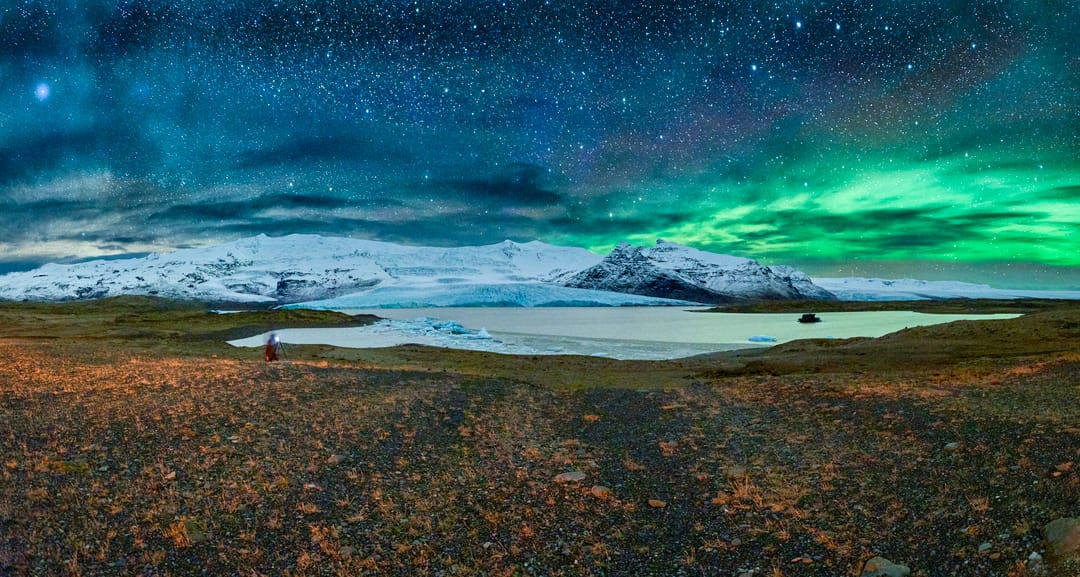
- Winter (October–April): In winter, the lagoon may partially freeze, and boat tours generally do not operate. However, this is an excellent time to see the Northern Lights, with dark skies and minimal light pollution. Daylight is limited to as little as four to five hours in mid-winter, so careful planning is essential.
Fjallsárlón vs. Jökulsárlón: Which Should You Visit?
As Iceland’s largest glacial lagoon, Jökulsárlón is often called the “Crown Jewel” of the South Coast. It is famous for its vast, open waters and the breathtaking sight of massive icebergs drifting to the Atlantic Ocean. Some end up on Diamond Beach, where glittering chunks wash up and lie on the black sand like discarded jewels. However, its fame comes with a cost: it is significantly more crowded and now has paid parking.
In contrast, Fjallsárlón is a smaller, landlocked lagoon where visitors can get close to the glacier front of Fjallsjökull. With fewer crowds and a more contained setting, it offers a calmer atmosphere for observing the ice. Because the lagoon isn’t connected to the ocean, icebergs tend to remain there until they melt, creating a different visual experience.
For the fullest perspective, many travelers choose to visit both glacier lagoons. That way, you get to experience two distinct expressions of Iceland’s dynamic glacial landscape.
FAQs
Is Fjallsárlón worth it?
Absolutely, Fjallsárlón is worth visiting for a quieter, more intimate encounter with Iceland’s glaciers. It offers close views of the glacier front with fewer crowds than nearby Jökulsárlón.
How far is Fjallsárlón from Reykjavík?
Fjallsárlón is approximately 370 kilometers (230 miles) from Reykjavík via the Ring Road (Route 1). The drive usually takes around 4.5 to 5.5 hours, depending on road conditions and stops.
How far from Fjallsárlón to Jökulsárlón?
The two glacier lagoons are about 10 kilometers (6.2 miles) apart, making it easy to visit both in one trip. Both are located in southeast Iceland near the Vatnajökull Glacier.
How long should I spend at Fjallsárlón?
Most visitors spend one to two hours exploring the shoreline and taking photos. If you’re joining a Zodiac boat tour or a guided glacier hike nearby, plan for three to four hours.
Is parking free at Fjallsárlón?
Parking at Fjallsárlón is generally free, making it a convenient stop along the South Coast.
Can you see the Northern Lights at Fjallsárlón?
Yes, Fjallsárlón can be a great place to view the Northern Lights thanks to its remote location and low light pollution. On clear winter nights, the aurora may be visible above the lagoon and surrounding ice.
Popular articles
The Complete Guide to the Northern Lights in Iceland
Learn how the Northern Lights form, where to see them in Iceland, how to prepare, take photos, read the forecast, and improve your chances of a sighting.
Let's Talk About the Volcano in Iceland About to Erupt
Is a volcano in Iceland about to erupt? Here’s what travelers should know about Svartsengi, Reykjanes activity, flights, safety, and the Blue Lagoon.
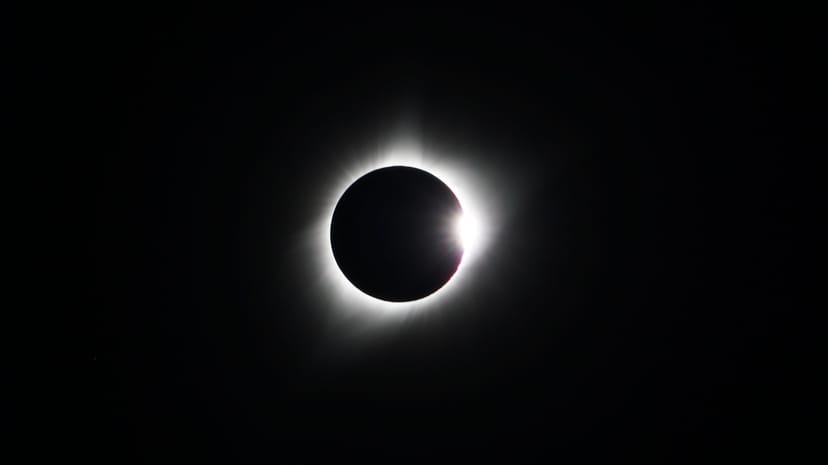
Solar Eclipse 2026 in Iceland | What Happened
Iceland experienced a total solar eclipse on August 12, 2026. Discover what happened in Reykjavík, eclipse times, totality locations and more.
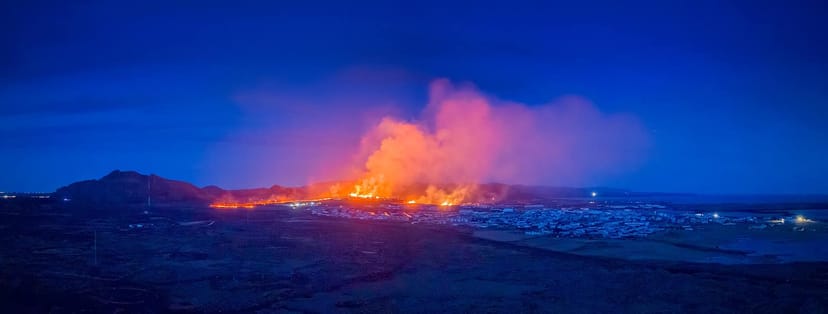
September 2026 updates on the Sundhnúkagígar Eruption in the Reykjanes Peninsula!
The current eruption in the Reykjanes Peninsula, is called Sundhnúkagígar Crater Row. See insights on the seismic activity and volcanic eruptions in the area!
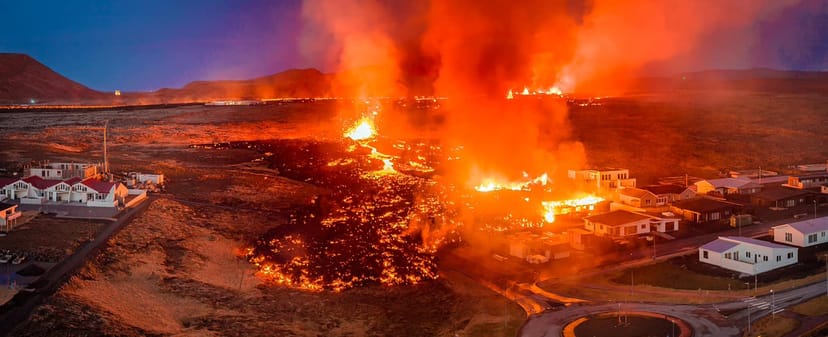
Active Volcanoes in Iceland 2026
Active volcanoes aren't the same thing as active eruptions. A volcano can be considered active even when it is not ejecting ash, rock, gases and magma, so which are active in Iceland in 2026?
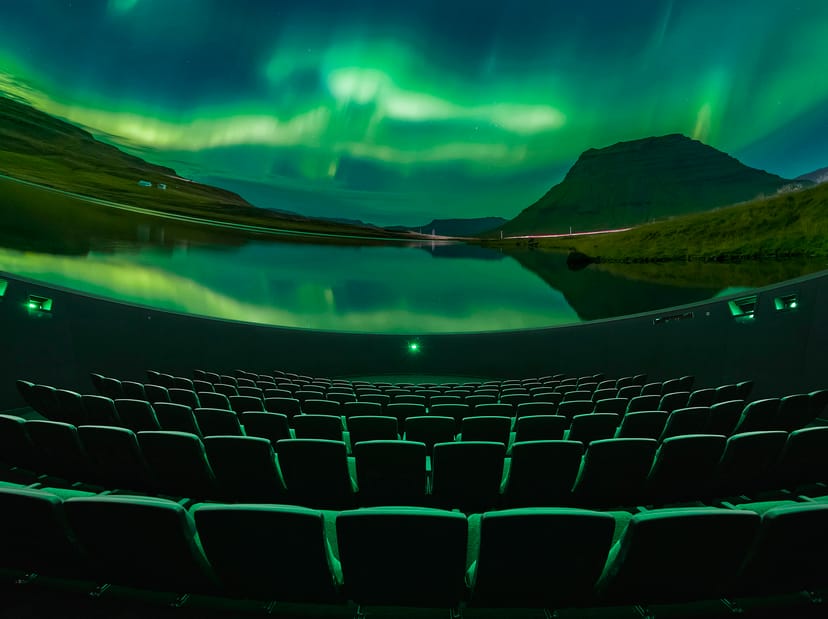
Top 10 Places To See the Northern Lights in Iceland
Discover the best places to see the Northern Lights in Iceland, from Jökulsárlón and Kirkjufell to Reykjavík, Þingvellir and North Iceland.
Ice Caves From Reykjavik
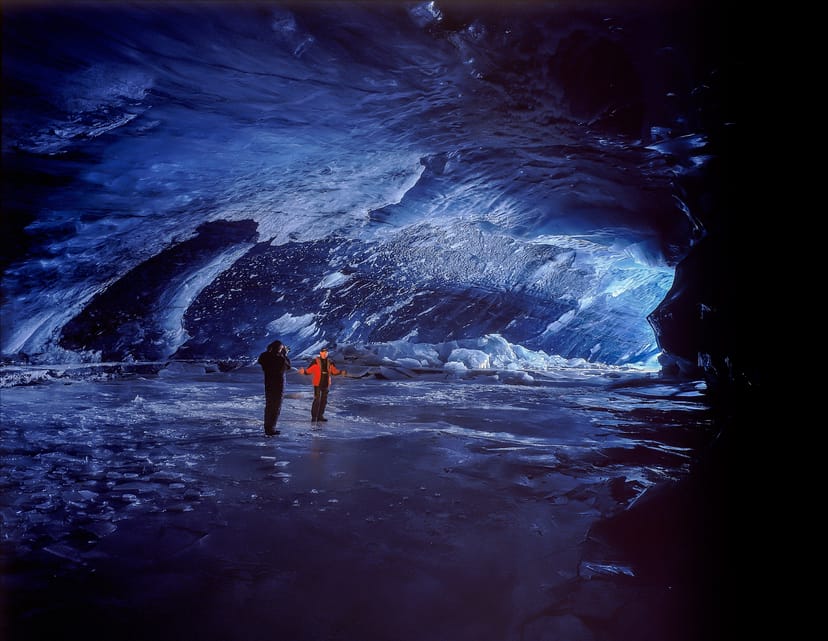
Planning an ice cave trip from Reykjavik? Compare Katla, Langjökull and Vatnajökull, travel times, seasons and Perlan’s ice cave in the city.